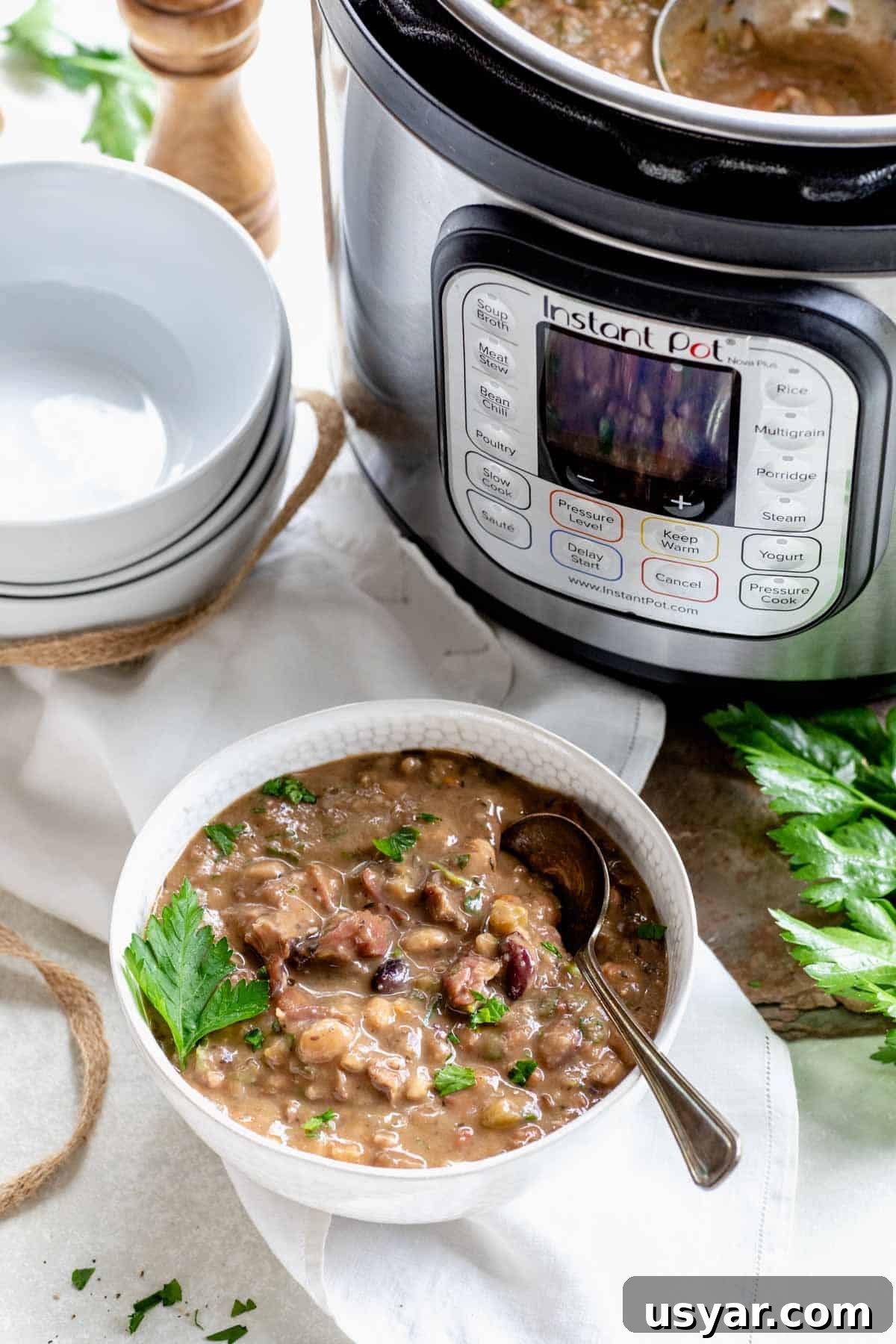
Now that you have a shiny new Instant Pot, here are the key things you should never do with it. These are practical rules to keep you safe and get the best results from your pressure cooker.
People often share what to do with an Instant Pot, but it’s just as important to know what to avoid. Below are the top 10 Instant Pot don’ts — straightforward, useful, and easy to remember.
Instant Pot tips can save you time and prevent accidents. Read on to avoid common mistakes and get comfortable using your Instant Pot quickly and confidently.
Pressure cooking is powerful, so respecting safety and best practices will make it one of the most useful appliances in your kitchen.
What Instant Pot Should I buy?
I personally own two Instant Pots and often use both at once for meal prep or when making a main and a side. Having two units can be very convenient if you cook frequently for a family.
I have the 6-quart Instant Pot LUX and the 6-quart Instant Pot DUO. The 6-quart size is great for everyday family meals. The primary difference between the LUX and the DUO is that the DUO includes a yogurt function, which can be handy if you make homemade yogurt.
Instant Pot DON’TS
1. If you double the recipe, don’t double the time
Doubling the quantity of ingredients does not usually mean you need to double the cook time. Most pressure-cooking times remain the same regardless of quantity, though the pot will take longer to come to pressure. Follow tested recipes or guidance for doubling recipes rather than simply multiplying cook time.
2. Don’t cancel just because it’s still showing “On” while pressurizing
When you start a program, the display often reads “On” while the unit comes to pressure. This can take from about 5 to 30 minutes depending on how much food and how warm the ingredients are. Be patient — canceling during pressurization will stop the process and waste the cooking time your food has already had.
3. Never remove the lid until all pressure has been released
Opening the lid before the pressure has fully released is dangerous. The Instant Pot is designed to lock the lid until internal pressure drops to a safe level. Don’t try to force it open; wait until the float valve drops and the lid can be turned easily.
4. Never put your hand over the steam when it’s venting
The steam released during quick-release is extremely hot and can cause serious burns. Keep hands and face away from the steam path. If you use accessories that redirect steam, set them in place before you begin cooking.
5. Don’t place the metal inner pot or the Instant Pot on a stovetop or other external heat source
Instant Pots are countertop appliances and the inner pot is not intended for use on a burner. External heat sources can damage the unit and the inner pot. Keep the cooker several inches away from walls and other appliances to allow for ventilation and to avoid heat damage to surrounding surfaces.
6. Never add food or liquid before the inner pot is inserted
Adding food or liquid into the cooker base without the stainless steel inner pot in place can damage the heating element. Always check that the inner pot is properly seated before adding ingredients and starting the cooker.
7. Different pot sizes don’t usually require different cooking times
Using 3-, 6-, or 8-quart Instant Pots generally does not change the pressure-cooking time for a recipe. The main differences are capacity and how long it takes to reach pressure. Follow the recipe’s cook time and adjust only when a recipe specifically calls for a different timing.
8. Always include some thin liquid — don’t use only thick sauces
The Instant Pot needs a certain amount of thin liquid (water, broth, or similar) to build steam and reach pressure. Very thick liquids or pure sauces may prevent the cooker from pressurizing. A good guideline is to use at least 1/2 cup of thin liquid unless the recipe specifies otherwise.
9. Do not overfill — stay below the fill line or three-quarters full
Overfilling the Instant Pot can block the vent, cause reduced pressure, and lead to messy, dangerous eruptions of foam or liquid through the steam release. For foods that expand or foam (grains, beans, pasta), keep levels well below the max fill and use natural pressure release when needed to let foaming settle.
10. Don’t call it an “Insta Pot”; the correct name is Instant Pot
Many people shorten the name, but the official name is “Instant Pot.” It’s a small point, but worth noting when reading manuals or searching for official information.
With the don’ts out of the way, it’s time to start using your Instant Pot!
If you’re new, start with a few simple recipes and practice basic functions like sealing, release methods, and sautéing. Many beginners find step-by-step videos and simple recipe collections helpful when learning how to use their Instant Pot safely and effectively.
Follow safety guidelines, keep the inner pot and sealing ring clean, and don’t be afraid to experiment once you’re comfortable. With a little care, your Instant Pot will become one of the most useful tools in your kitchen.