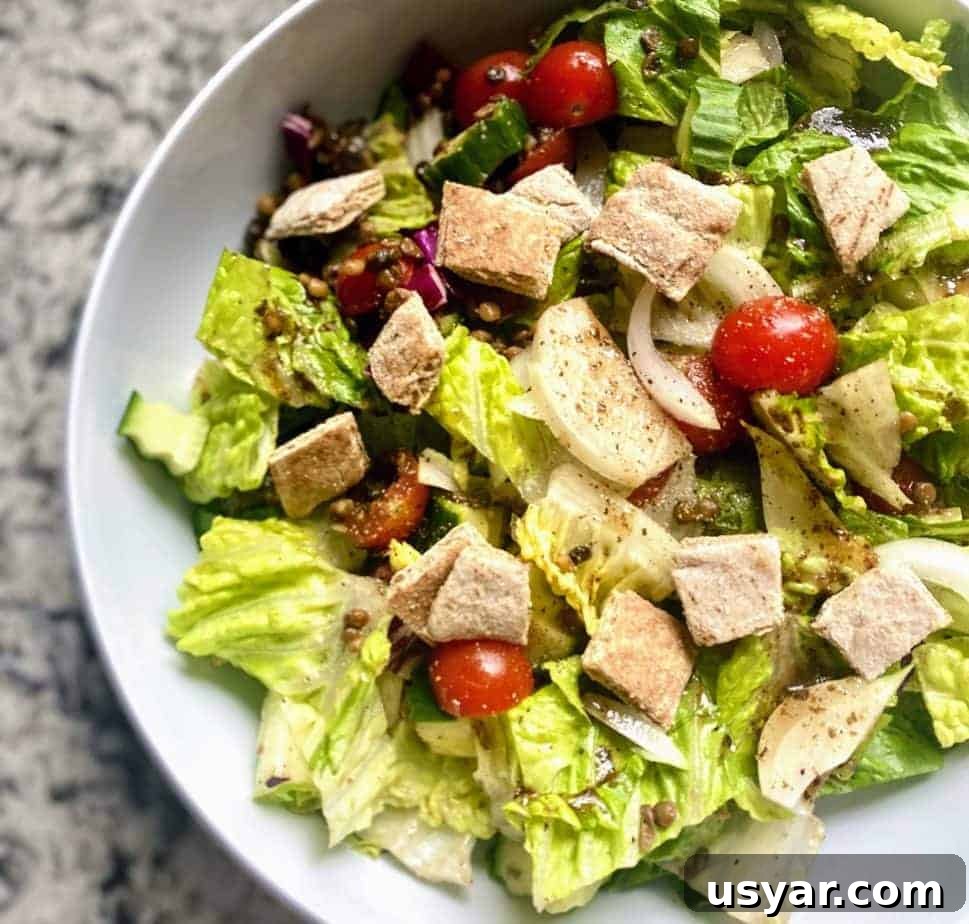
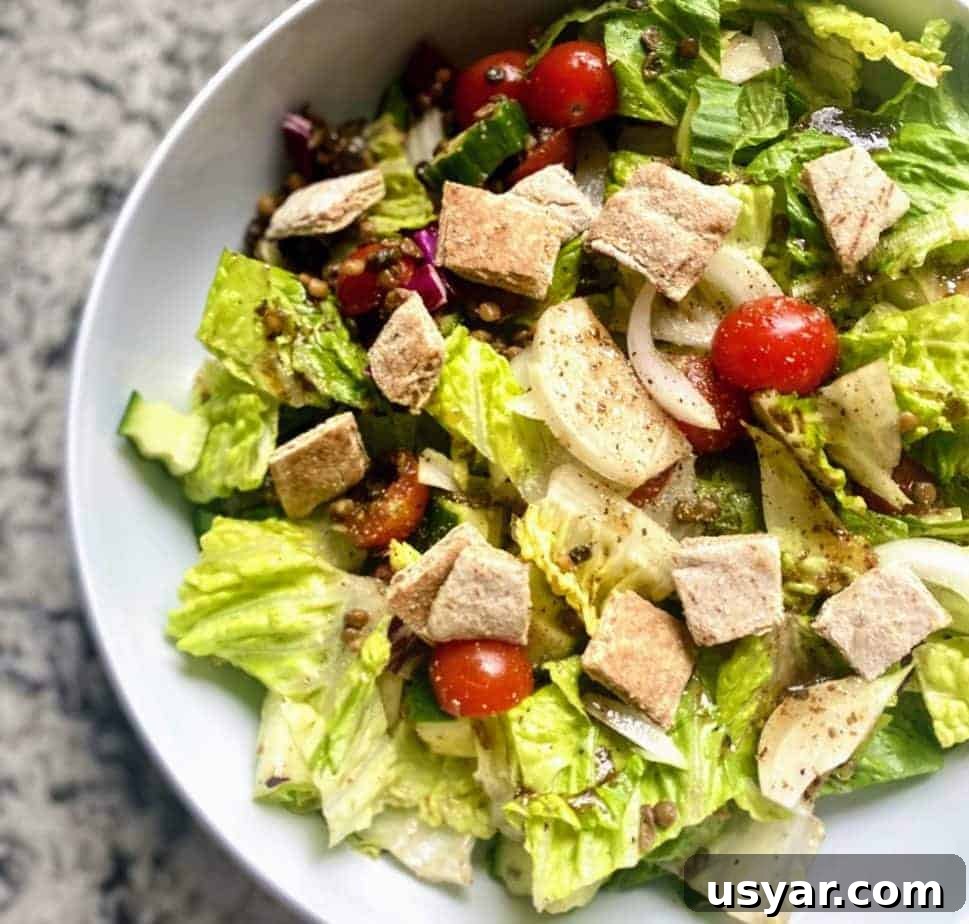
When I lived in Michigan, my go-to Mediterranean spot was La Marsa. Their fattoush salad left a lasting impression—especially the tangy dressing. After moving to Arizona and not finding an authentic version nearby, I began recreating my favorite Mediterranean dishes at home. This oil-free fattoush salad captures the bright, zesty flavors I missed, while keeping the recipe light and simple.
This version swaps fried pita for baked pita chips and uses an oil-free dressing built around two key Mediterranean ingredients: pomegranate molasses and sumac. The result is a vibrant, refreshing salad that works as a side or a light main dish and doubles as a versatile sauce for roasted vegetables, potatoes, or rice.
What is fattoush salad?
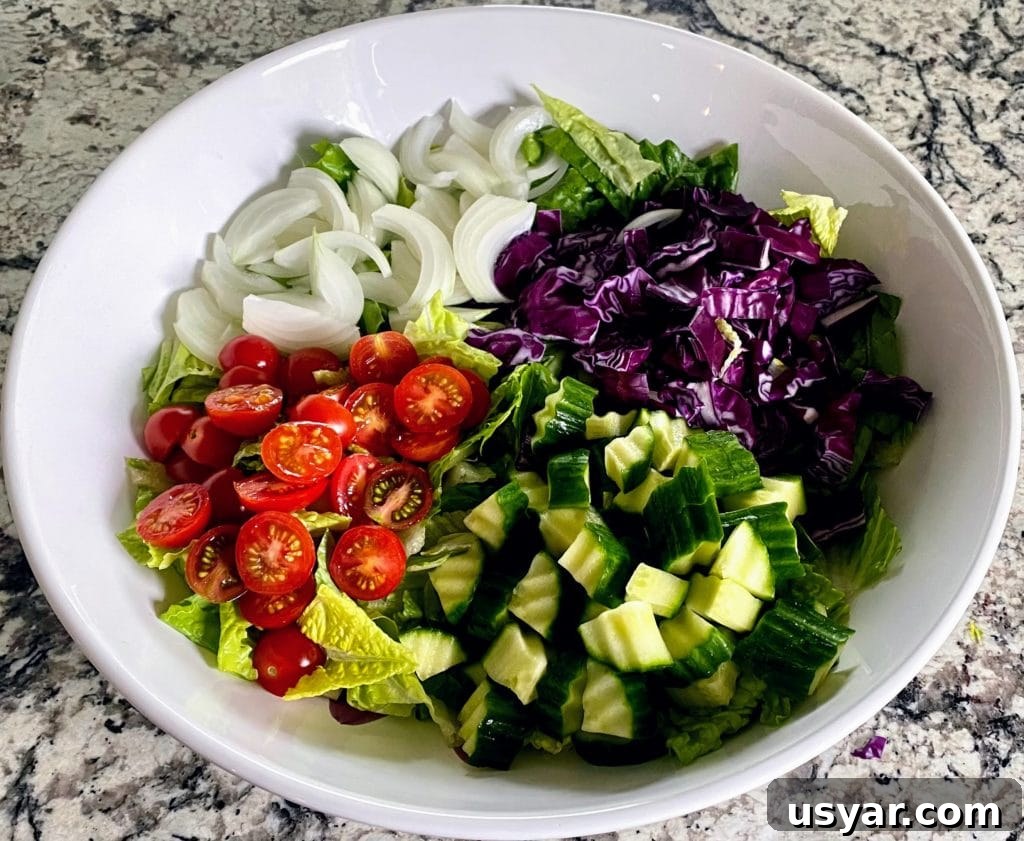
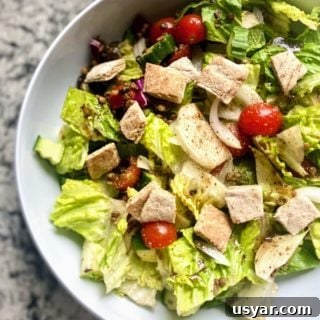
Fattoush is a classic Mediterranean salad traditionally made with crisp greens, tomatoes, cucumber, onion, and pieces of fried flatbread. My version keeps the core ingredients—romaine lettuce, cucumber, tomato, and white onion—but adds purple cabbage for color and crunch and uses baked pita chips instead of fried bread to reduce fat while maintaining texture.
There’s no single “right” way to make fattoush: chickpeas, kalamata olives, or fresh herbs like parsley or mint are all welcome additions. The one non-negotiable for me is a bold, tangy dressing—it’s what transforms ordinary salad components into something memorable.
How to make fattoush salad
Begin by building a base of chopped romaine lettuce in a large bowl. Add sliced cucumber, halved grape tomatoes, thinly sliced white onion, and shredded purple cabbage. Toss gently to combine.
Most vegetables store well in the refrigerator if prepared ahead. Prepare the baked pita chips separately and add them to the salad only right before serving to avoid sogginess. Making the chips in advance and keeping them in an airtight container saves time on serving day.
How to make fattoush salad dressing
The dressing is central to this recipe. After experimenting, I found that pomegranate molasses and ground sumac are the two ingredients that deliver that characteristic sweet-tart, lemony flavor typical of fun and authentic fattoush dressings.
Pomegranate molasses is a concentrated syrup made from reduced pomegranate juice that adds a fruity tartness. Sumac is a tangy, lemony spice made from dried berries and is commonly used across Mediterranean and Middle Eastern cooking. Combined with lemon juice, vinegar, garlic, and a touch of maple syrup, they produce a bright, oil-free dressing that clings to vegetables and pita chips.
This dressing is versatile—use it on roasted vegetables, potatoes, grain bowls, or as a dipping sauce.
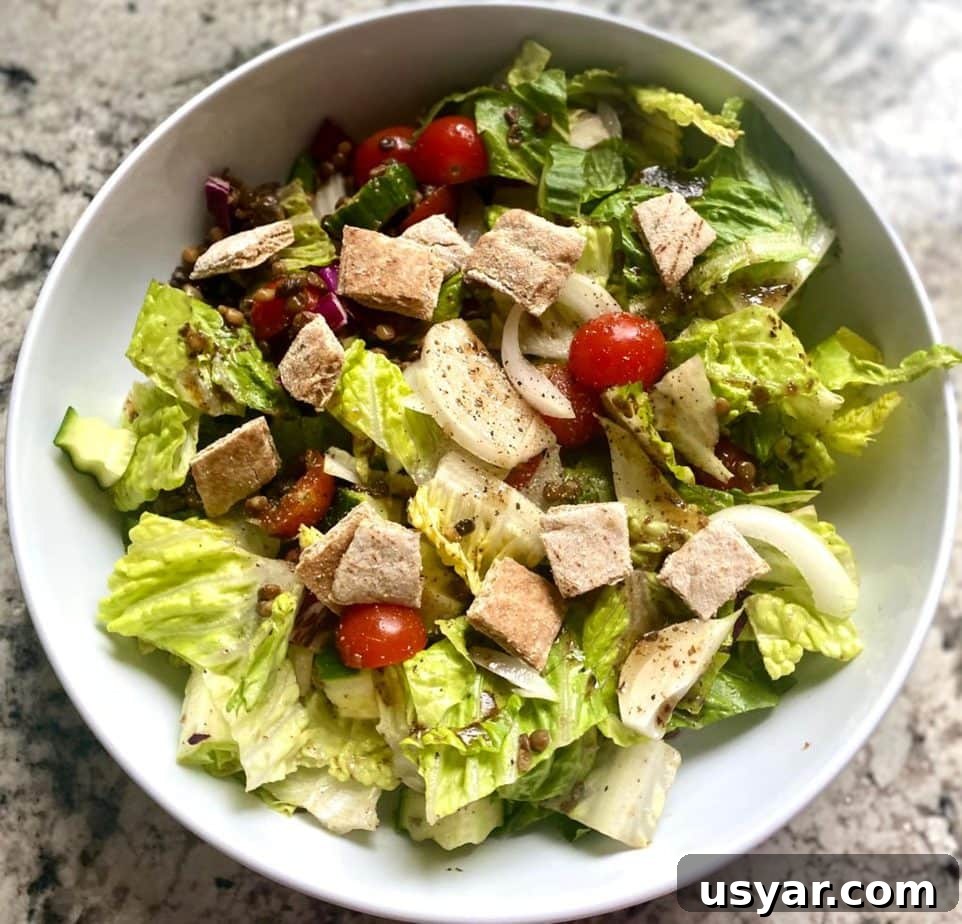
How to make homemade baked pita chips
Baked pita chips are easy and crisp up nicely without oil. Cut whole wheat pita into triangles, arrange in a single layer on a baking sheet lined with parchment or a silicone mat, mist or lightly wet the surface with water, sprinkle with garlic salt, and bake at 400°F (about 200°C) until golden and crisp—roughly 6–8 minutes. Let them cool fully before breaking into pieces.
If you prefer to skip the chips, the salad remains delicious without them—those who avoid bread entirely will still enjoy the bold dressing and crunchy vegetables.
FAQ
How many calories are in fattoush salad?
- Per the recipe as written, a serving provides approximately 180 kcal.
What dressing is used on fattoush salad?
- This recipe features an oil-free, vinegar- and pomegranate-based dressing with lemon, garlic, sumac, and a hint of maple syrup.
What can I use instead of pomegranate molasses?
- Good alternatives include reduced cranberry juice, grenadine, a small amount of raspberry jam mixed with lemon juice, or a blend of pomegranate seeds with a splash of vinegar; adjust sweetness and acidity to taste.
What is sumac and what can replace it?
- Sumac is a tart, lemony spice from dried berries used widely in Mediterranean cuisine. If you don’t have sumac, use a small amount of lemon zest, lemon juice, or a mild vinegar, but use sparingly since these substitutes can be more intensely sour.
If you love Mediterranean food, try these recipes
Here are other Mediterranean-inspired favorites to explore: Quinoa Greek Salad with Oil-Free Dressing; Greek Veggie Pasta Salad; Vegan Greek Spinach Pie; Greek Wrap Sandwich; Vegan Greek Quesadilla; Roasted Greek Bowl; Layered Greek Dip; Lentil Gyro Bowl with Vegan Tzatziki; Mediterranean Veggie Sandwich; Mediterranean Vegan Quiche; Mediterranean Salad.
📖 Recipe
Fattoush Salad
Ingredients
SALAD
- 8 cups Romaine lettuce, chopped into bite-sized pieces
- 1 large English cucumber, cut into ovals then halved
- 1 pint grape tomatoes, halved
- 1 medium white onion, thinly sliced
- 3 cups purple cabbage, shredded
DRESSING
- 1/4 cup fresh lemon juice + zest
- 4 Tbsp pomegranate molasses
- 4 Tbsp white vinegar
- 4 Tbsp minced garlic
- 1 Tbsp fresh mint, chopped
- 1 Tbsp ground sumac soaked in 3 Tbsp warm water
- 1 Tbsp pure maple syrup
- 1 tsp sea salt
- 1 tsp ground black pepper
PITA CHIPS
- 3 whole wheat pita breads, each cut into 8 triangles
- 2 tsp garlic salt
Instructions
Dressing
- Soak the ground sumac in 3 tablespoons warm water and let it sit while you prepare the chips and salad.
- Combine lemon juice and zest, pomegranate molasses, vinegar, minced garlic, chopped mint, the soaked sumac (including the water), maple syrup, salt, and pepper.
- Whisk until smooth and well combined. Taste and adjust acidity or sweetness as needed.
Pita Chips
- Preheat oven to 400°F (200°C).
- Cut each pita into 8 triangles and arrange in a single layer on a baking sheet lined with parchment or a silicone mat.
- Lightly mist or brush the pita pieces with a little water, then sprinkle with garlic salt.
- Bake for about 6–8 minutes, until crisp and lightly browned. Cool completely before breaking into pieces.
Salad
- Prepare the lettuce and vegetables, then arrange them in a large bowl or divided bowls for serving.
- Add a small handful of pita chips to each bowl if desired, but wait until just before serving to keep them crisp.
Serve
- Right before serving, add pita chips to the salad and drizzle with the dressing.
- Serve additional dressing on the side for people who like extra tang.
Notes
The oil-free, pomegranate- and sumac-forward dressing works well on many dishes beyond fattoush—try it on roasted vegetables, grains, or as a dipping sauce. If you don’t have pomegranate molasses, try a reduced cranberry juice, a mix of raspberry jam and lemon juice, or grenadine in small amounts. For sumac substitutes, use a light sprinkle of lemon zest or a dash of lemon juice or mild vinegar, used sparingly.
Nutrition (per serving)
Calories: 180 kcal • Carbohydrates: 39 g • Protein: 6 g • Fat: 1 g • Fiber: 5 g • Sugar: 13 g • Sodium: 1337 mg • Vitamin A: 6703 IU • Vitamin C: 47 mg