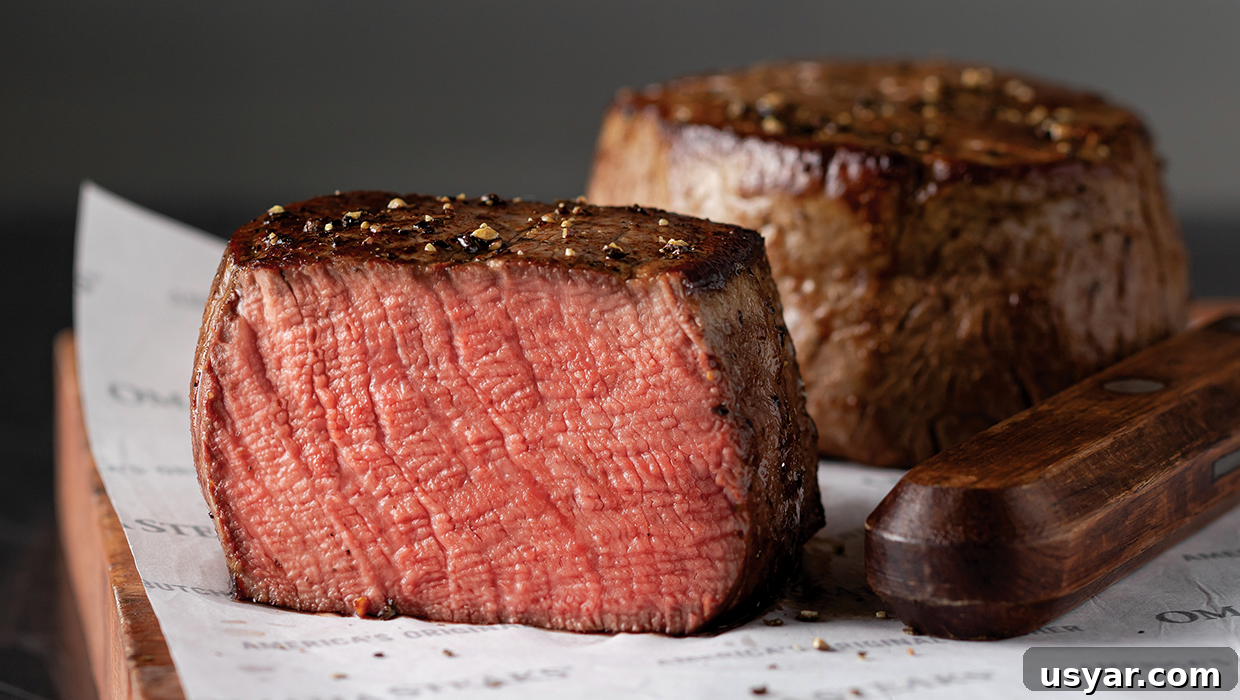
Perfect Sous Vide Filet Mignon
Filet mignon is prized for its exceptional tenderness and subtle flavor. Cut from the tenderloin, a muscle that does very little work, it delivers a buttery texture that many consider the pinnacle of steak. Because only a small portion of each animal yields this cut, filet mignon is often one of the most expensive steaks on the menu. Cooking it precisely is important to preserve its delicate texture and flavor—using sous vide is one of the most reliable ways to do that.
What Is Filet Mignon?
Filet mignon comes from the tenderloin, a long, narrow muscle that runs along the spine. This muscle is not heavily used during the animal’s life, which is why the resulting meat is so tender. The cut is lean, with a fine grain and minimal connective tissue, making it ideal for quick searing and serving rare to medium-rare. Because it has less fat and marbling than other premium cuts, careful cooking is essential to avoid drying it out while still achieving a rich, satisfying crust.
Why Use Sous Vide for Filet?
Sous vide cooking offers precise temperature control, which makes it virtually impossible to overcook a filet mignon. By sealing the steak and cooking it in a water bath held at the exact target temperature, you can achieve an even doneness edge to edge. The method also allows you to gently break down any residual toughness without sacrificing juiciness. After the sous vide bath, a quick, high-heat sear develops a flavorful crust without raising the interior temperature significantly, producing an ideal contrast between a caramelized exterior and a tender center.
Equipment
- Sous vide immersion circulator or appliance and a large pot or container to hold the water bath.
- Vacuum sealer and bags, or heavy-duty, BPA-free resealable freezer bags suitable for the water displacement method.
- Cast iron skillet or another heavy pan for searing to get a consistent, high-heat crust.
- Tongs, paper towels, and a sharp knife for resting and slicing.
Sous Vide Filet Mignon
Ingredients
- 1 filet mignon steak (about 6–8 oz or desired size)
- 1 tsp kosher salt (or to taste)
- 1/2 tsp freshly ground black pepper (or to taste)
- Cold-pressed extra virgin olive oil or ghee for searing
Instructions
- Set the sous vide: Fill a pot or container with water and attach your sous vide circulator. Preheat to 130°F (54°C) for medium-rare. If you prefer a different doneness, choose the appropriate temperature: for rare aim for 125°F (52°C), for medium aim for 140°F (60°C).
- Prepare the steak: Season the filet mignon lightly with salt and pepper. Place the steak in a vacuum bag and seal, or use a heavy-duty freezer bag and remove air using the water displacement method: slowly lower the bag into water, allowing pressure to push air out, then seal the bag just above the water line.
- Cook sous vide: Submerge the sealed steak in the preheated water bath, making sure it is fully underwater and the bag is not touching the circulator. Cook for 1 to 2 hours; this window yields a consistently tender result while allowing the connective tissue to relax.
- Dry and season: Remove the steak from the bag and discard any accumulated juices or aromatics. Pat the steak thoroughly dry with paper towels—moisture on the surface prevents a good sear. If desired, season again with a small pinch of salt and pepper to taste.
- Preheat the pan: Place a cast iron skillet over high heat until it is very hot. Add a thin layer of oil or a small amount of ghee; it should shimmer but not smoke excessively.
- Sear the steak: Sear the filet for about 30–60 seconds per side, rotating to get all surfaces browned and developing a rich crust. Use tongs to quickly sear the edges as well. Avoid extended searing that would raise the steak’s interior temperature too much.
- Rest and slice: Let the steak rest for about 5–10 minutes to allow juices to redistribute. Slice against the grain into medallions and serve immediately.
Tips for Best Results
- Patting the steak very dry before searing is essential to form a strong crust quickly.
- Use high smoke-point fat (ghee or a neutral oil) if you need a higher sear temperature, or finish with a pat of butter off-heat for added richness.
- If cooking multiple steaks, avoid overcrowding the water bath and make sure each bag has sufficient water circulation around it.
- Adjust sous vide times based on thickness: thin steaks finish faster, while thicker cuts benefit from a longer hold to ensure even temperature throughout.
This sous vide filet mignon method produces reliably tender, evenly cooked steaks with a beautiful seared crust. It’s an excellent technique when you want restaurant-quality results at home without the risk of overcooking. Experiment with temperatures and sear times to find your perfect balance of texture and flavor.