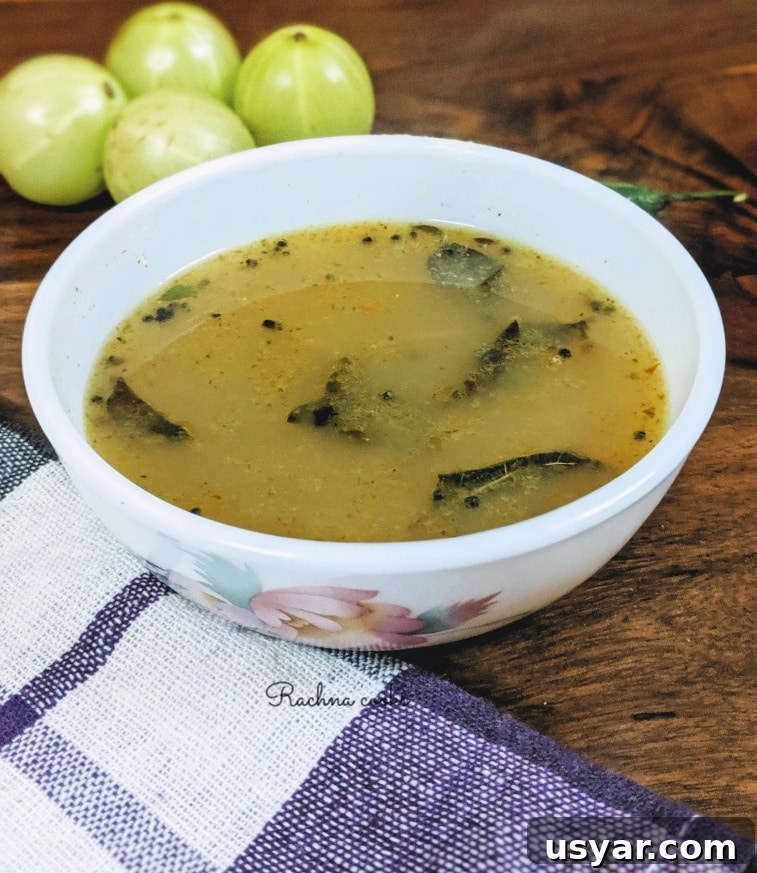
I recently learned this simple amla rasam recipe from a Tamil aunty. Amla rasam, made with Indian gooseberries (amla or nellikai), is especially comforting in winter due to its rich vitamin C content and soothing properties. I made it yesterday when I had a scratchy throat and a nagging cough, and it helped—along with ginger tea and chyawanprash. The recipe is straightforward, and I have included a few small tweaks that make it tastier while preserving the traditional flavors.
Here is the amla rasam recipe, adapted for clarity and ease of use:
Serves 4
Time to prepare: 15 minutes
Ingredients:
- 4 Indian gooseberries (fresh amla)
- 1 tsp cumin seeds
- 1 tsp coriander seeds
- 1 tsp urad dal (split black gram)
- 3–4 green chilies (adjust to taste)
- 1 inch piece of fresh ginger
- 1 tsp black peppercorns
- 2 tsp sugar (optional, to balance sourness)
- Salt, to taste
For tempering
- 1 tsp ghee (clarified butter) — or use vegetable oil for a vegan version
- 1 tsp mustard seeds
- 1 sprig curry leaves
- 1 pinch hing (asafetida)
For garnish
- 1 tbsp chopped cilantro (coriander leaves)
Recipe:
Begin by dry roasting the cumin seeds, coriander seeds and urad dal in a small skillet over medium heat until they become fragrant and lightly golden. Remove the roasted spices from the heat and allow them to cool for a minute.
Wash the amlas, remove any stems, and cut them into small pieces. Place the amla pieces in a blender along with the roasted cumin, roasted coriander, urad dal, whole black peppercorns, green chilies and a small piece of fresh ginger. Grind everything into a fairly thick paste, adding a little water only if needed to help the blender.
Transfer the paste to a saucepan and add about 3 cups (approximately 700–750 ml) of water. Bring the mixture to a gentle boil, then reduce the heat and simmer on low for about 5 minutes. This short simmer allows the raw flavors to mellow while preserving the vitamin C and bright sourness of the amla.
Season with salt to taste. If the rasam tastes too tart for your liking, stir in 1–2 teaspoons of sugar to balance the sourness—this will not make the rasam noticeably sweet but will round the flavors. If you prefer the raw sourness, you can skip the sugar or reduce the number of amlas to three instead of four.
To prepare the tempering, heat 1 teaspoon of ghee or vegetable oil in a small pan. Add the mustard seeds and let them crackle. Sprinkle in a pinch of hing (asafetida) and add the curry leaves. Turn off the heat and immediately pour this hot seasoning into the simmering rasam so the aromas infuse the soup.
Stir gently and serve the rasam hot, garnished with chopped cilantro. This rasam works well as a light, nourishing soup on its own or served over steamed rice as part of a meal.
Enjoy it warm. Its tangy, spicy and aromatic profile makes it comforting and satisfying.
Pro Tips
- If the rasam seems too sour, add sugar sparingly until the acidity is balanced; it won’t turn the rasam sweet, just milder.
- Use three amlas instead of four for a less sharp tang.
- Reduce the number of green chilies or omit the black pepper if you prefer a milder version—this dish can be easily adjusted for heat.
- Amla rasam is traditionally valued for its immune-supporting qualities and can be soothing for colds and sore throats.
- For a vegan option, replace ghee with a neutral vegetable oil for tempering.
- Serve immediately for the best flavor and aroma; the rasam tastes freshest when hot.
If you try this amla rasam, consider leaving a star rating or a brief comment about how you adapted the recipe. Your feedback helps refine the recipe for others who want a comforting, vitamin-rich winter soup.
You may also enjoy other recipes featuring amla or rasam spices, such as amla chutney, homemade rasam powder and variations like horsegram rasam—these pair well with rice and expand the comforting, tangy flavors of South Indian cuisine.