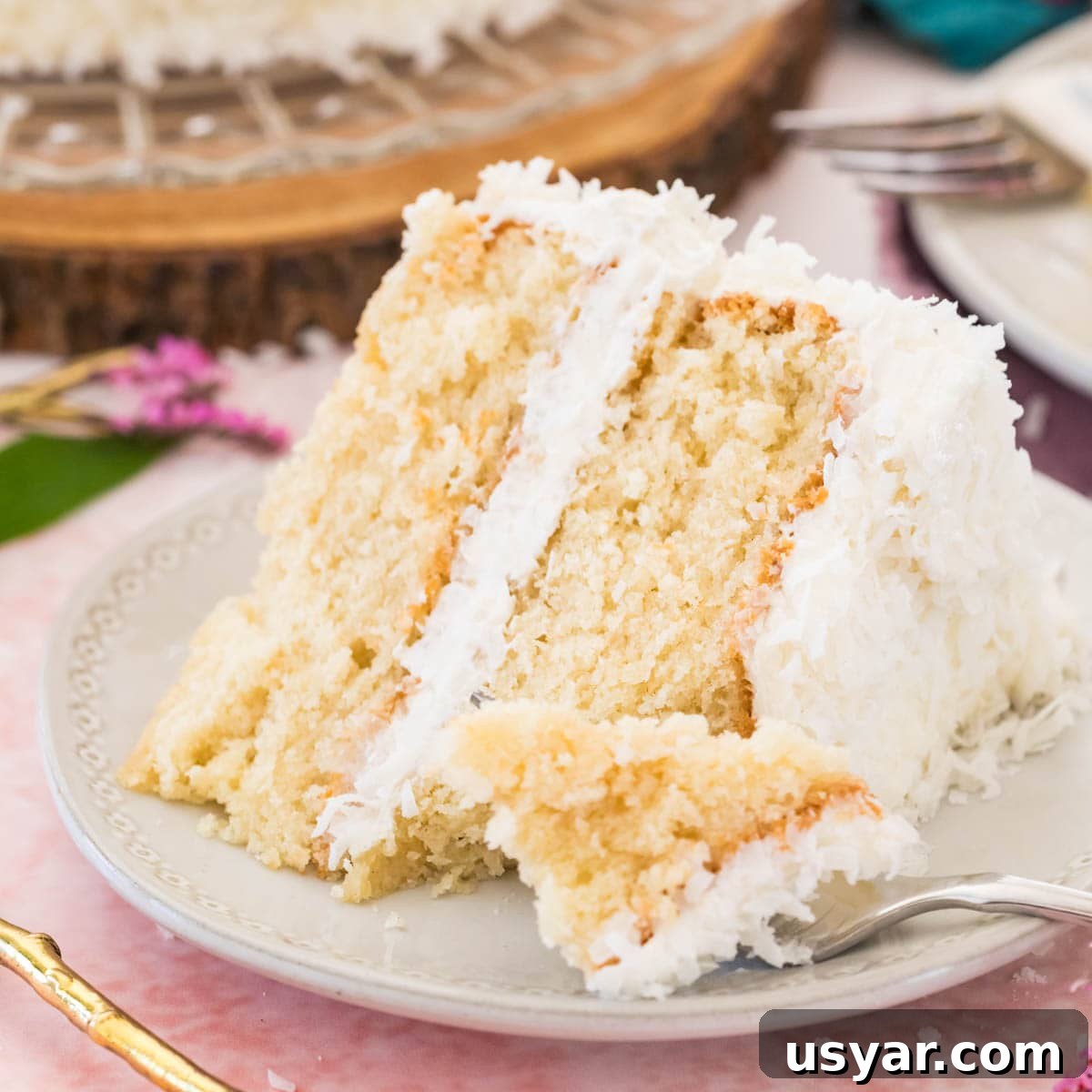
An old-fashioned coconut cake made with soft, fluffy layers, an old-fashioned silky frosting, and a coating of sweet shredded coconut. This recipe includes tips for reliable results and a how-to video tutorial.
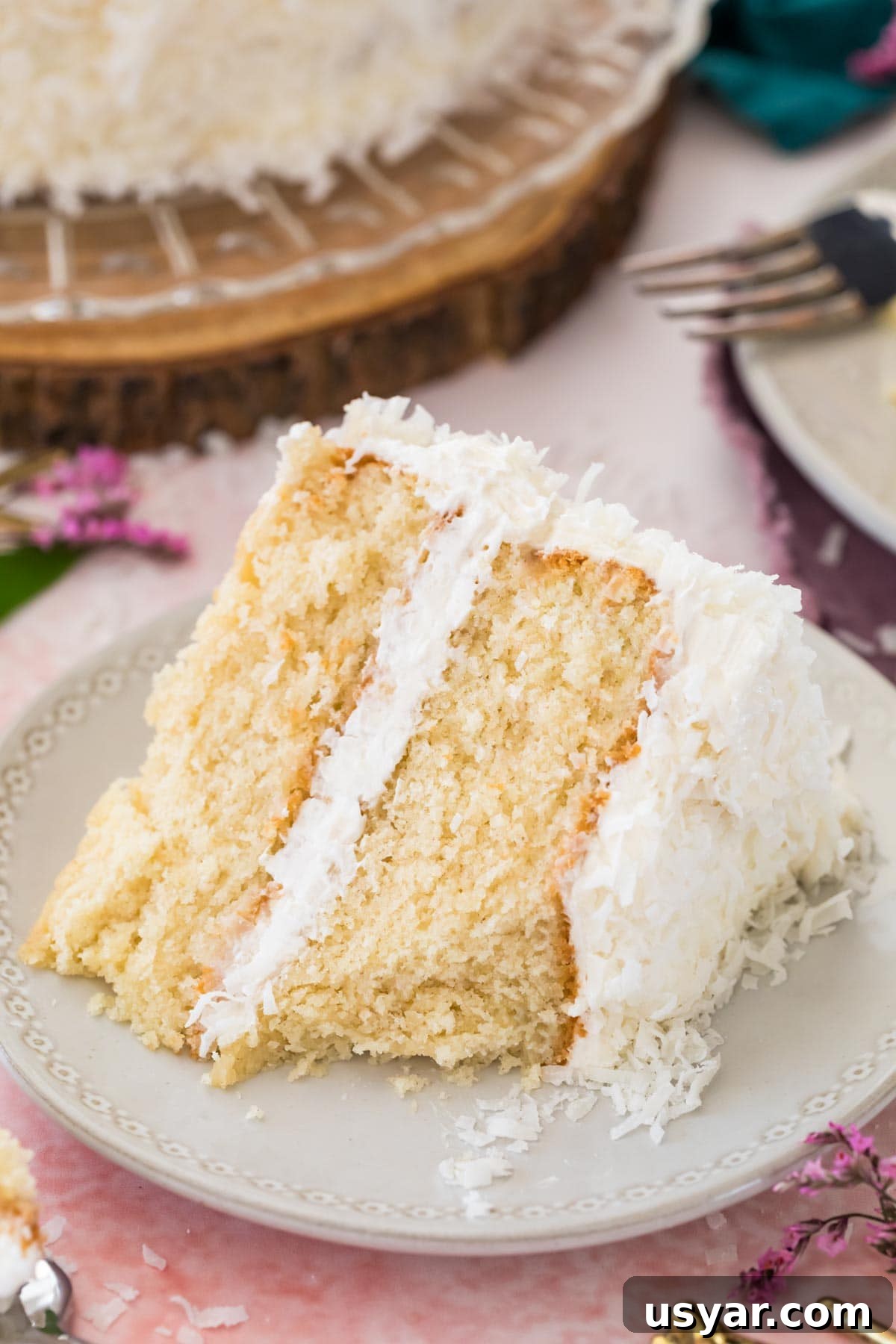
Soft, Fluffy Coconut Cake
This coconut cake is inspired by old family recipes but made from scratch for better texture and flavor. After testing many variations, this recipe produces tender, moist, and stable cake layers that hold up well under a traditional, slightly textured frosting and generous shredded coconut. The result is a classic coconut cake with a delicate coconut flavor and a melt-in-your-mouth crumb.
Why You’ll Love This Recipe
- Incredible texture: Designed to avoid dense, dry results, this cake stays soft, tender, and moist while maintaining structure for stacking and frosting.
- Balanced coconut flavor: A subtle splash of coconut extract in the cake, coconut milk in the frosting, and shredded coconut on the outside deliver a pleasant coconut profile without overpowering the cake.
- Time-tested: This recipe has been shared for years and consistently praised for its flavor and texture.
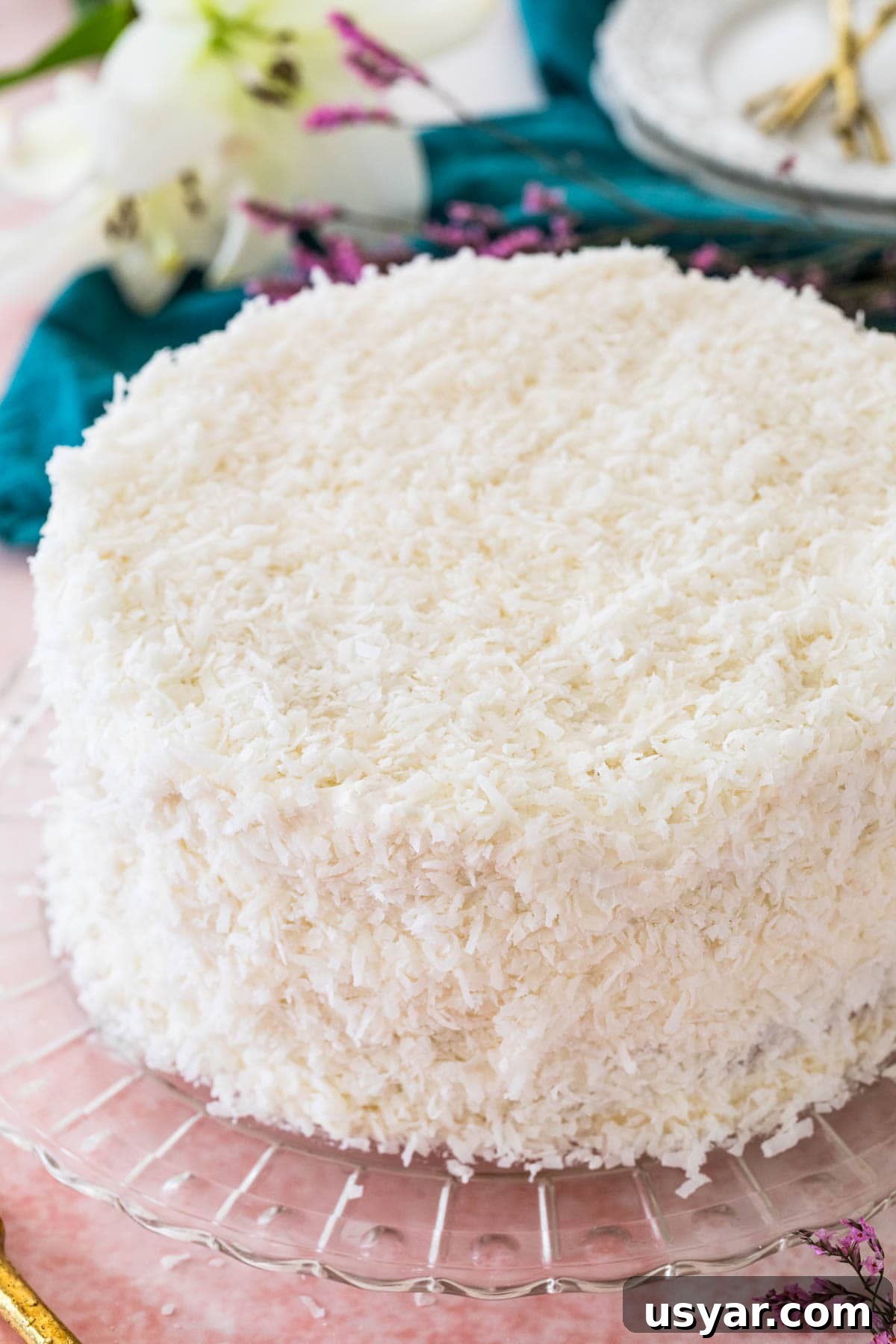
- Beautiful presentation: The finished cake looks like a fluffy snowball — perfect for spring gatherings, holidays, or any celebration.
Because of its light flavor and tender crumb, this coconut cake is a great addition to spring dessert tables, Easter celebrations, and any time you want a classic, nostalgic dessert.
What You Need
For the Cake Layers
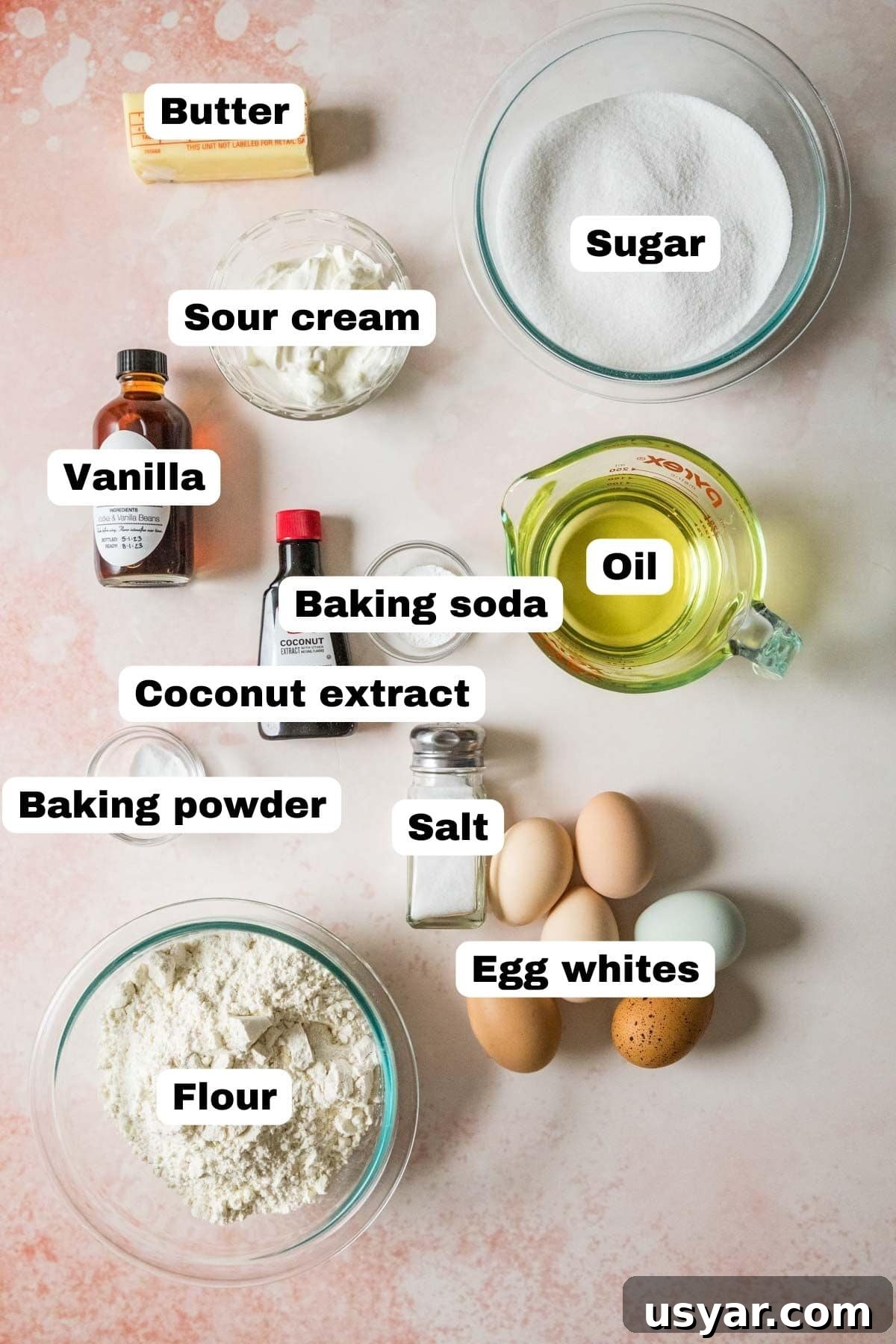
This recipe makes two thick, tender layers. Key ingredients and why they matter:
- Butter and oil: A blend gives great flavor from butter and lasting moisture from oil, which is helpful if the cake is chilled.
- Flavor: Vanilla extract is essential; a small amount of coconut extract enhances the coconut character without overwhelming the cake.
- Sour cream: Full-fat sour cream (or plain full-fat Greek yogurt) adds moisture and depth of flavor.
- Egg whites: Whipped egg whites provide lift and a fine, tender crumb. Keep yolks for another use.
For the Frosting
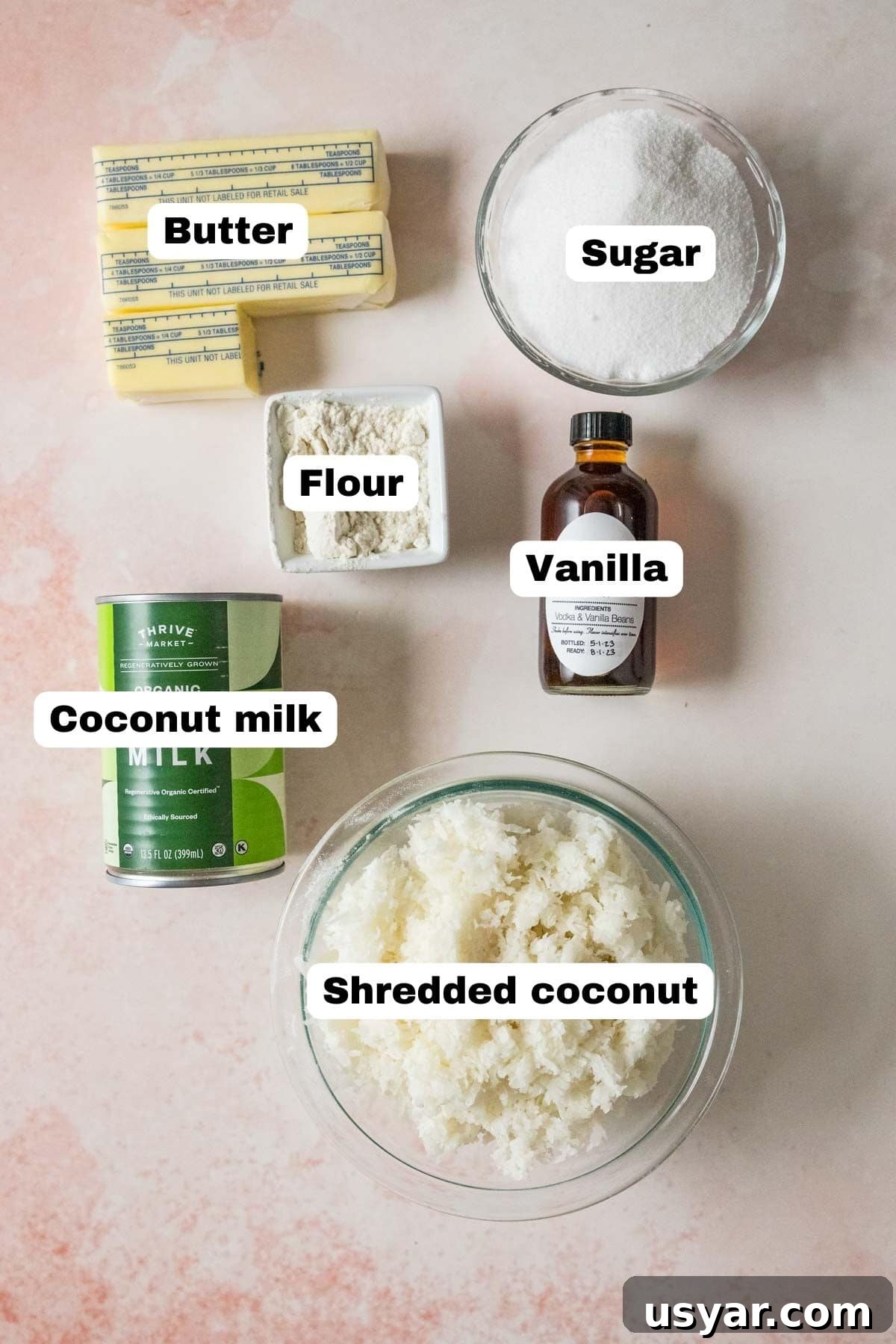
The frosting for this coconut cake is a classic, slightly old-fashioned style that uses granulated sugar and a small amount of flour for texture. Important notes:
- Butter: This version uses all butter for flavor. If using unsalted butter, add a small pinch of salt to taste.
- Granulated sugar: Not powdered sugar. The sugar must be beaten until it dissolves to avoid graininess, which requires time and a mixer.
- Heat-treat the flour: Because the flour is not cooked in the cake, briefly heat-treat it before adding to the frosting to eliminate any risk from raw flour.
- Coconut milk: Adds coconut flavor and a creamy consistency; whole milk can substitute if preferred.
- Shredded coconut: Sweetened shredded coconut is recommended. If the shreds seem stringy, pulse them briefly in a food processor for a finer texture.
SAM’S TIP: Use a stand mixer for the frosting if possible — it takes 12+ minutes of mixing to fully dissolve the sugar and reach a silky texture.
Scroll to the recipe below for exact measurements and step-by-step instructions.
Helpful Tips When Making Coconut Cake
Before you begin, keep these practical tips in mind to improve your results:
- Whipping egg whites: Use a clean, dry stainless steel or glass bowl and make sure no yolk contaminates the whites. Whip to stiff peaks.
- Finer coconut texture: If shredded coconut seems stringy, pulse it a few seconds in a food processor for a less stringy finish.
- Use a mixer for the frosting: Dissolving granulated sugar takes time. A stand mixer saves effort and produces a smoother frosting more reliably than hand mixing.
- Patience is key: The frosting will become smooth with enough mixing — scrape the bowl and continue mixing if it feels grainy.
Frequently Asked Questions
What’s the easiest way to cover the cake with coconut?
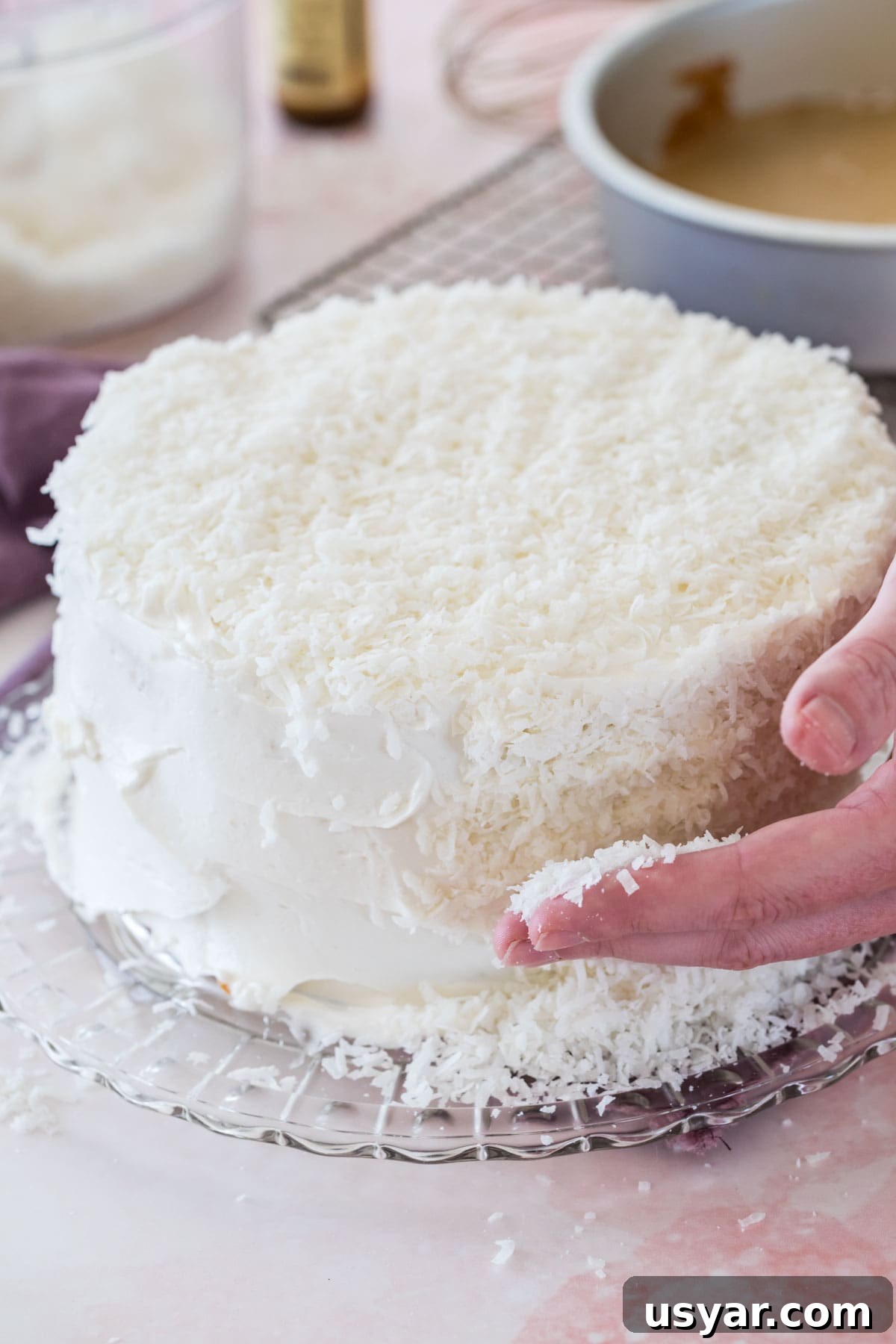
Use your hands and a bit of confidence. Apply coconut immediately after frosting so it adheres well. Scoop coconut up the sides and gently press it into the frosting. If the coconut is stringy, pulse it in a food processor first for a finer, more even coating.
How can I prevent my coconut cake from being dry?
Two common causes of dry cake are over-measuring flour and over-baking. Weigh flour on a kitchen scale or spoon and level it into measuring cups rather than scooping directly. Bake the layers together on the center rack and remove them when a toothpick shows a few moist crumbs — even a couple of minutes can make a difference.
Can I use a different frosting?
Yes. Cream cheese frosting is an excellent alternative, or try vanilla, Swiss meringue buttercream, or a coconut cream cheese buttercream. Whatever you use, press shredded coconut onto the frosting for the classic coconut-cake appearance.
Coconut Cake Recipe
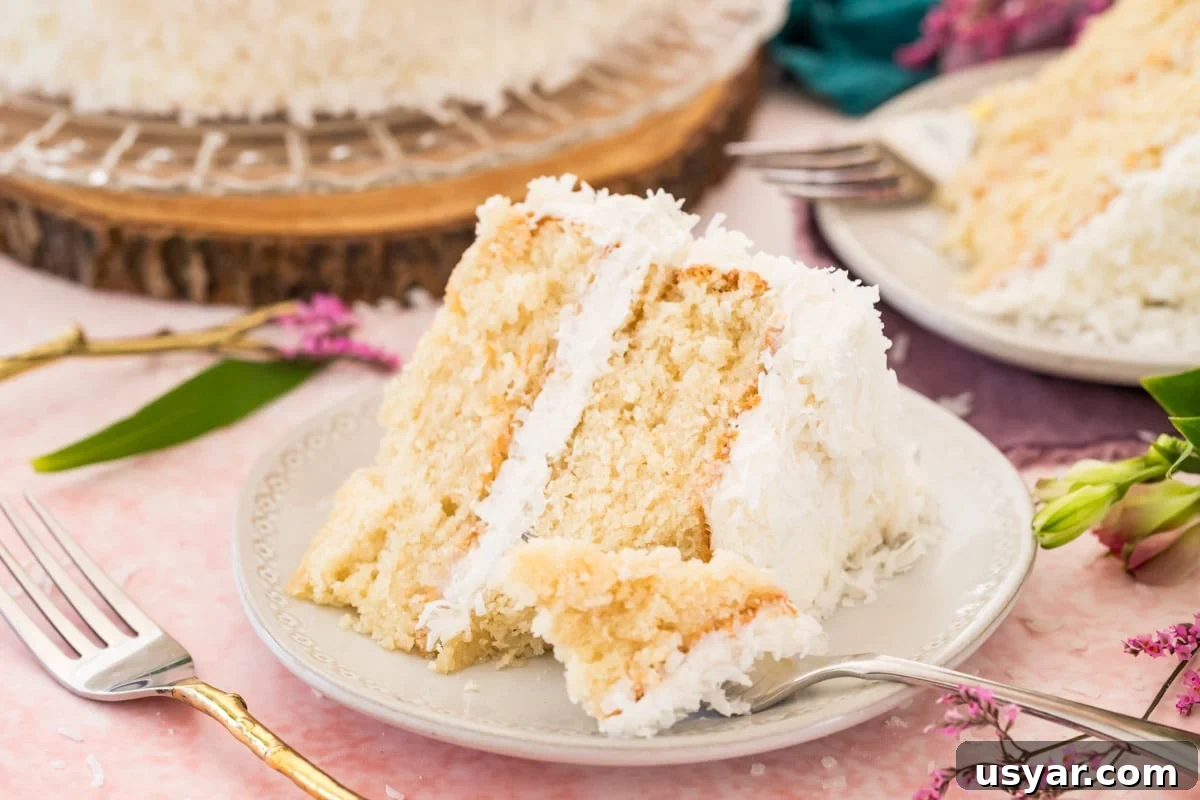
You’ll love this super soft and moist coconut cake. It’s made with a simple vanilla-style cake base, an old-fashioned frosting, and shredded coconut for a classic finish. The recipe yields two thick 8″ layers and serves about 12 slices.
Ingredients
Cake
- 6 tablespoons (85 g) unsalted butter, softened
- 2/3 cup (157 ml) avocado, vegetable, or canola oil
- 2 cups (400 g) granulated sugar
- 1 cup (240 g) sour cream
- 2 teaspoons vanilla extract
- 1/2 teaspoon coconut extract
- 2 3/4 cups (344 g) all-purpose flour
- 1 teaspoon baking powder
- 1/2 teaspoon baking soda
- 1 teaspoon table salt
- 6 large egg whites (about 190 g), room temperature
Frosting
- 4 tablespoons (31 g) all-purpose flour (heat-treated)
- 1 1/4 cups (282 g) salted butter, softened
- 1 1/2 cups (300 g) granulated sugar
- 1 cup (236 ml) coconut milk
- 3/4 teaspoon vanilla extract
- 3 cups (300 g) sweetened shredded coconut, divided
Instructions
- Preheat oven to 350°F (175°C). Grease and flour two 8″ cake pans and line the bottoms with parchment rounds.
- In a mixer fitted with the paddle (or using an electric mixer), beat butter, oil, and sugar until creamy and combined.
- Scrape the bowl and stir in sour cream, vanilla, and coconut extract until smooth.
- Whisk together flour, baking powder, baking soda, and salt in a separate bowl.
- Gently fold the dry ingredients into the wet mixture in several additions using a spatula until fully combined. Scrape the bowl to ensure even mixing.
- In a clean, dry stainless steel or glass bowl, beat the egg whites on high speed until stiff peaks form.
- Gently fold the whipped egg whites into the batter until there are no streaks of white.
- Divide batter evenly between prepared pans and bake at 350°F (175°C) for 33–37 minutes, or until a toothpick inserted in the center comes out mostly clean with a few moist crumbs.
- Allow cakes to cool in the pans 10–15 minutes, then run a knife around the edges and invert onto a cooling rack. Cool completely before frosting.
Frosting
- Heat-treat the flour: place the flour in a microwave-safe dish and heat for 30 seconds, stir, and check that the temperature reaches at least 160°F (71°C). Heat in 10-second bursts if needed. Cool the flour completely before using.
- In a mixer, beat butter and granulated sugar on medium speed until creamy and combined.
- Add the heat-treated flour one tablespoon at a time, beating briefly after each addition. Scrape the bowl and beat again.
- Add coconut milk and vanilla extract, then increase the speed and beat for about 6 minutes. Scrape the bowl and beat another 6 minutes or until the frosting is silky and no longer grainy.
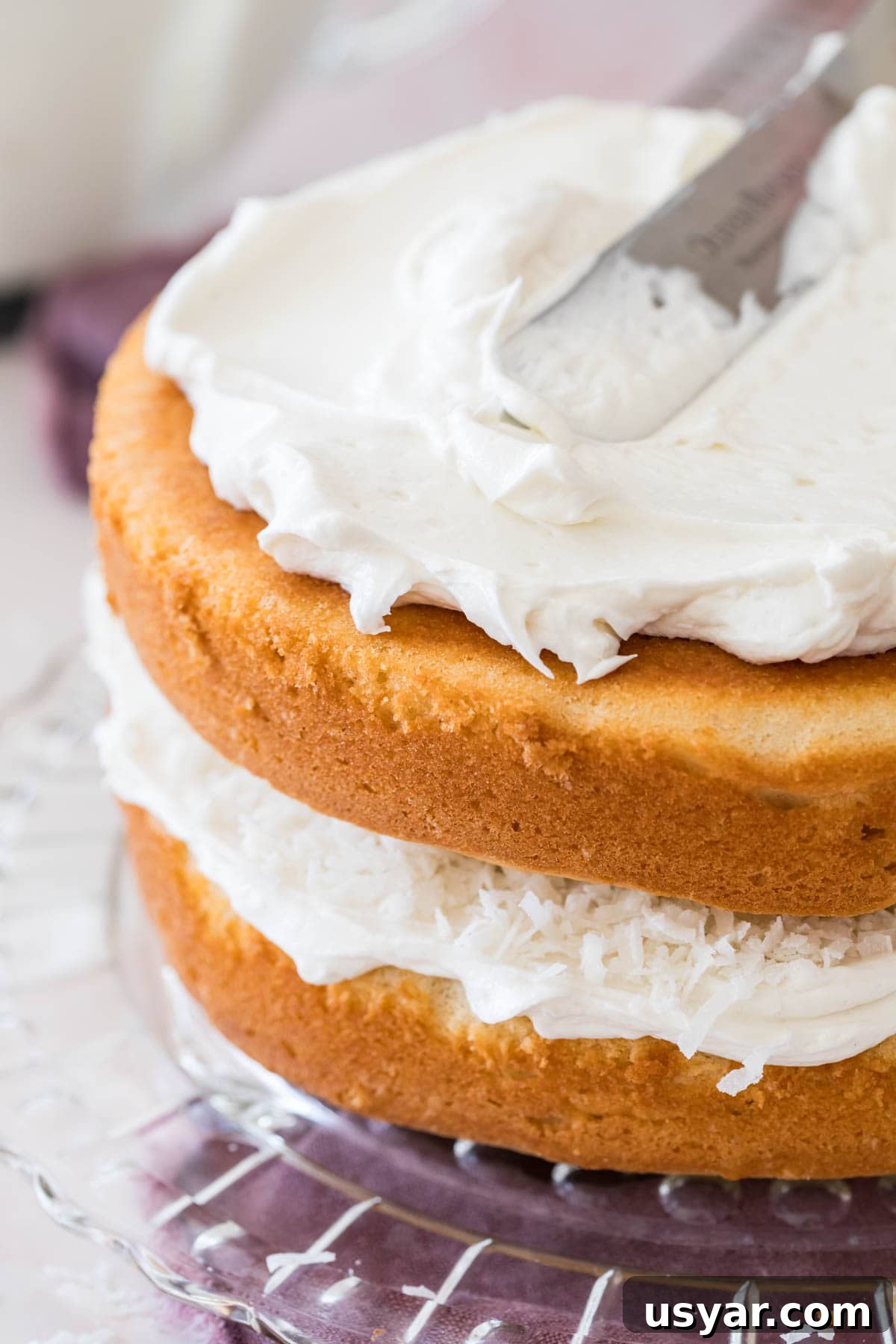
- Place one cooled cake layer on a serving plate, spread an even layer of frosting, and sprinkle some shredded coconut. Top with the second layer, frost the top and sides, then press the remaining shredded coconut onto the sides and top.
Notes
- Butter vs shortening: The original version used a mix of butter and shortening; the current version uses all butter. Use your preference.
- Stand mixer recommended: The frosting requires extended mixing to dissolve the sugar — a stand mixer makes this easy.
- Coconut texture: Pulse shredded coconut briefly if you want a finer, less stringy texture for a smoother finish.
- Leftover egg yolks: Save yolks for custards, creme brûlée, or other recipes that use yolks.
- Storage: Store the cake covered in the refrigerator for up to 5 days, or freeze tightly wrapped for longer storage.
- Gluten-free option: Some bakers have had success with a 1:1 gluten-free flour blend such as Cup4Cup; results may vary.
Nutrition (approx.)
Serving: 1 slice | Calories: 889 kcal | Carbohydrates: 89 g | Protein: 7 g | Fat: 58 g | Saturated Fat: 31 g
Nutrition information is an approximation and will vary based on ingredients and serving size.
Enjoy baking this classic coconut cake and sharing it with family and friends!
More Cake Recipes You Might Enjoy:
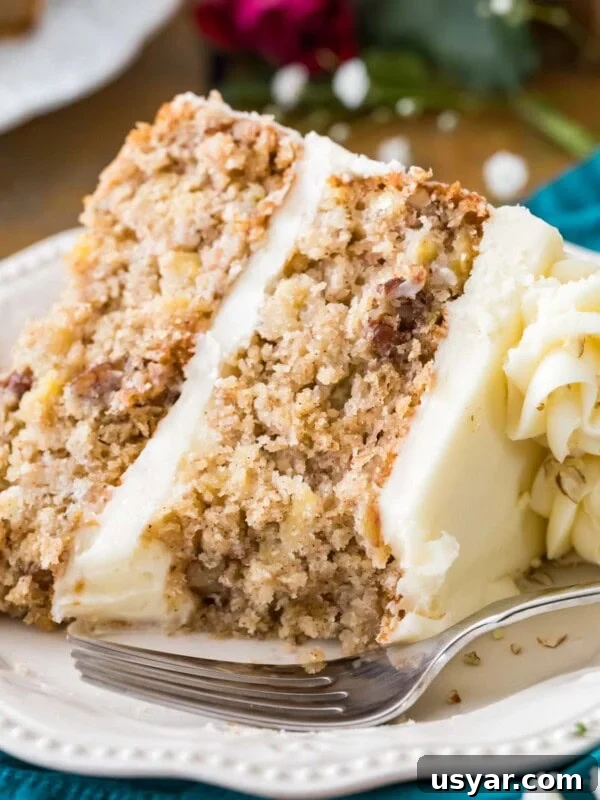
Hummingbird Cake
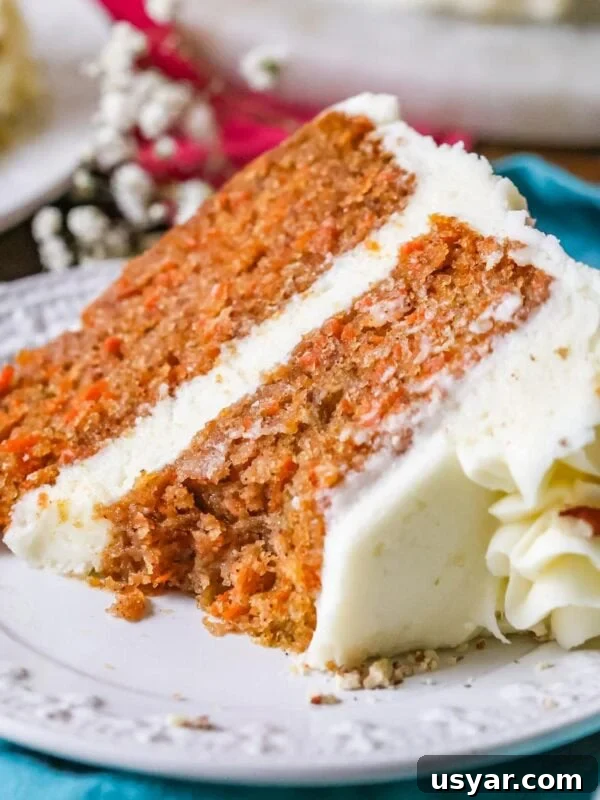
The Best Carrot Cake
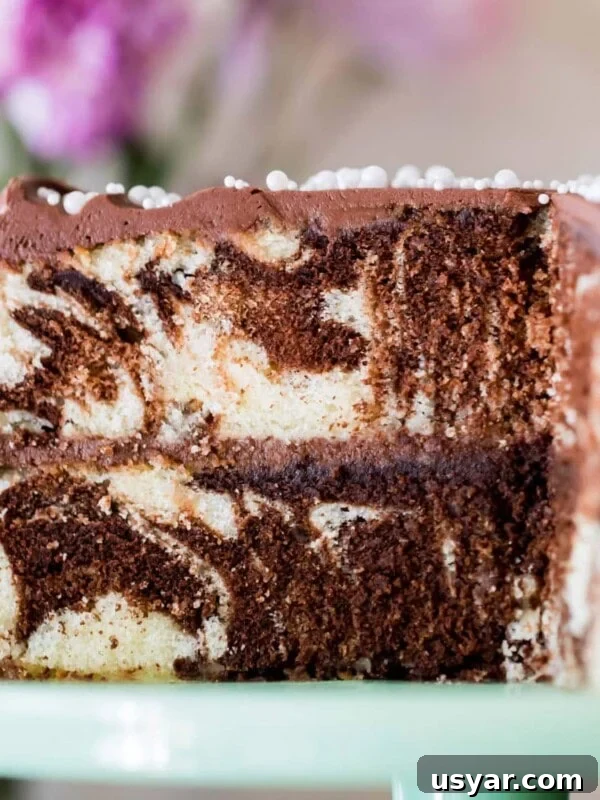
Marble Cake
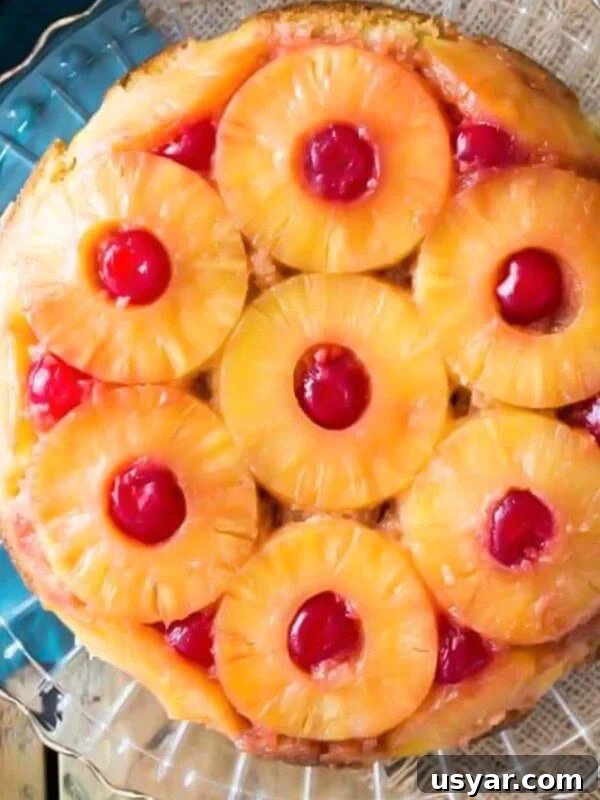
Pineapple Upside Down Cake
Originally published April 2016. Recipe refinements were made in 2019 and the post updated for clarity in 2024.