If you plan to buy beef directly from a local farmer, you’ll want to know how many pounds come in a quarter of beef so you can plan freezer space. Purchasing a whole, half, or quarter from a farmer is an excellent way to save money, stock up, and enjoy higher-quality beef than what you typically find at the grocery store.
We’ve bought half to whole beef from local producers for several years and have been consistently impressed by the flavor and value. The first time we ordered directly, my main concern was simply, “How much meat will I actually get?” I had one deep freezer and needed to know whether it would be large enough.
Whole Beef
Farmers typically send cattle to the processor when the live weight of the animal is around 1,400–1,600 pounds. That translates to roughly 700–800 pounds live weight for a half beef and about 350–400 pounds for a quarter at live weight. However, live weight is not the same as the amount of packaged meat you’ll take home.
After slaughter, the head, hide, organs, and other parts are removed, which reduces the weight considerably. You can request specific organs or parts (heart, liver, tongue) if you want them retained. The average hanging or carcass weight of a finished animal is often near 800 pounds, but this varies. The hanging weight and final price will depend on the animal’s live weight and the farmer’s pricing.
The beef carcass is usually aged or hung for a week or two to improve tenderness and flavor; this also causes a small moisture loss, typically around 5%. During final butchering, bones and excess fat are trimmed according to your instructions. If you want bones for dog treats or marrow, tell your butcher so they can set them aside.
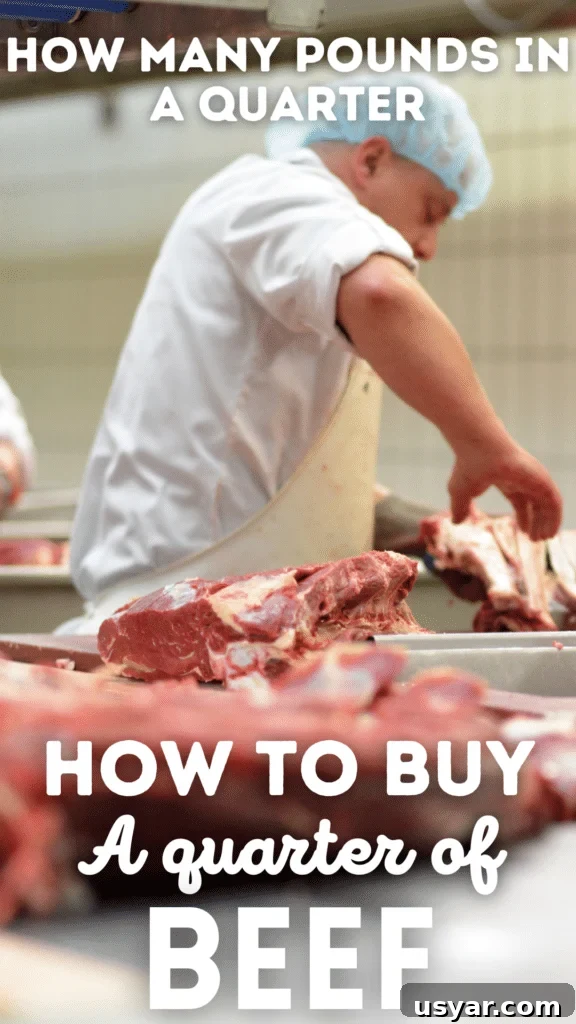
Personal cutting preferences—such as trimming exterior fat for leaner roasts and steaks—will reduce the final take-home weight. We choose farmers who prioritize natural practices, avoiding unnecessary hormones and antibiotics, which improves meat quality and gives us confidence in what we’re eating.
How Many Pounds in a Quarter of Beef
A quarter beef (one quarter of a processed steer) typically yields about 120–170 pounds of wrapped, ready-to-freeze beef; a commonly quoted average is around 150 pounds. The exact number depends on the animal’s size, how much external fat is trimmed, and how the butcher portions steaks, roasts, and ground beef.
Pounds in a Side of Beef (Half Beef)
When you order a half cow, expect roughly 250–350 pounds of packaged beef to go into your freezer, with 300 pounds being a reasonable average. Again, the final total depends on trimming choices and how the butcher divides cuts.
Pounds Of Meat In A Whole Cow
A whole cow processed for home use will generally produce about 500–700 pounds of packaged meat, with around 600 pounds often cited as an average. Buying whole maximizes your selection of cuts and can offer the best cost per pound if you have the freezer space.
Freezer Space for Pounds in a Quarter of Beef
How much freezer space will you need? A good rule of thumb is 1 cubic foot of freezer space for every 30–35 pounds of meat. Using that guideline, a quarter beef will usually require roughly 4–6 cubic feet of freezer space, depending on how the meat is packaged and whether bone-in cuts are included.
For perspective, when we bought three-quarters of a cow, I filled a large upright freezer and about half of a small chest freezer. A single quarter would generally take up about half of a large upright freezer, depending on packaging choices.
Why Buy Beef From The Farmer?
There are several good reasons to buy directly from a local farmer.
Quality
Local farmers who care for their herds and manage feed sources often produce beef with better flavor and marbling than many supermarket options. You can typically see or ask about the feed and finishing practices used, which helps you choose the style of beef you prefer—whether grass-finished, grain-finished, or a combination.
Ethics
Buying locally gives you insight into how animals are raised. Many small-scale producers raise cattle on pasture with better living conditions than industrial systems. Knowing the farm and its practices provides transparency and peace of mind.
Value
Purchasing a quarter, half, or whole can be more economical on a per-pound basis, especially when you consider the premium cuts you receive—filet mignon, ribeye, strip steaks, porterhouse, prime rib, brisket, roasts, short ribs, and plenty of ground beef. You get a variety of high-quality cuts for a price that often matches or beats supermarket ground beef per pound.
Choosing A Butcher & Cutting Instructions
Talk with your butcher before processing so you understand their handling, packaging, and aging practices. Ask how they wrap meat—airtight, double-wrapped packages will resist freezer burn and keep well for up to two years. Avoid butcher paper if you want longer shelf life.
Be specific about your preferences: package sizes for ground beef, roast weights, steak thickness, whether to leave fat on for tallow, and any bones or organs you want saved. Clear instructions ensure you get the cuts you need for your household.
You May Also Enjoy These Beef Recipes
Here are some recipe ideas you may like: How to cook a 1.5-inch steak; Fall Apart Sirloin Tip Roast; Tender Rump Roast Recipe; Old Fashioned Beef Stew; Smoked Beef Brisket.
My Local Farmer – Where I Buy Beef
Y-1 Farms Beef
5112 Maag Rd.
Vale, OR 97918
Call 541-216-0121
What do You Think?
Have you ever bought beef directly from a farmer? What was your experience like and which cuts are your favorites? Do you have tips for storing or cooking larger quantities of meat? Share your thoughts in the comments.