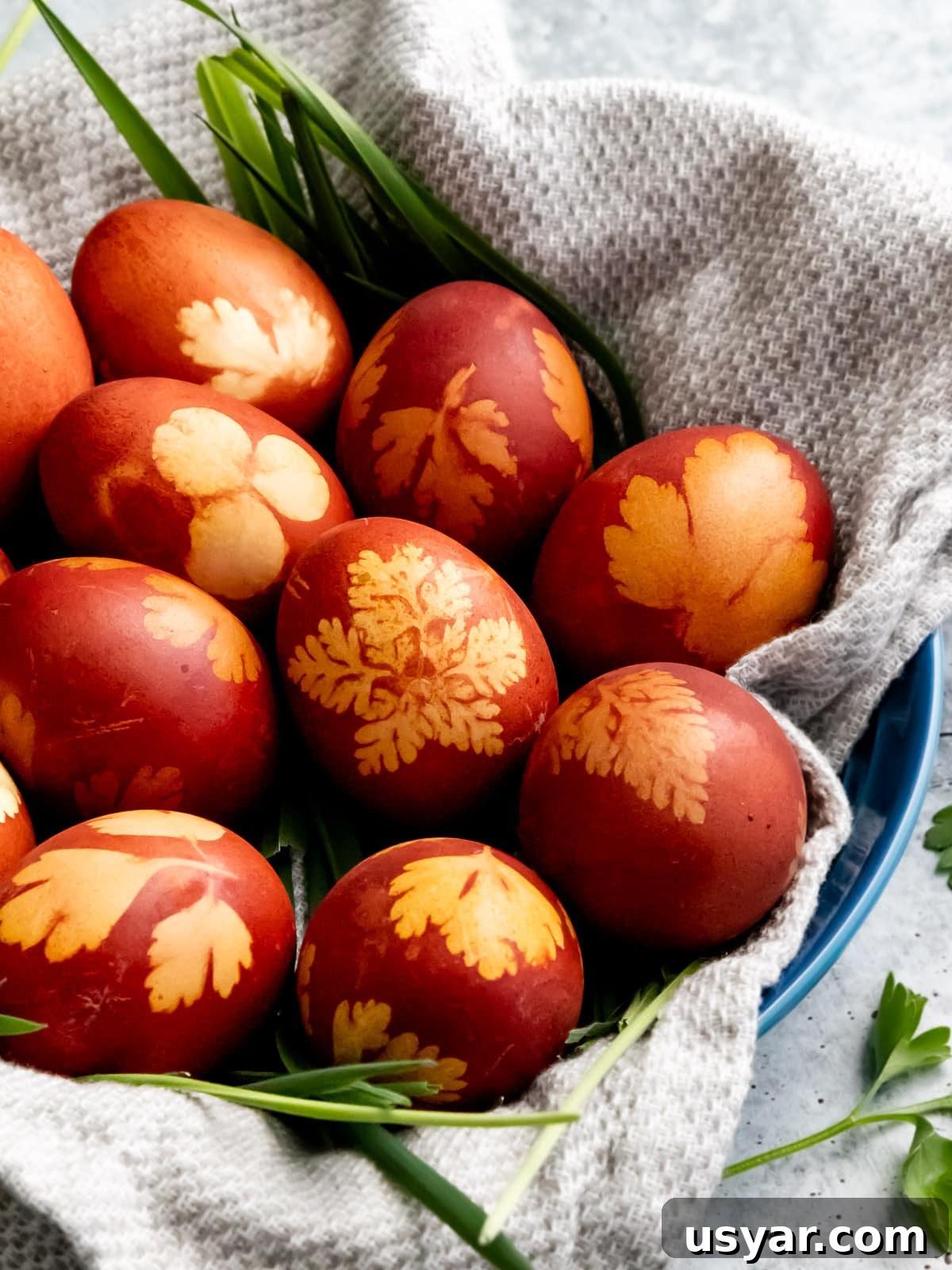
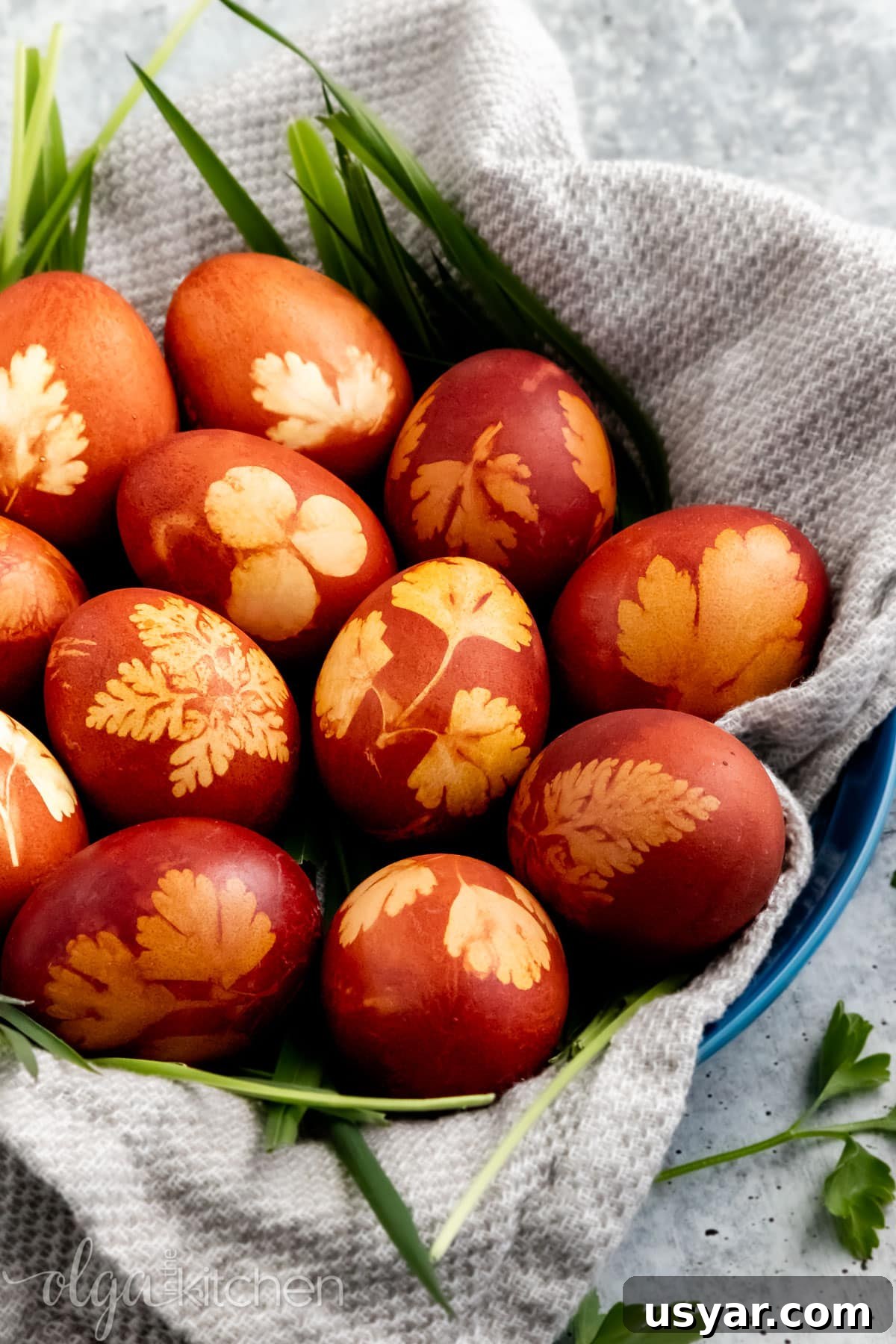
An easy guide to creating rustic, naturally dyed Easter eggs using onion skins and fresh herbs. This Ukrainian tradition is still practiced by many families and makes a creative, meaningful activity to share the evening before Easter.
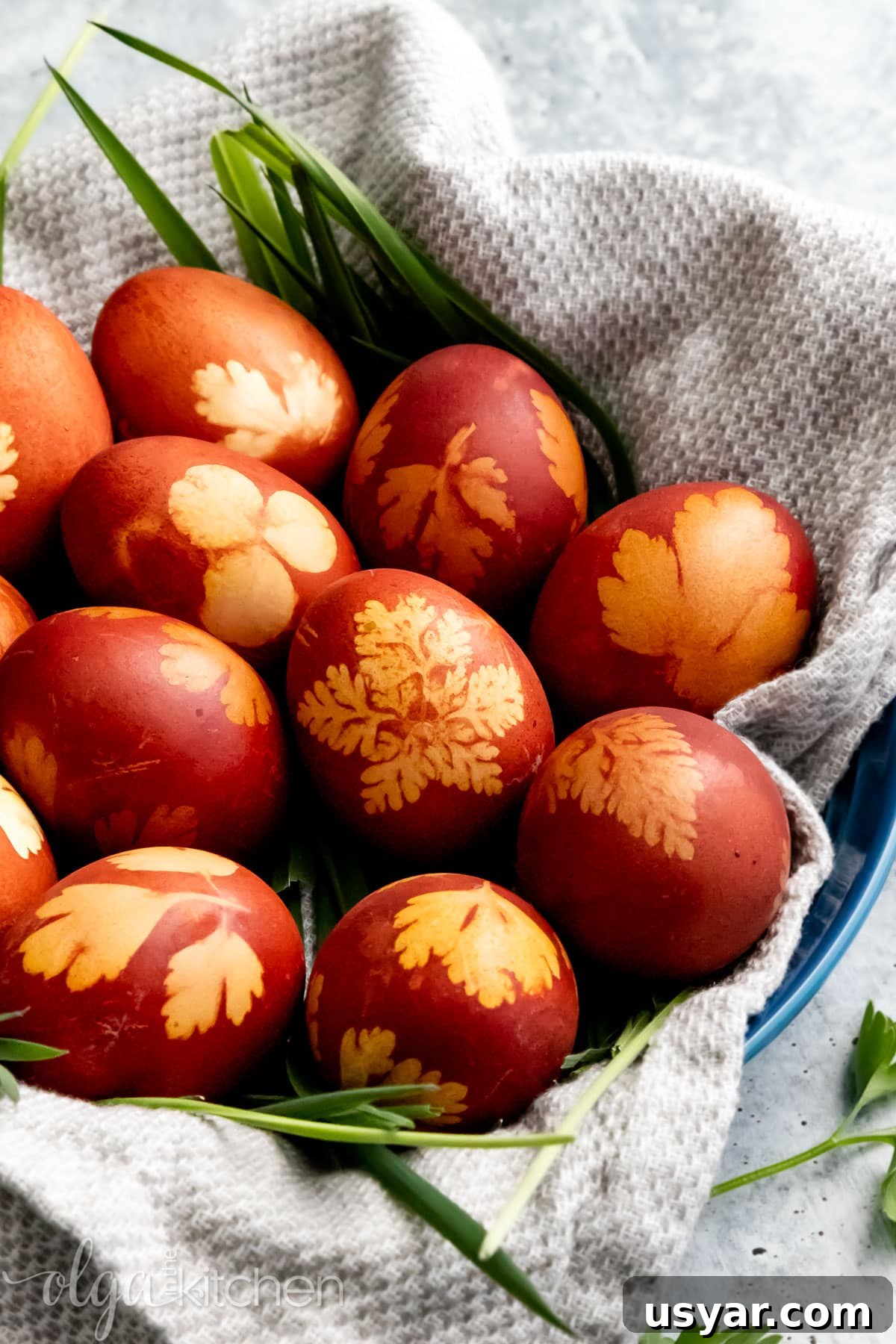
At Easter we greet one another with “Christ is Risen!” and reply, “He is Truly Risen.” For many families the holiday is centered on faith, food and cherished rituals—one of the most beloved being naturally dyed eggs.
Eggs feature prominently in classic Easter dishes such as Mimosa Salad, Farmers Cheese Crepes and Olivye Salad, and dyeing eggs by hand adds a personal touch to the holiday table. There are many natural dye options—turmeric, beets, coffee and red cabbage—but the traditional and most reliable choice is onion skins.
Natural Easter Eggs
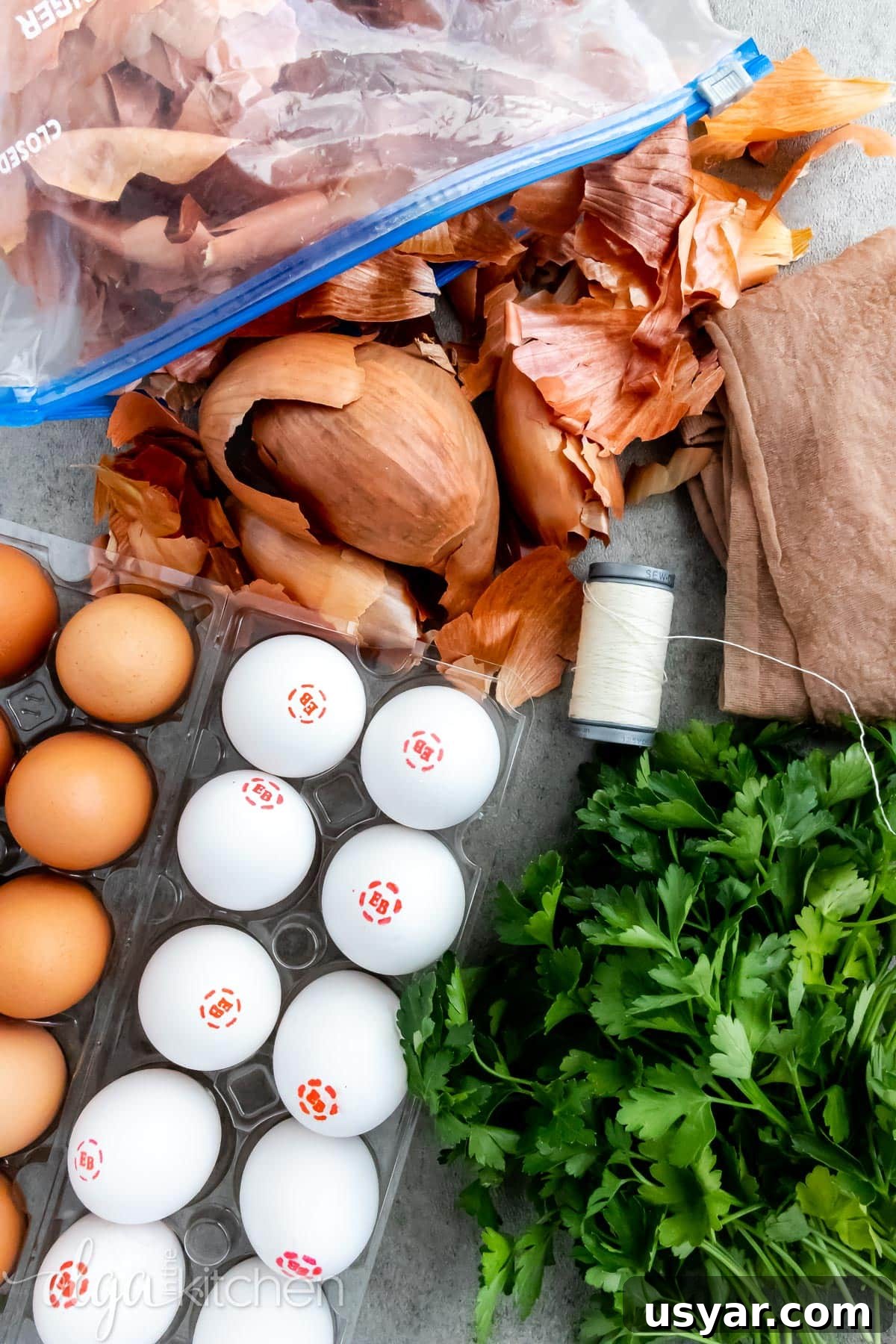
Dyeing eggs with onion peels is inexpensive, easy and safe: the color bonds to the shell and doesn’t tint the yolk, so you can eat the eggs afterwards. This method produces a warm, rustic palette and makes beautiful leaf-patterned eggs when paired with fresh herbs and a stocking to hold them in place.
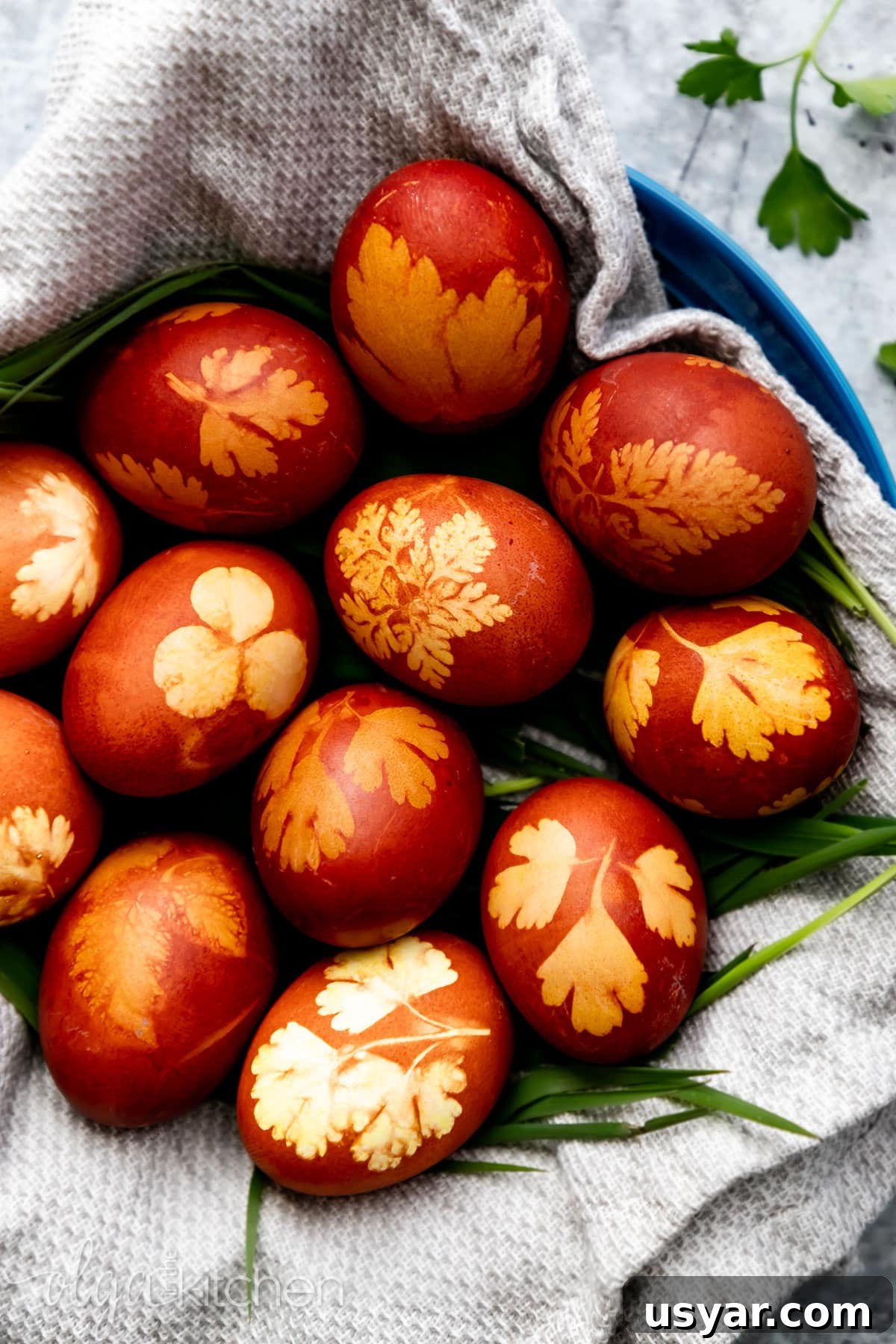
What You’ll Need to Dye Easter Eggs Naturally
- Onion peels — a mix of red and yellow onion skins or just yellow skins will work.
- Water — cold water to make the dye bath.
- Eggs — white eggs show leaf patterns best; brown eggs give a deeper rustic color.
- Nylon stockings — one pair will cover a dozen eggs; clean or torn nylons are fine if washed without perfumed detergent.
- Thread — to tie the stocking around each egg.
- Fresh herbs — parsley or cilantro work particularly well; mint and other tender greens can also be used.
Four Helpful Tips
- Use a stainless steel pot. Older stainless pots are easier to clean after strong onion dyes. Baking soda helps remove stains.
- Bring eggs to room temperature. Cold eggs placed in boiling water may crack. Wipe them clean so no dirt interferes with the herb prints.
- Choose soft herbs. Parsley and cilantro lie flat against the shell and create clear leaf impressions. Stiffer leaves can allow water beneath them and blur the print.
- For a shiny finish. After drying, rub a little vegetable oil on the shell with a paper towel to enhance the sheen.
Homemade Natural Dye Bath
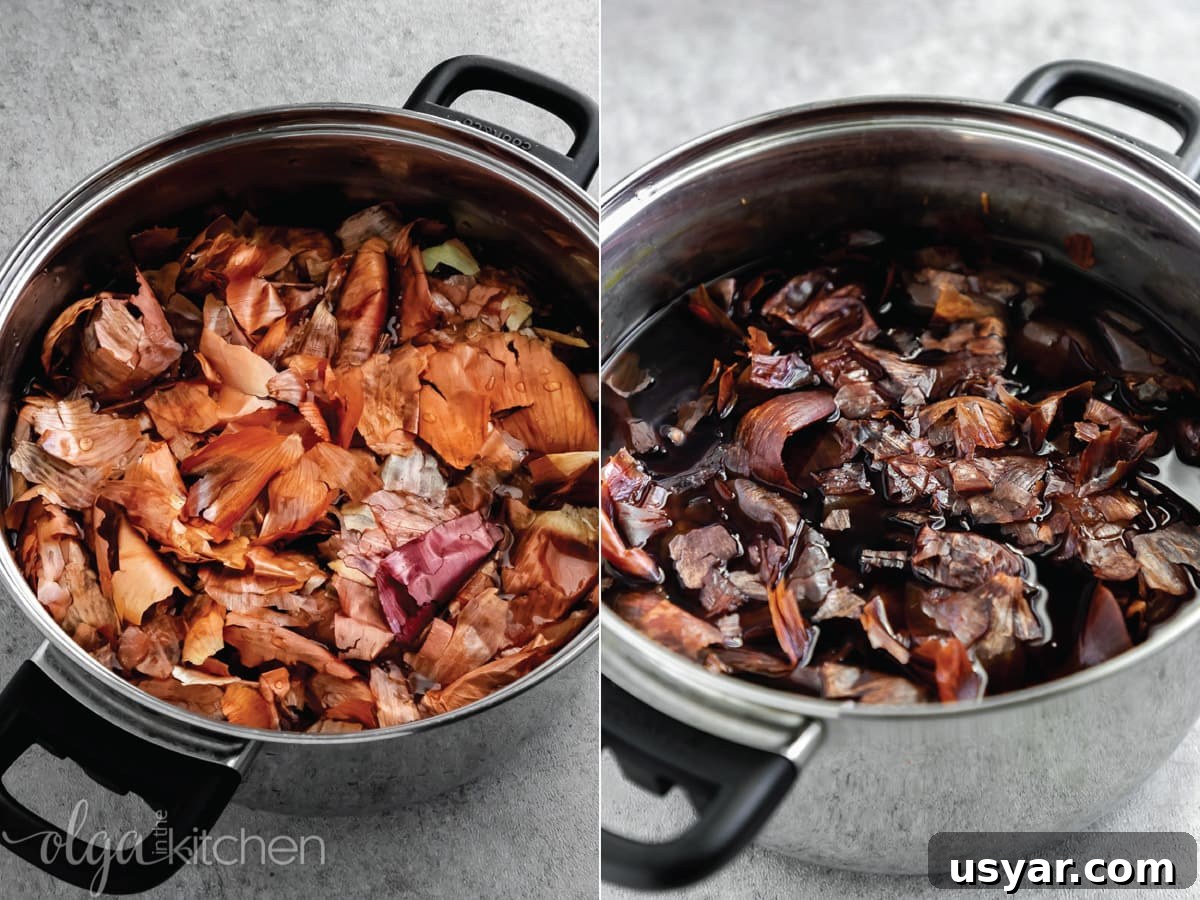
- Fill a medium pot with onion peels and enough cold water to cover them. Press the peels down so they’re submerged.
- Bring to a boil, then reduce heat to low and simmer, covered, for 10–15 minutes.
- Remove from heat and let the peels steep in the water overnight or up to 24 hours to extract maximum color.
How to Dye Easter Eggs Naturally
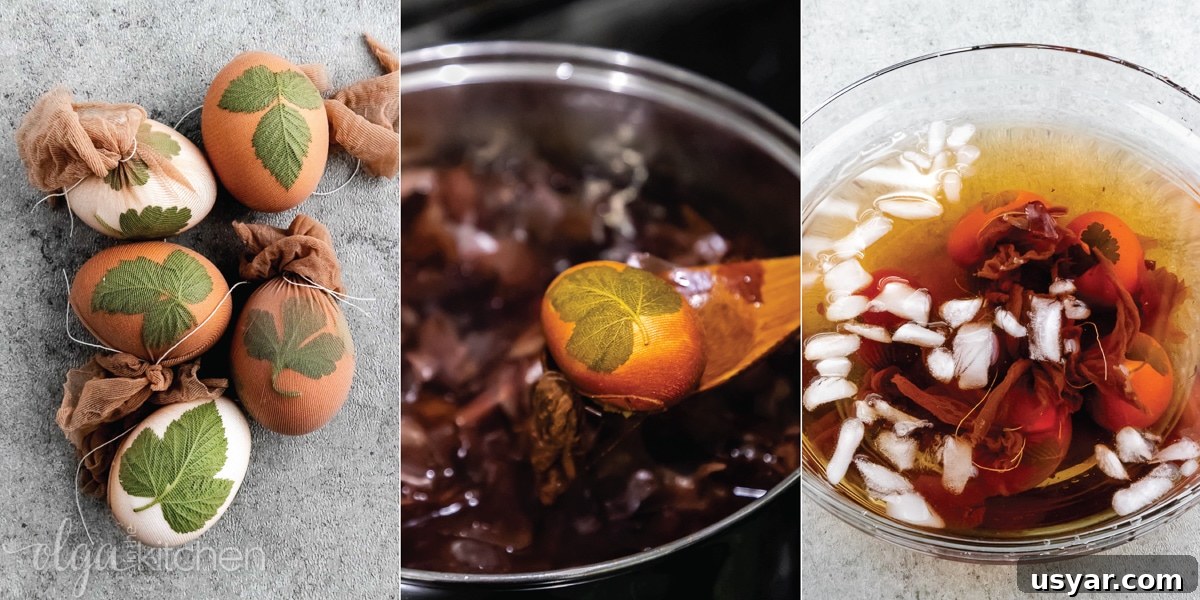
- Reheat the dye. Bring the onion-skin bath back to a simmer over medium heat.
- Prepare the eggs. Arrange a small sprig or leaf on the egg. Cover it tightly with a piece of stocking, hold the herbs flat, then wrap the stocking snugly and tie it with thread to secure the herbs in place.
- Cook the eggs. Lower 6–7 eggs at a time into the pot so they are fully submerged. Allow the water to return to a gentle boil, then simmer for 7–8 minutes for a soft center or 9–10 minutes for fully hard-boiled eggs. Color intensity depends on dye concentration, peel color and cooking time.
- Cool and finish. Transfer eggs to an ice water bath for 10–15 minutes. Remove the stockings and rinse away herb bits. Pat the eggs dry and store them refrigerated until serving.
Ukrainian Easter Egg Tradition
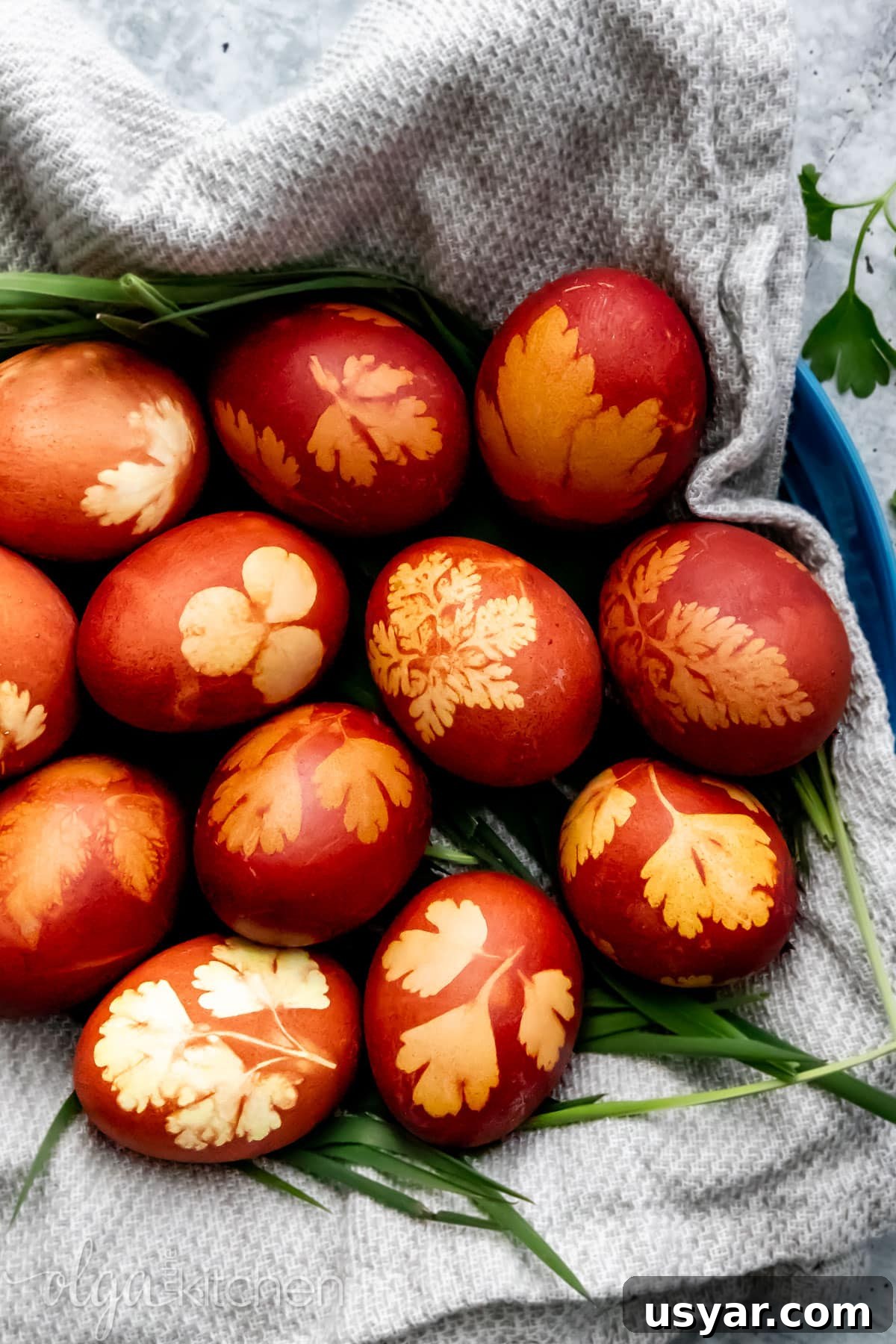
These dyed eggs are commonly used in a traditional cracking game: two people tap their eggs together, each trying to crack the other’s while keeping their own intact. The winner is the one whose egg remains unbroken. It’s a spirited, simple pastime that families enjoy after the Easter meal.
Eating the Eggs
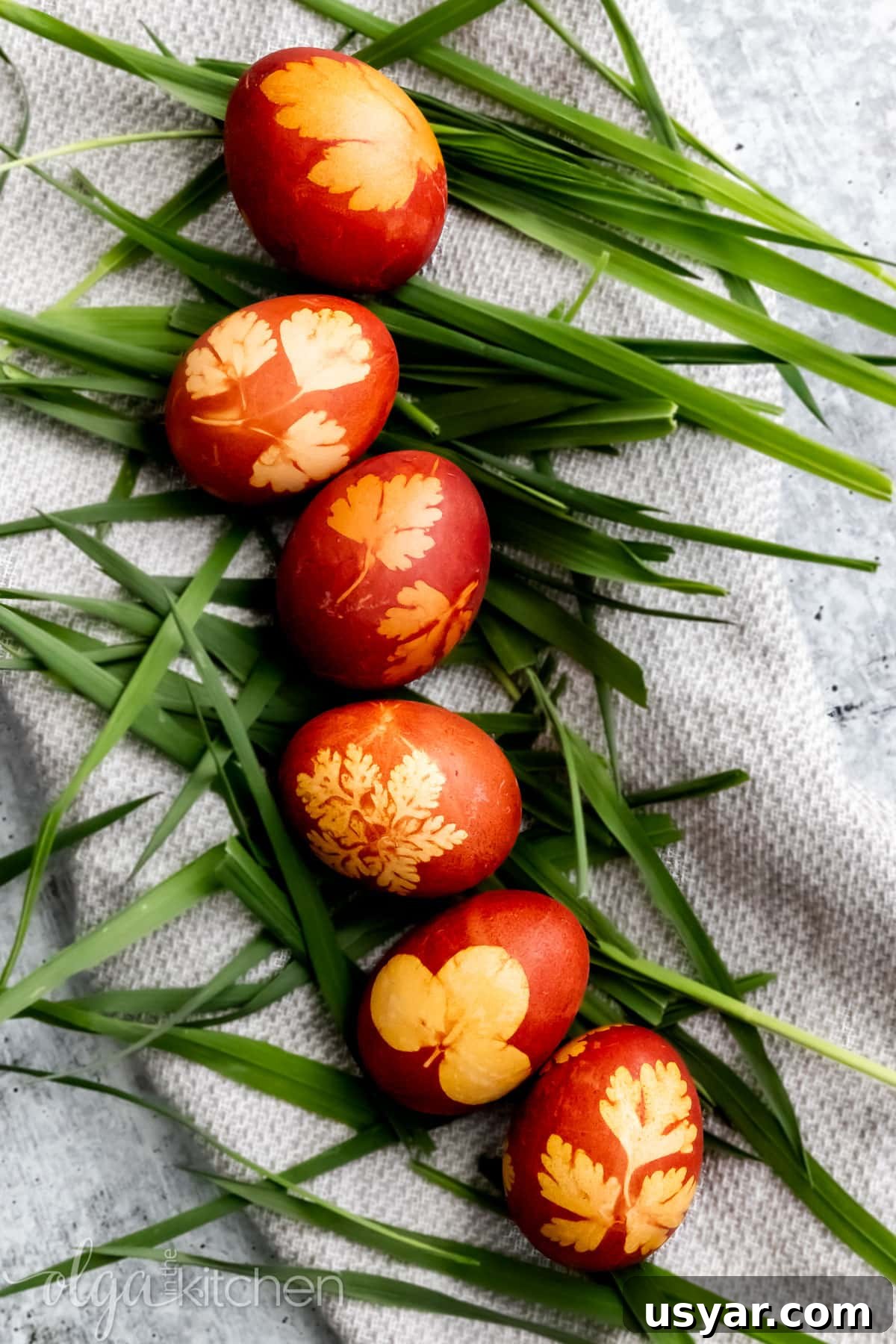
These eggs are meant to be eaten. A favorite way to serve them is halved, topped with a little mayonnaise and a sprinkle of salt and pepper. They also make a beautiful addition to salads and sandwiches.
Health Benefits of Eggs
Eggs are an affordable source of high-quality protein and essential nutrients. They contain no carbohydrates or sugar and are filling, making them a versatile and nutritious ingredient for many dishes.
Make-Ahead
Because these eggs are usually dyed the day or night before Easter, they make a convenient make-ahead item. You can dye them up to two days ahead if needed. Keep the finished eggs refrigerated until serving.
More Easter Recipe Ideas
- Sweet Cheese Filled Buns
- Salmon Avocado Canapés
- Green Cabbage and Cucumber Salad
- Classic Mashed Potatoes
- Mini Pavlovas with fresh berries
- Baked Chicken Tenderloins
What is your favorite Easter tradition? Which Easter recipes are popular where you live? Share your thoughts and traditions.
Natural Easter Eggs — Recipe
Servings: 12 eggs • Prep: 30 minutes • Cook: 10 minutes • Total: 40 minutes
Ingredients
- 1 gallon plastic bag of onion peels
- Cold water
- 1 pair of nylon stockings (or equivalent pieces)
- Thread to tie stockings
- Fresh parsley, cilantro or other tender greens
- 12 large white eggs (or brown for deeper color)
Instructions
- Make the dye: Place onion peels in a medium pot, cover with cold water, press down and bring to a boil. Simmer 10–15 minutes, then remove from heat and steep overnight or up to 24 hours.
- Reheat the dye to a simmer. Arrange herbs on each egg, cover and secure with stocking and thread so the herbs lie flat.
- Gently lower 6–7 eggs at a time into the simmering dye. When the water returns to a boil, cook 7–8 minutes for a soft center or 9–10 minutes for fully hard-boiled eggs.
- Transfer eggs to an ice bath until cooled. Remove stockings, rinse off herbs, dry and refrigerate until serving.