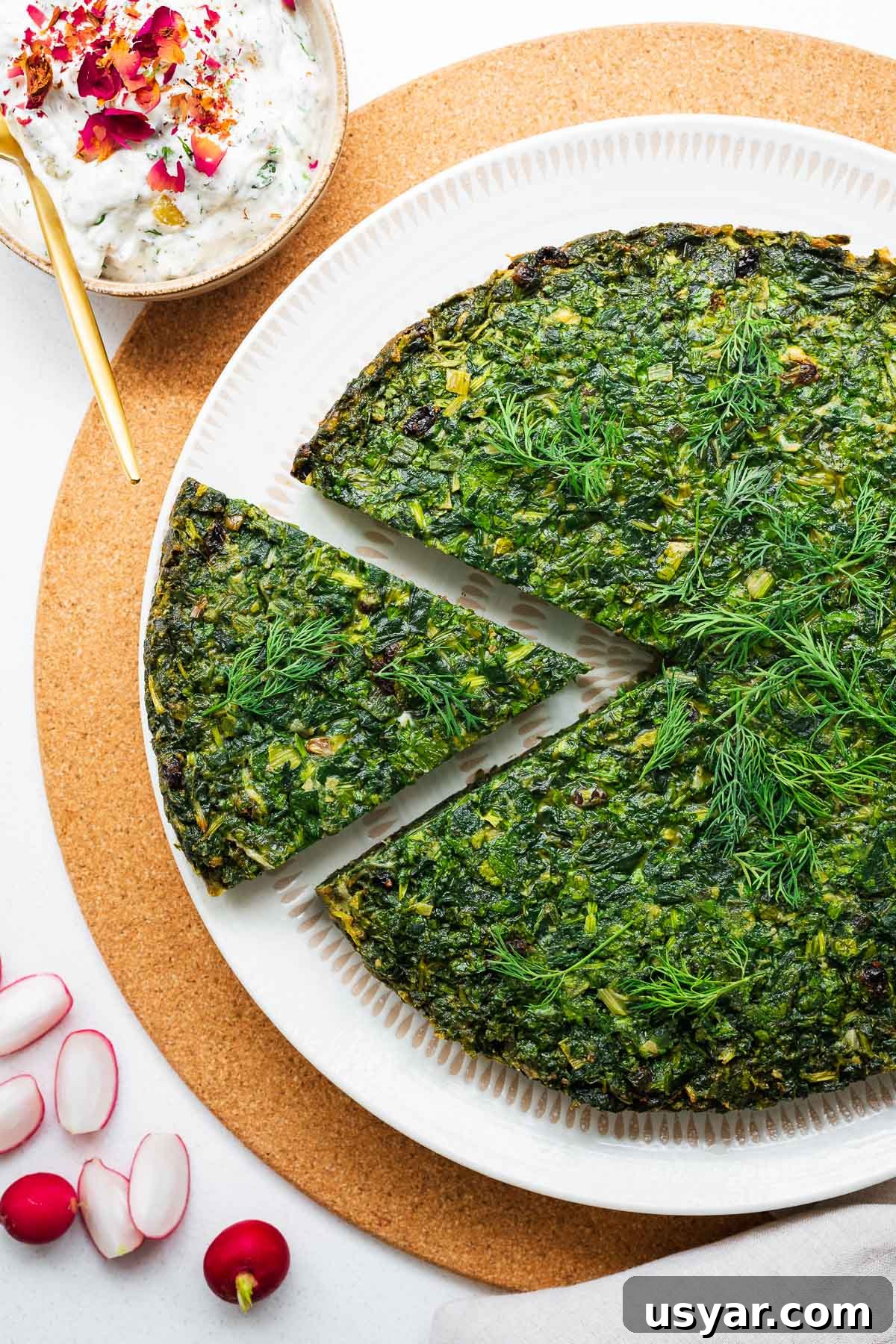
Kuku sabzi is a fragrant and deeply flavorful Persian herb frittata made with a generous amount of fresh herbs, greens, and just enough eggs to bring everything together. Unlike a typical egg-heavy frittata, this classic Persian dish is all about the greens. Every slice is vibrant, savory, and packed with the freshness of parsley, cilantro, dill, leek, and chard or spinach.
The secret to the best kuku sabzi is the ratio of greens to eggs. At first, the amount of herbs may look excessive, but that is exactly what gives kuku sabzi its signature texture and flavor. A beautifully browned, caramelized crust on the bottom adds contrast to the tender, custardy center.
This Persian kuku sabzi recipe is perfect for breakfast, brunch, lunch, or a light dinner. It can be served warm, at room temperature, or cold, which makes it ideal for picnics, potlucks, and make-ahead meals.
With a few simple tips, this baked kuku sabzi is easy to prepare and does not require the traditional pan flip. Gather your fresh herbs, greens, and eggs, and make a stunning Persian herb frittata that tastes as good as it looks.
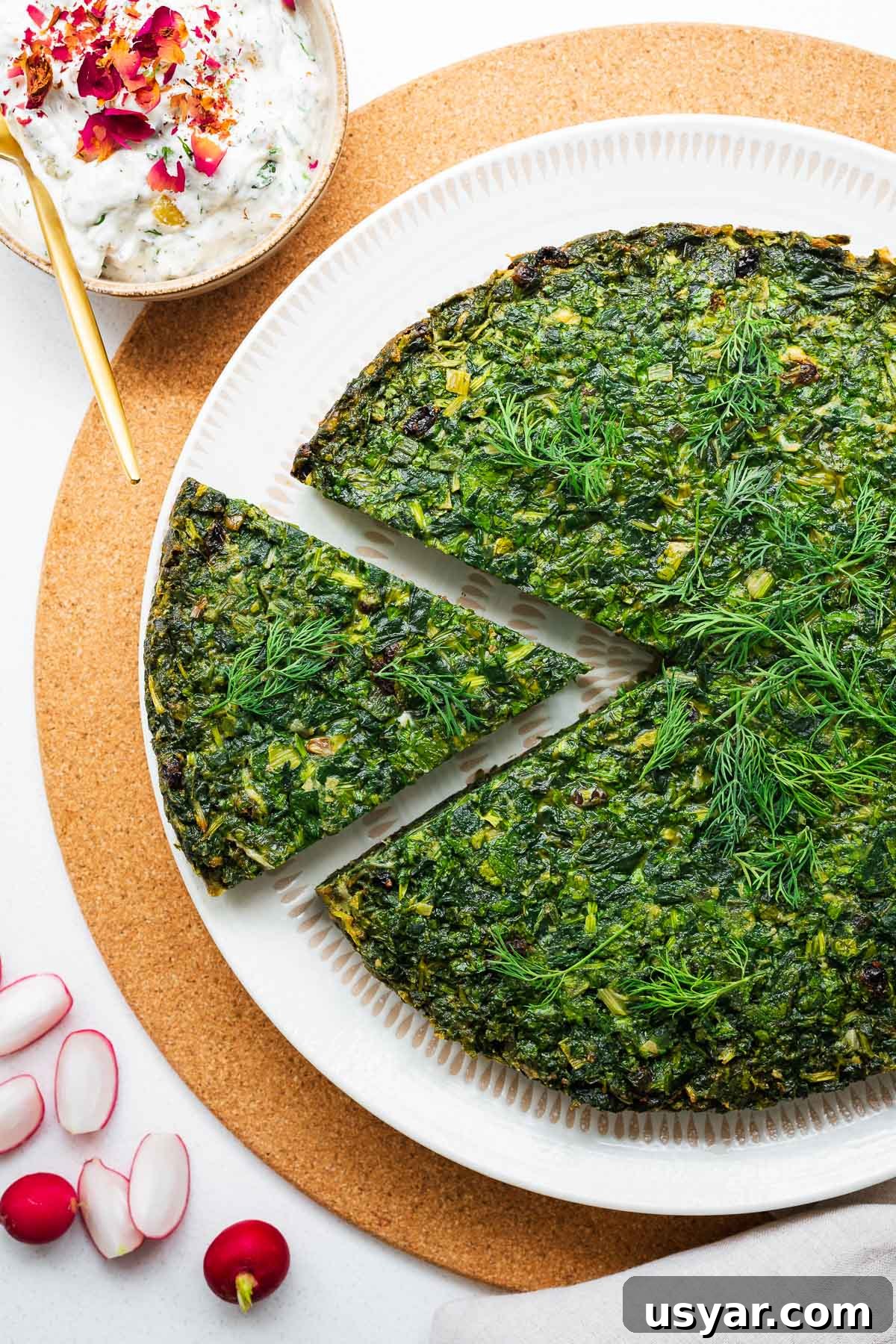
Table of Contents
- Why you’ll love this recipe
- What is kuku sabzi?
- Ingredients and substitutes
- How to make kuku sabzi
- Tips for perfect kuku
- Serving suggestions
- Frequently asked questions
- Kuku sabzi recipe card
Why you’ll love this recipe
This Persian frittata is fresh, herbaceous, and satisfying without feeling heavy. Tart barberries, or dried cranberries if you prefer, add a bright pop of acidity that balances the richness of the eggs and butter.
Here is why this kuku sabzi recipe is worth making:
- It is full of flavor: Fresh herbs, tender greens, sweet leeks, and rich eggs create a savory dish with layers of taste and texture.
- It is easier than traditional kuku: This baked version avoids the intimidating flip while still giving you a delicious golden crust.
- It is make-ahead friendly: The herbs and greens can be washed, chopped, and prepared a day in advance, making the final cooking simple.
- It is versatile: Serve kuku sabzi for brunch, pack it for lunch, or enjoy it as part of a larger Middle Eastern-style meal with yogurt, flatbread, salad, and pickles.
- It looks impressive: The bright green top and browned base make this Persian herb frittata a beautiful centerpiece for the table.
What is kuku sabzi?
Kuku sabzi, also spelled kookoo sabzi, is a traditional Persian herb frittata. It is often served as part of celebratory meals, including Persian New Year gatherings.
The dish is made primarily with finely chopped fresh herbs, tender greens, and whole eggs. Unlike many Western frittatas, kuku sabzi uses eggs as a binder rather than the main ingredient. The greens should dominate the mixture, giving the finished dish its intense green color and fresh flavor.
Optional ingredients such as barberries, walnuts, spinach, or turmeric can add extra flavor, color, and texture. This version is adapted from Samin Nosrat’s Persian herb and greens frittata in Salt, Fat, Acid, Heat.
Ingredients and substitutes
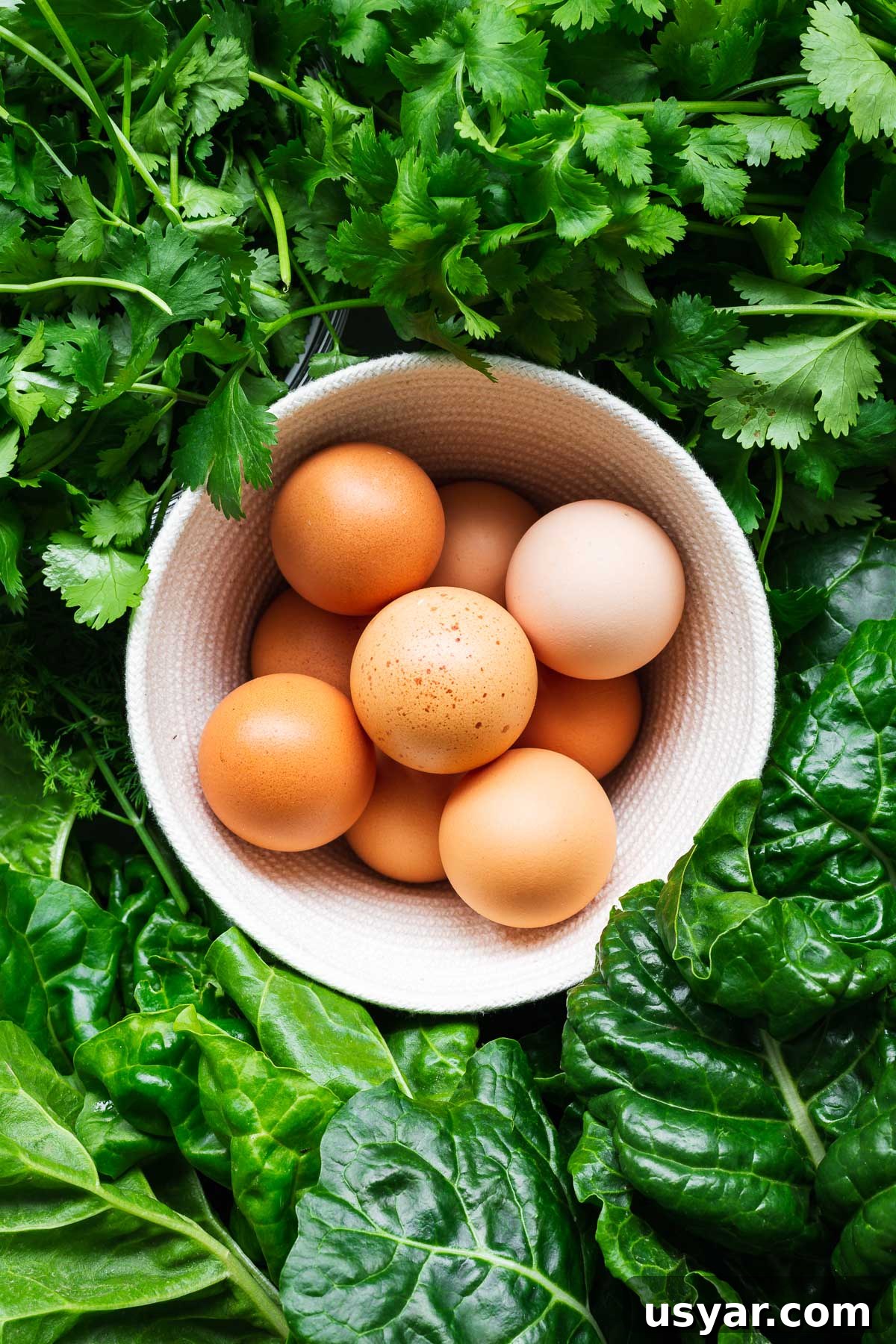
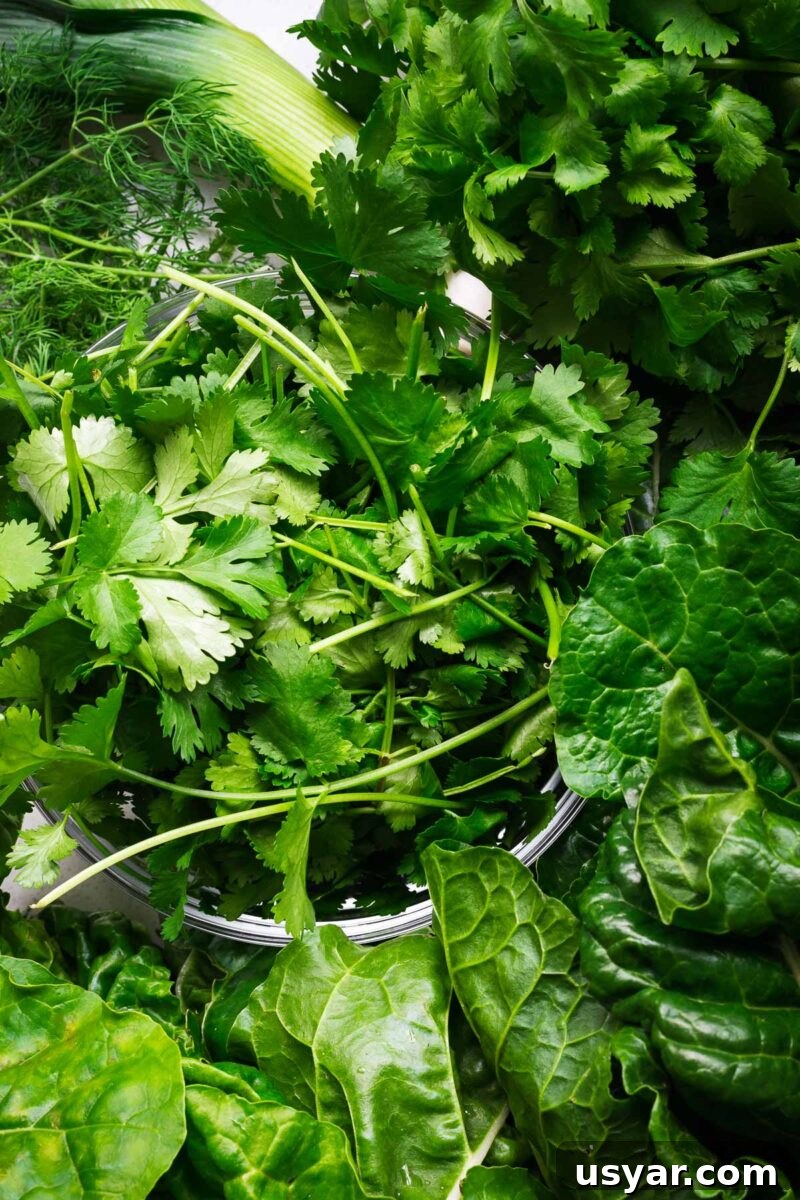
The most important part of making great kuku sabzi is using plenty of greens and herbs. The mixture should look almost overloaded with chopped vegetables, with only enough beaten egg to coat and hold everything together.
- Chard leaves: Swiss chard gives the kuku a deep green color and a tender texture. Spinach also works well. You can use frozen spinach if it is fully thawed, squeezed dry, and brought to room temperature before mixing.
- Leek: Leeks add gentle sweetness and depth. You can substitute a small onion, shallots, scallions, or green onions. If using scallions, they can be added raw to save time.
- Fresh herbs: A mix of parsley, cilantro, and dill creates the classic fresh flavor. Adjust the proportions according to what you like or what is available. Chives can also be added.
- Dried dill: This boosts the dill flavor, but it can be skipped if you do not have it.
- Baking powder: A small amount gives the eggs a little lift. It is optional, but helpful for a lighter texture.
- Fat: Olive oil and butter create a rich, golden crust. For a dairy-free version, omit the butter and use your preferred vegetable oil.
- Eggs: Use enough eggs to coat the greens well. The mixture should not be loose or swimming in egg.
Optional add-ins
This kuku sabzi is excellent without extras, but a few traditional additions can make it even more interesting.
Dried barberries: Barberries are small, tart red berries often used in Middle Eastern cooking. They add a sharp, fruity contrast to the rich eggs and fresh herbs. Dried cranberries can be used instead, although they are sweeter.
Substitute tip: If using dried cranberries, sprinkle them over the kuku mixture once it is in the pan, then gently press them just below the surface. Because they are sweeter than barberries, they can taste bitter if they burn against the hot pan.
Walnuts: Chopped walnuts add crunch and a nutty flavor. You can mix them into the kuku or serve them on the side with Persian cucumber yogurt.
Turmeric: A teaspoon of ground turmeric adds earthiness and a golden tone. If you prefer a bright green kuku with a strong herb flavor, you can leave it out.
How to make kuku sabzi
This traditional Persian egg dish is made with a large amount of chopped herbs, cooked greens, soft leeks, and eggs. It is a wonderful choice for brunch, a light lunch, or a simple vegetarian meal.
The prep can feel like a lot because kuku sabzi requires so many greens. To make the process easier, wash and chop the herbs and blanch the greens the day before. When you are ready to cook, all you need to do is soften the leeks, mix the batter, and bake the kuku.
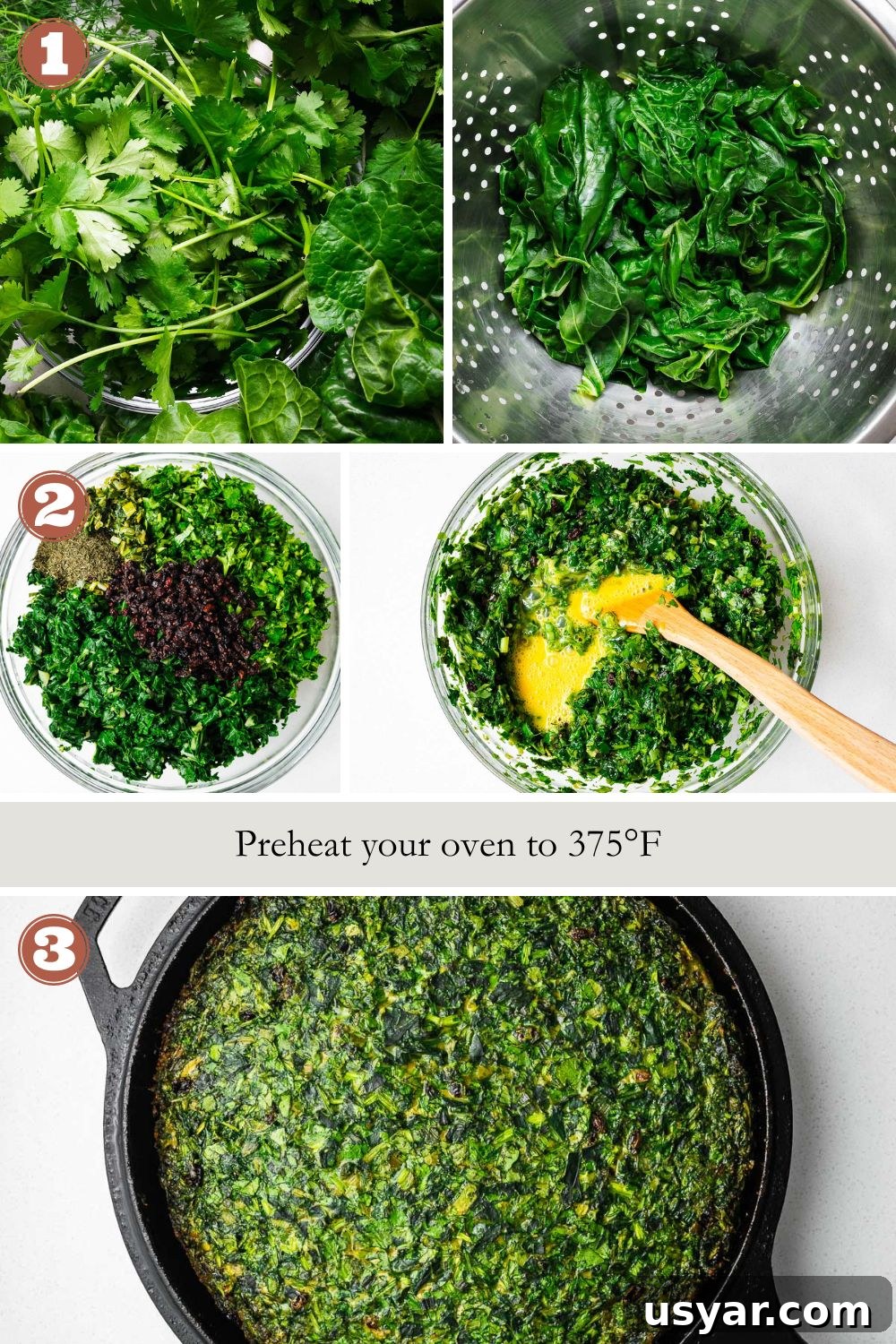
Step 1: Prep the ingredients
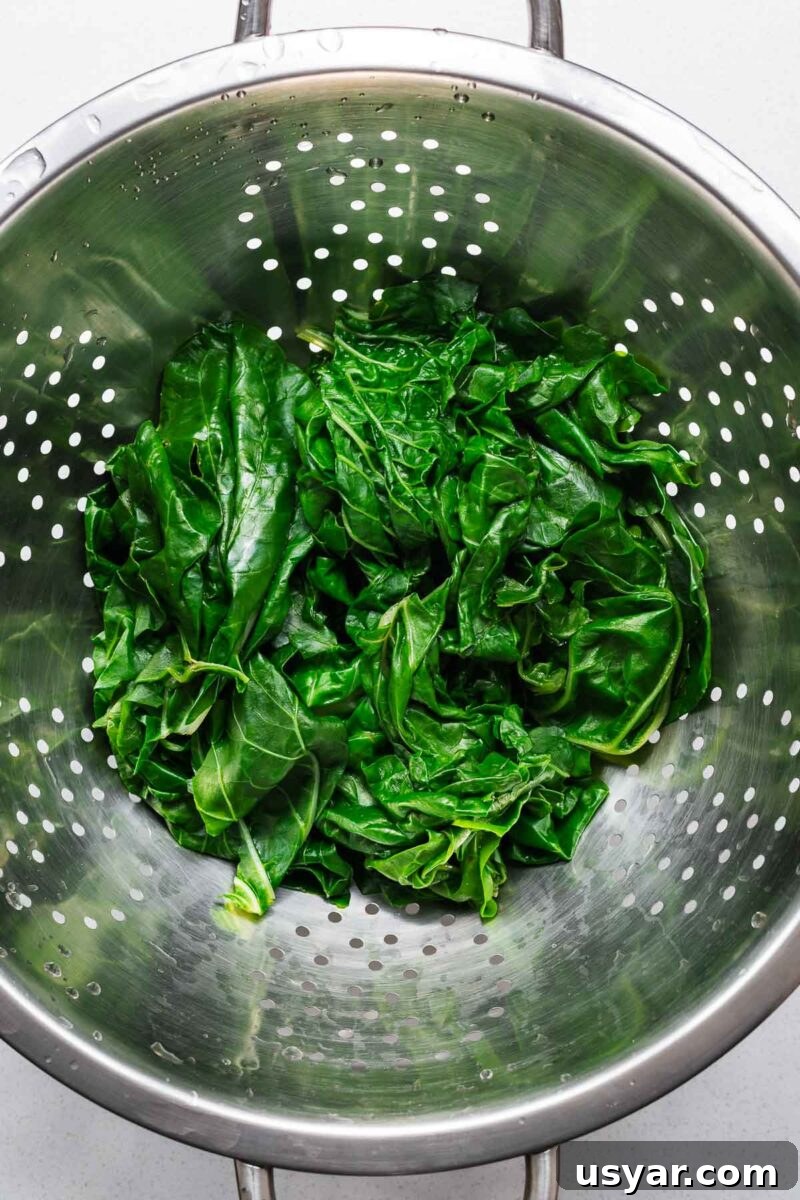
Bring a large pot of salted water to a boil. Add the chard or spinach leaves and cook for 2 minutes. Drain the greens in a colander or mesh strainer, then set them aside until cool enough to handle.
Finely chop the leek, using both the white and green parts, then wash it thoroughly to remove any grit.
Gather the parsley, cilantro, and dill, then chop them very finely. A food processor fitted with an S-blade makes this step much faster, but avoid using a blender.
If using barberries, rinse and dry them. Dried cranberries usually do not need rinsing unless the package says otherwise.
Squeeze the cooked greens very well to remove excess liquid, then chop them coarsely.
Make-ahead tip: The herbs and greens can be prepared one day in advance. Store the chopped herbs and cooked greens in an airtight container, and keep the leeks in a separate container. Let everything come to room temperature before mixing the kuku.
Step 2: Mix the kuku batter
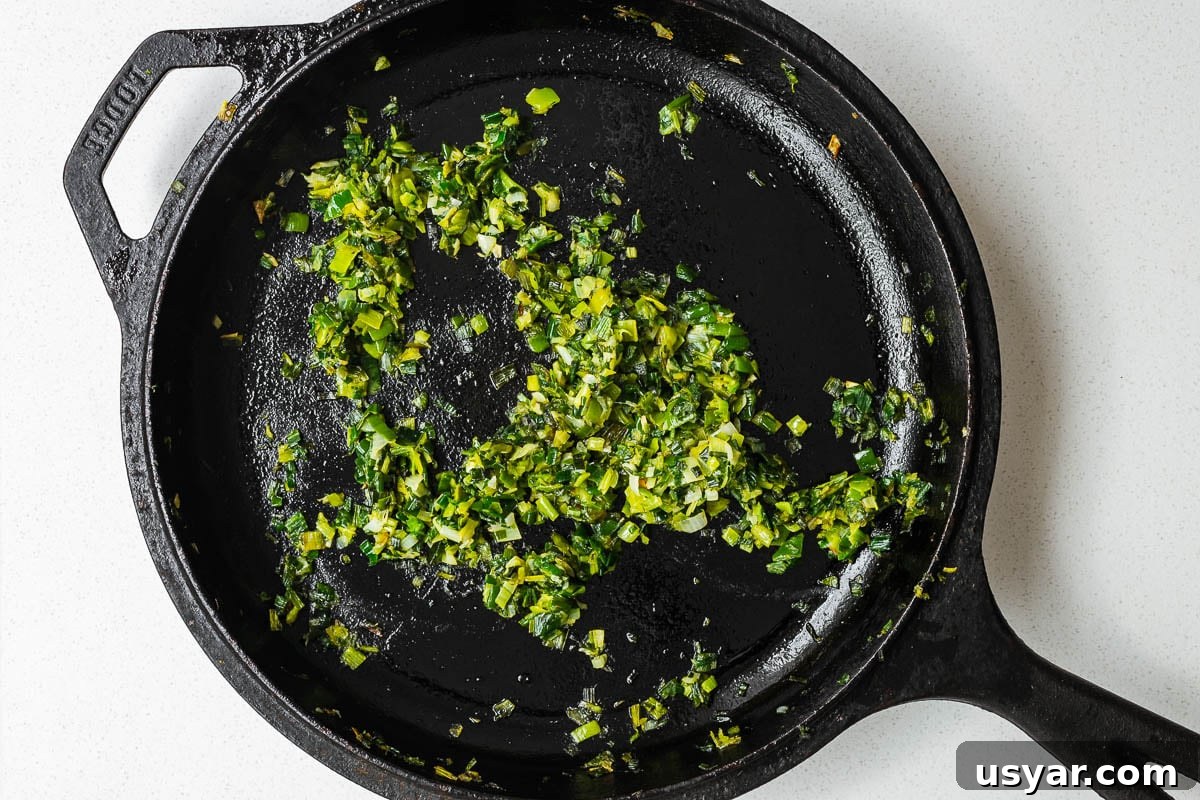
Heat a 10-inch cast iron skillet or oven-safe frying pan over medium heat. Add 1 tablespoon olive oil and 1 tablespoon butter. Once the butter melts, add the leeks with a pinch of salt.
Cook the leeks until soft and translucent, about 10 to 15 minutes. Do not brown them. Lower the heat if needed, and add a splash of water if the pan becomes too dry.
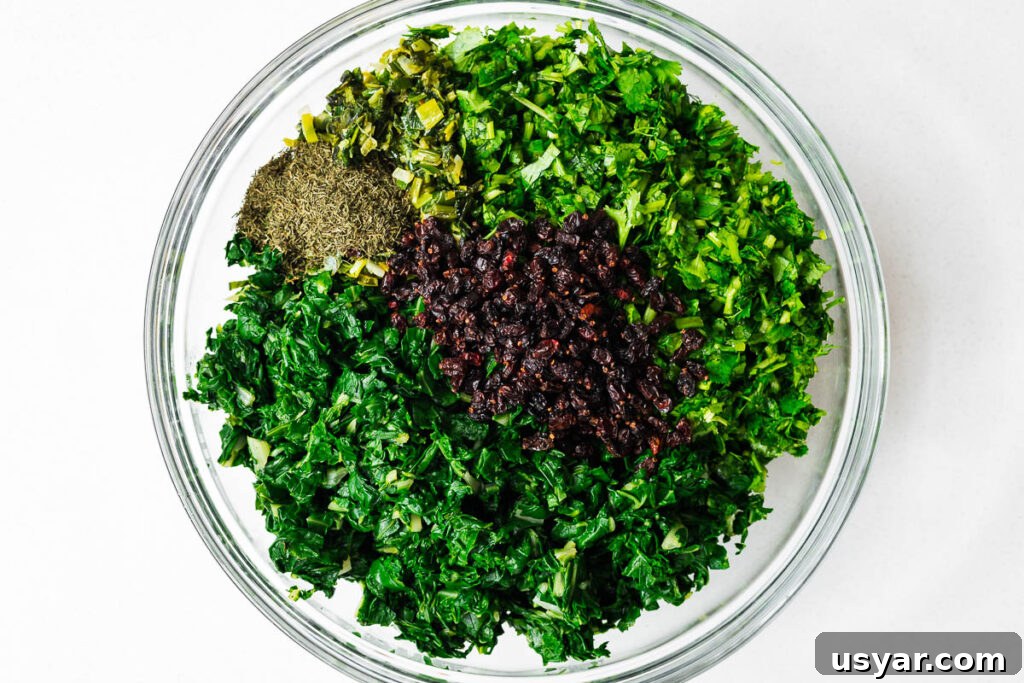
In a large bowl, combine the cooked chard, chopped parsley, cilantro, dill, cooked leeks, barberries if using, and dried dill. Season with salt and plenty of freshly ground black pepper. Taste a tiny pinch of the mixture and adjust the seasoning, remembering that the eggs are still unseasoned. Sprinkle over the baking powder and mix again.
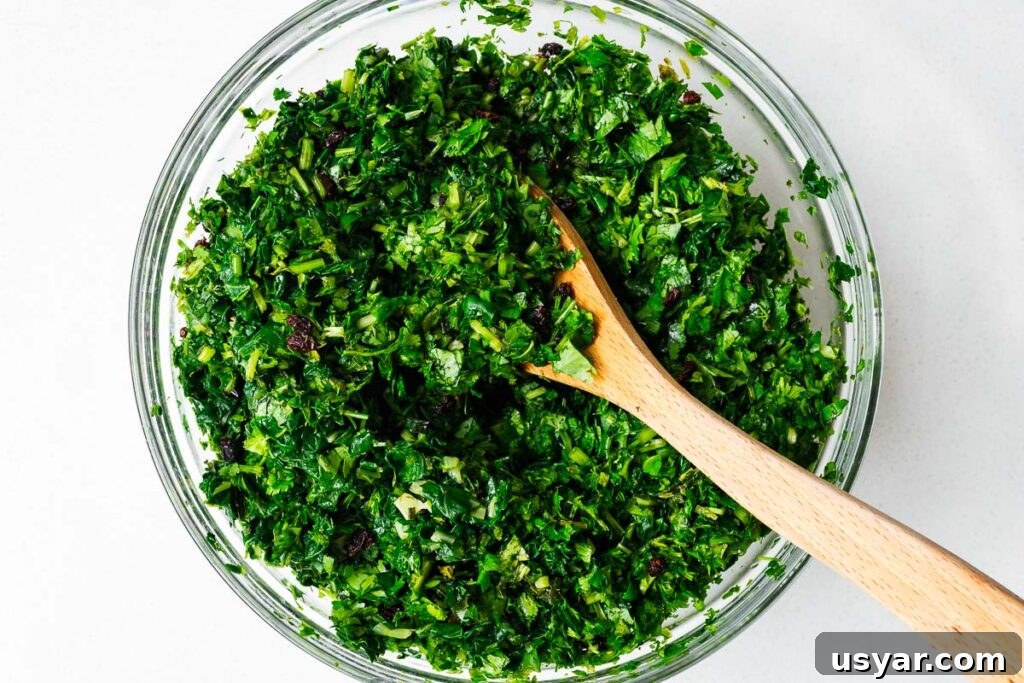
Whisk 6 eggs in a separate bowl and pour them over the herb mixture. Mix thoroughly. Add the final egg only if the mixture looks too dry. The ideal texture is a large amount of greens lightly coated in egg.
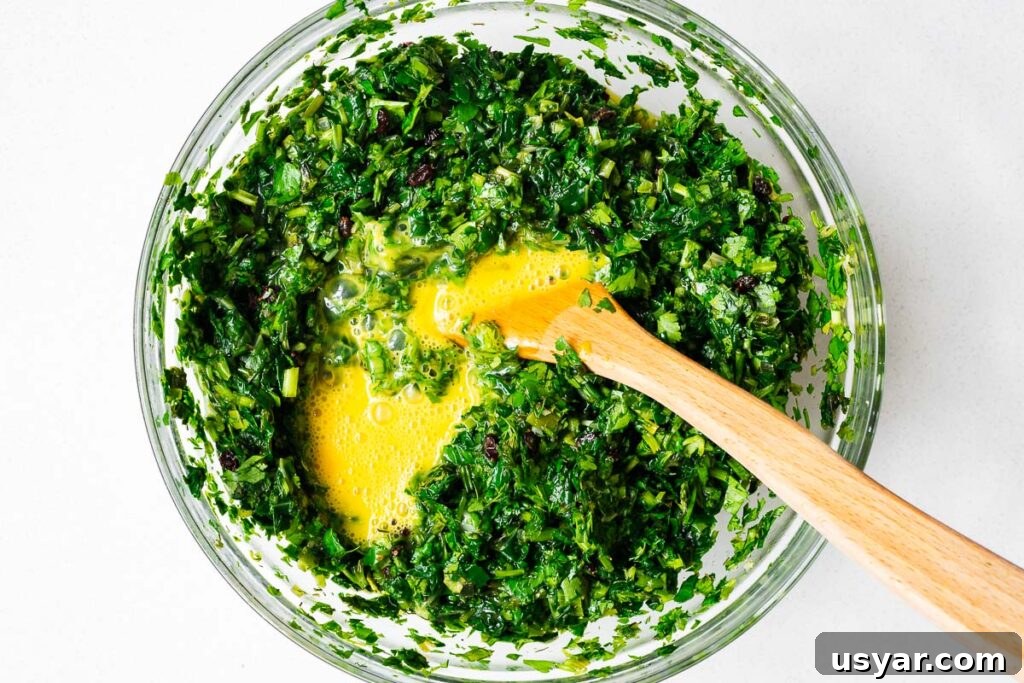
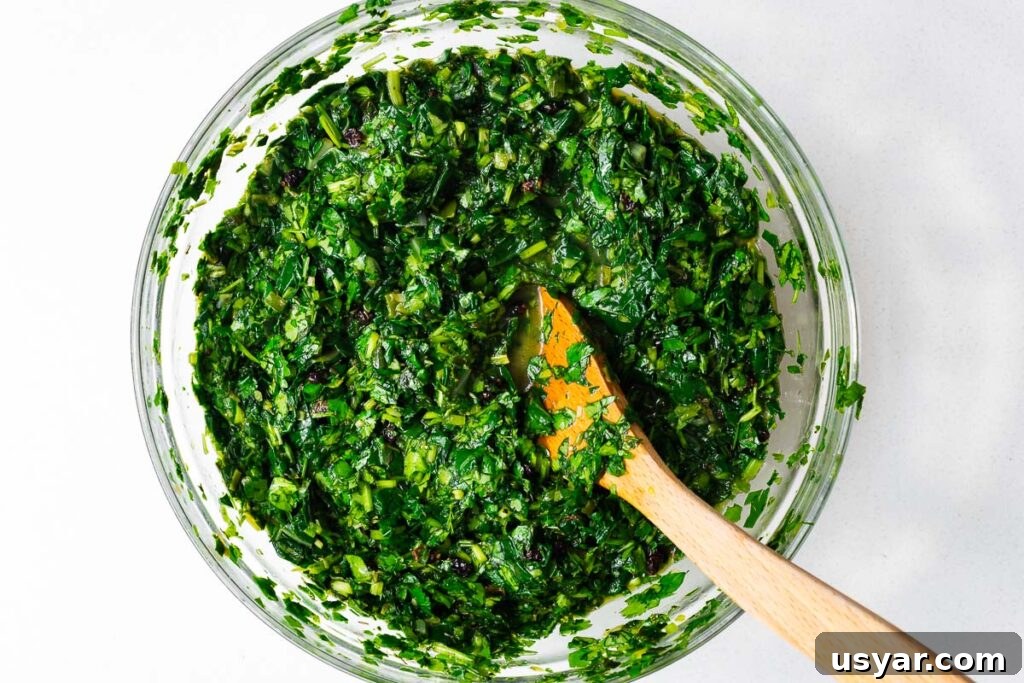
If you are unsure whether more egg is needed, press a spoon into the mixture to make a small dent. Wait a few seconds. If egg begins to collect in the dent, you have enough.
Step 3: Bake your kuku
Preheat the oven to 375°F and place a rack in the center.
Wipe the skillet clean so the kuku does not stick. Reheat it over medium-high heat. Add the remaining 1 tablespoon olive oil and 3 tablespoons butter. When the butter begins to foam, spoon in the kuku mixture and spread it evenly.
Transfer the pan to the oven and bake until the center is set but still slightly springy when pressed, about 18 to 20 minutes.
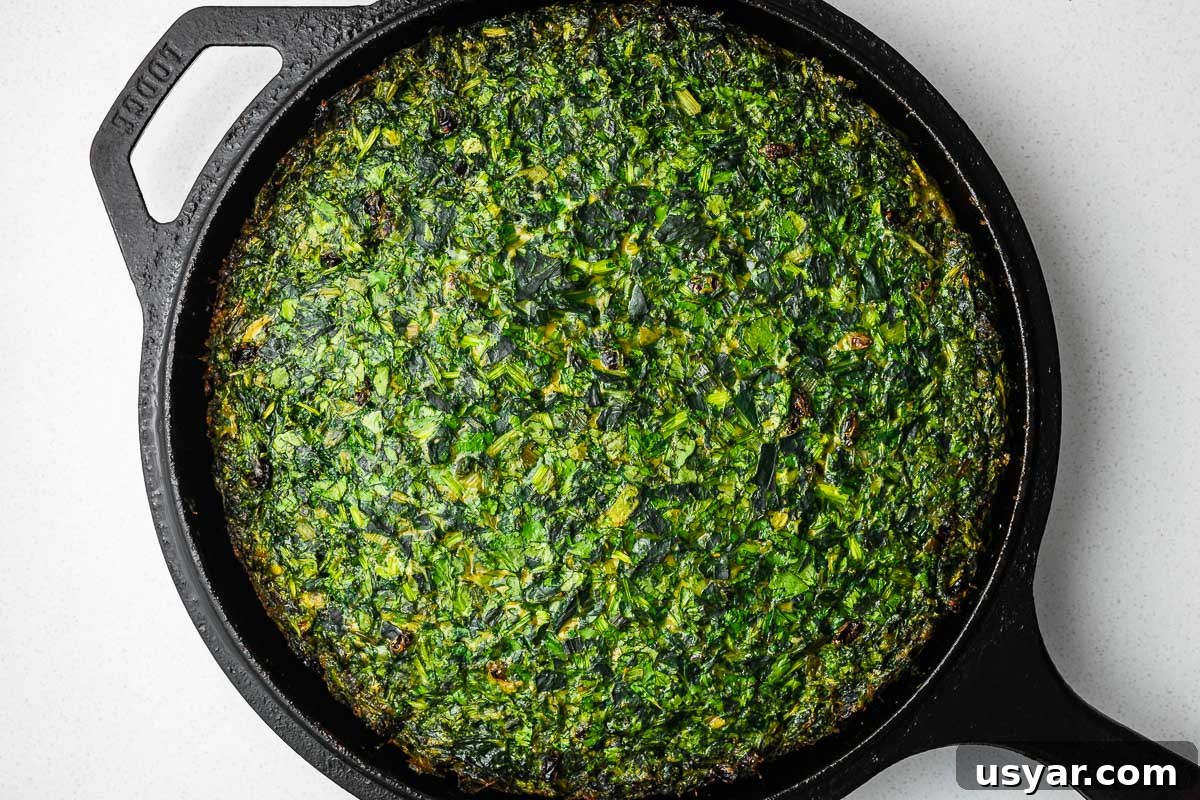
Lift the edge with a rubber spatula to check the bottom. If you want a deeper crust, return the pan to the stovetop over medium-high heat for about a minute. Keep in mind that the kuku will continue to sit in the hot pan as it cools.
Let the kuku rest in the pan for 5 minutes. Blot away excess oil, then slide or flip it onto a serving plate.
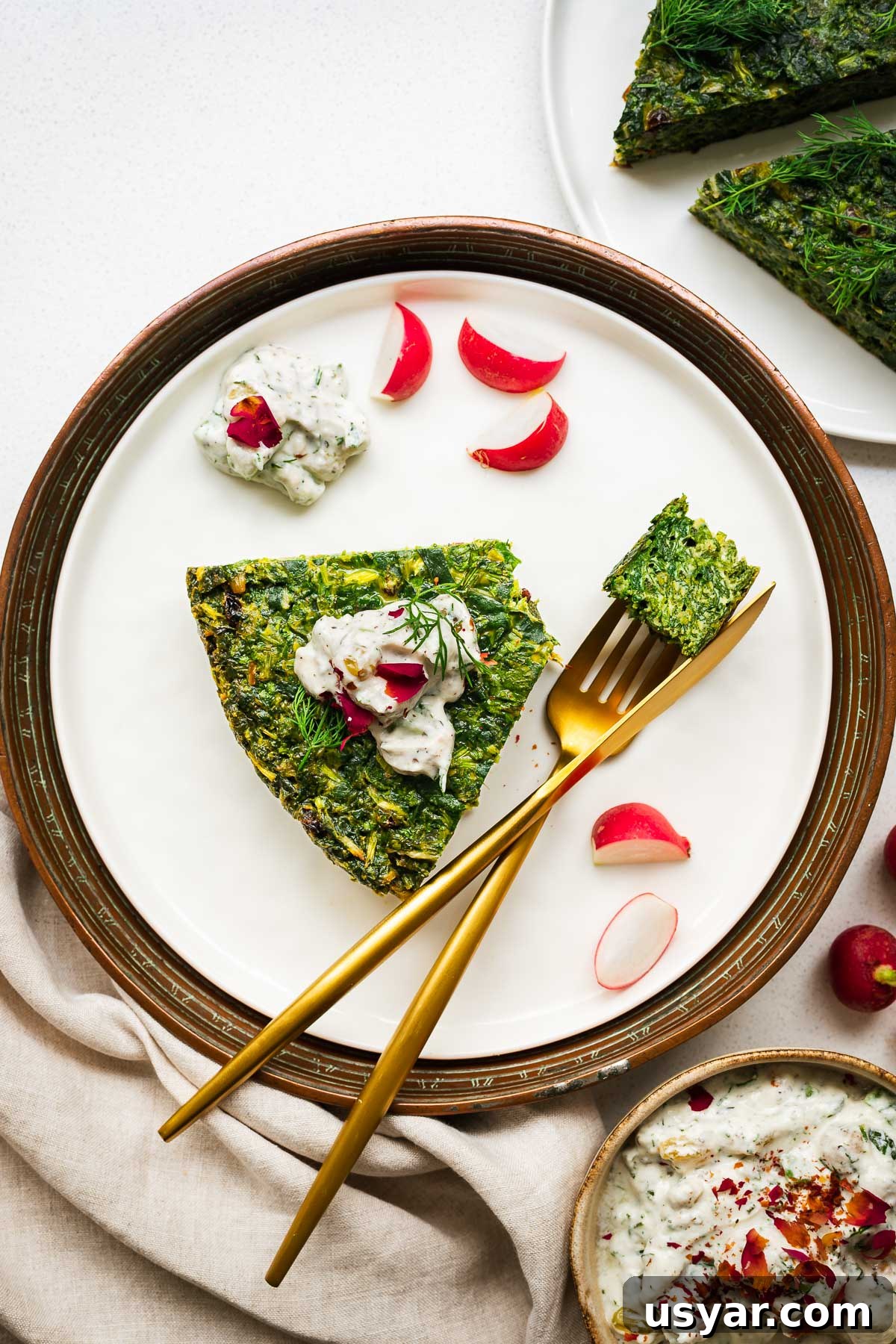
Serve warm, at room temperature, or cold with mast-o khiar, plain yogurt, radishes, pickles, and warm flatbread.
Tips for perfect kuku
Kuku sabzi is simple once you understand the technique. This oven-baked method makes the recipe more approachable because you do not have to flip the kuku in the pan.
Use these tips for the best texture, color, and flavor.
1. Clean and dry your greens
Wash the herbs, chard, and leeks very well. Leeks can hold grit between their layers, so rinse them thoroughly after chopping.
Excess moisture can make the kuku watery. Squeeze the blanched greens dry and dry the washed herbs before chopping. A salad spinner is useful for this step.
2. Finely chop your herbs
The herbs should be very finely chopped so the kuku has an even texture and a beautiful green color. A food processor can save time, especially when working with a large volume of herbs.
3. Pick the right pan
A 10-inch cast iron skillet or oven-safe pan is ideal for this recipe. A 12-inch pan will also work, but the kuku will be thinner and may cook faster, so start checking it around 15 minutes.
If you do not have an oven-safe skillet, cook the leeks in a regular frying pan and bake the kuku in a well-greased cake pan. The crust will be less caramelized, but the flavor will still be excellent.
4. Prep the greens ahead of time
You can save time by blanching the greens, chopping the herbs, and dicing the leeks the night before. Store each component in sealed containers in the refrigerator.
Bring the ingredients to room temperature before mixing, or allow the kuku an extra minute in the oven.
5. Preheat your pan
The golden kuku crust is one of the best parts of the dish. A hot pan helps create that browned base. Heat the skillet well before adding the oil and butter, then spoon in the kuku mixture and spread it evenly.
For an even deeper crust, cook the kuku on the stovetop for about 5 minutes before transferring it to the oven. Watch the heat carefully so the bottom browns without burning.
How to serve kuku sabzi
Kuku sabzi is wonderful for brunch, especially when served warm with Persian cucumber yogurt, a fresh chopped salad, flatbread, and pickles.
It is also delicious at room temperature, making it an excellent option for picnics, packed lunches, and casual gatherings.
Store leftovers in an airtight container in the refrigerator for up to 3 days.
Leftover kuku makes a satisfying sandwich. Slice it into strips or cubes and tuck it into soft bread with pickles, or add it to pita with hummus and tahini sauce for an easy lunch.
Frequently asked questions
Kuku is a traditional Persian egg dish made with vegetables, herbs, and eggs. Common ingredients include potatoes, eggplant, leeks, parsley, cilantro, dill, spinach, or chives. Kuku is often served as part of meals for special occasions, including Persian New Year.
Kuku is made by combining chopped vegetables and herbs with beaten eggs and optional ingredients such as barberries or walnuts. The mixture is cooked in a hot pan until set and browned. This baked version creates a flavorful crust without requiring a traditional flip.
There are many types of kuku. Kuku sabzi, made with fresh herbs, is one of the best-known versions. Other variations include potato kuku, eggplant kuku, roe kuku, and yogurt kuku.
Middle Eastern recipes to serve with kuku sabzi
- Harissa roasted cauliflower: A buttery, spicy vegetarian dish to serve with yogurt.
- Barley pilaf with rose harissa: A simple Middle Eastern-style pilaf that pairs well with cucumber yogurt.
- Persian eggplant stew: Slow-roasted eggplant stew with lentils and black lime.
- Arabic salad: A fresh chopped salad that works beautifully alongside kuku sabzi.
- Mast-o khiar: A refreshing Persian cucumber and yogurt sauce.
Kuku Sabzi Persian Herb Frittata
Equipment
-
10-inch cast iron skillet or oven-safe frying pan
Ingredients
- 1 pound chard leaves or spinach leaves
- 1 leek white and green parts finely diced and washed
- 2 tablespoons olive oil divided
- 4 tablespoons butter divided
- 2 cups finely chopped parsley leaves and tender stems
- 2 cups finely chopped cilantro leaves and tender stems
- 1 cup finely chopped dill leaves and tender stems
- ¼ cup dried barberries optional, rinsed and dried
- 2 teaspoons dried dill
- ½ teaspoon baking powder
- 7 large eggs
- salt and freshly ground black pepper
To Serve
- mast-o khiar or plain yogurt
- radishes
- Middle Eastern pickles or cornichons
- flatbread or pita
Instructions
-
Preheat the oven to 375°F with a rack in the center.
-
Bring a large pot of salted water to a boil. Cook the chard leaves for 2 minutes, then drain and set aside to cool.
-
Heat a 10-inch cast iron skillet or oven-safe pan over medium heat. Add 1 tablespoon olive oil and 1 tablespoon butter. Add the leeks with a pinch of salt and cook until soft and translucent, 10 to 15 minutes. Do not brown them.
-
Squeeze the cooked chard dry, discard the liquid, and chop the leaves coarsely. Add them to a large bowl with the chopped herbs, cooked leeks, barberries if using, and dried dill.
-
Season with 1 teaspoon salt and plenty of black pepper. Sprinkle over the baking powder and mix well.
-
Whisk 6 eggs in a bowl and add them to the herb mixture. Mix thoroughly. Add the final egg only if the mixture looks too dry. The greens should be coated, not swimming in egg.
-
Wipe the skillet clean and reheat it over medium-high heat. Add the remaining 1 tablespoon olive oil and 3 tablespoons butter. When the butter foams, spoon in the kuku mixture and spread it evenly.
-
Bake for 18 to 20 minutes, until the center is set but still slightly springy. If you want a darker crust, return the pan to the stovetop for about 1 minute.
-
Let the kuku rest in the pan for 5 minutes. Blot away excess oil, then slide or flip it onto a serving plate. Serve warm, at room temperature, or cold.
Notes
- Barberries add tartness and contrast. Dried cranberries can be used instead, but they are sweeter.
- Adjust the balance of parsley, cilantro, and dill according to your taste and what you have available.
- A food processor fitted with an S-blade is helpful for chopping the herbs. Do not use a blender.
- A 10-inch skillet is ideal for this recipe. If using a larger pan, the kuku will be thinner and may cook faster.
- If you do not have an oven-safe pan, bake the mixture in a well-greased cake pan at 375°F for 20 to 25 minutes.
- Prepared greens can be refrigerated a day ahead. Bring them to room temperature before making the kuku.
- Store leftovers in an airtight container in the refrigerator for up to 3 days.
This kuku sabzi recipe was adapted from Samin Nosrat’s Persian herb and greens frittata in Salt, Fat, Acid, Heat.
Nutrition Information
Carbohydrates: 14 g
Protein: 10 g
Fat: 18 g
Have eggs? Explore more recipes with lots of eggs:
- Mayak eggs, Korean soy-marinated eggs
- Chinese tomato egg stir-fry and tomato egg drop soup
- Shakshuka with feta and rose harissa