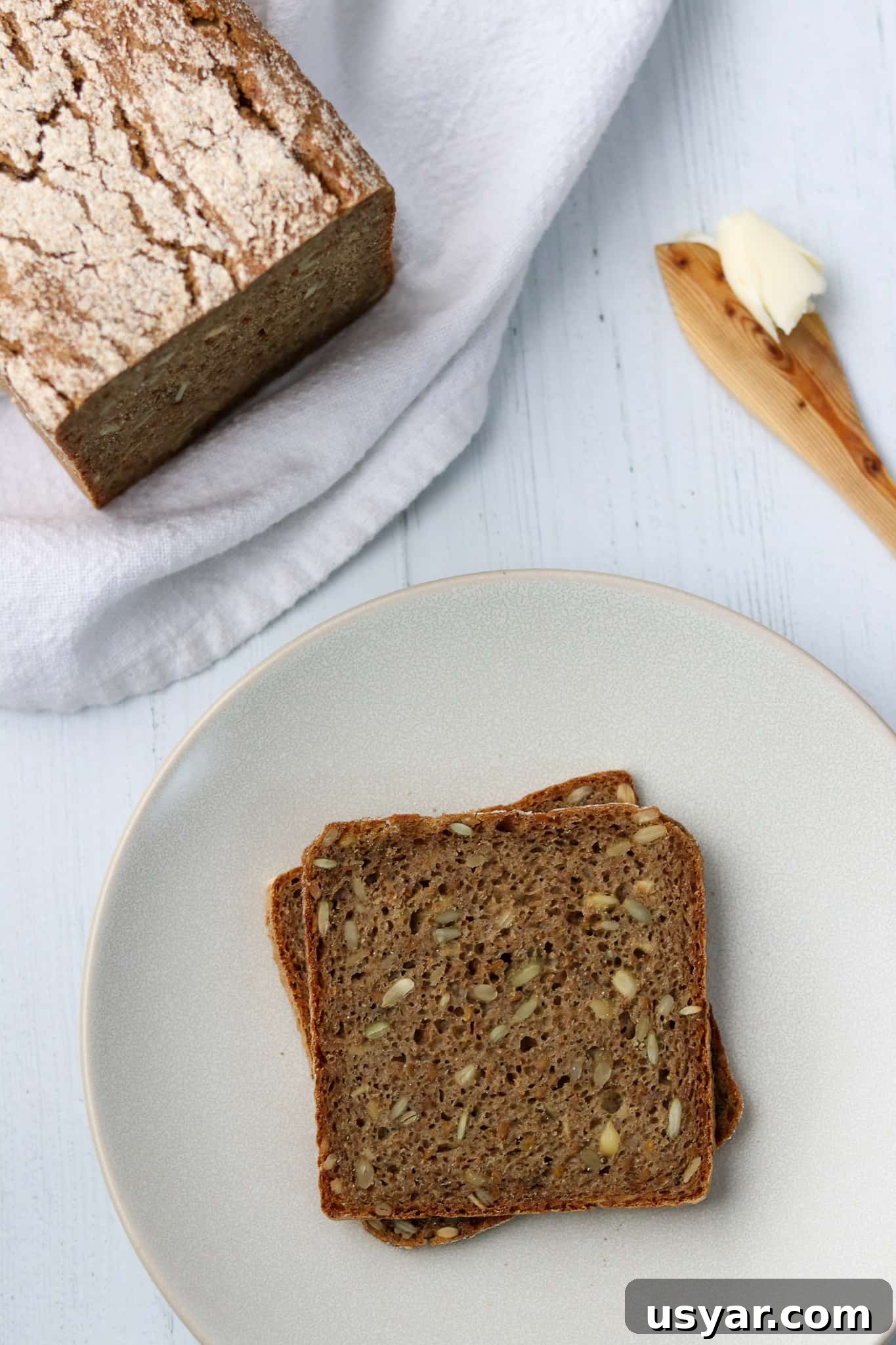
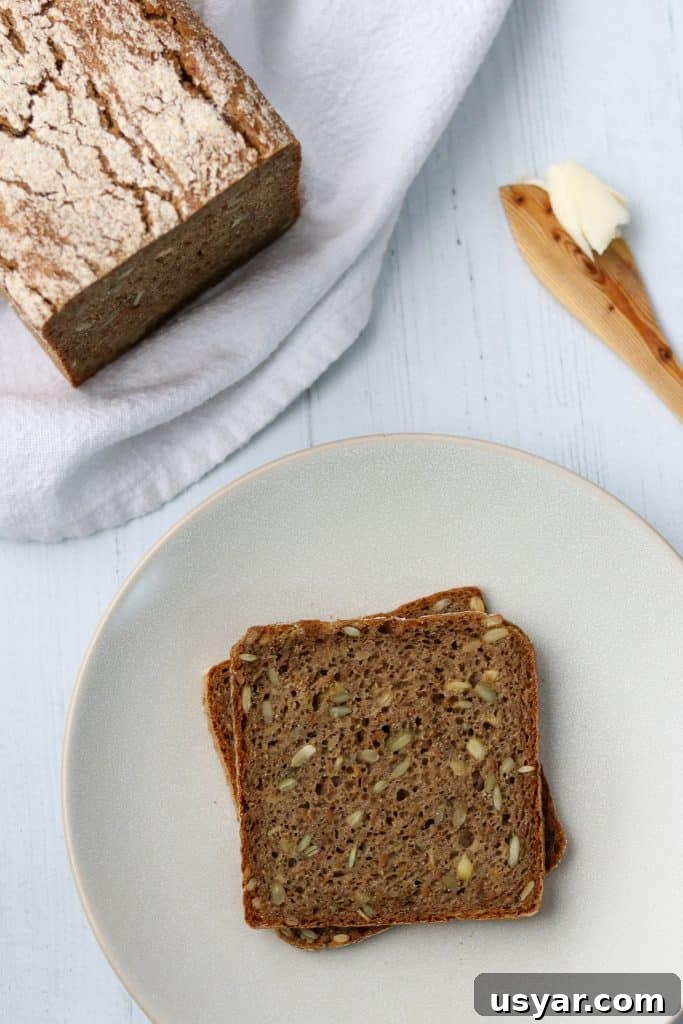
If you keep a sourdough starter at home, this sourdough Danish rye bread, known as rugbrød, is a deeply rewarding loaf to bake. Rugbrød is the classic dense rye bread used as the foundation for smørrebrød, the beloved Danish open-faced sandwich. It is hearty, nourishing, full of rye flavor, and sturdy enough to support everything from salted butter and cheese to potatoes, smoked fish, eggs, vegetables, and spreads.
This version is made with a natural sourdough starter rather than commercial yeast. The sourdough process gives the bread its gentle tang, improves keeping quality, and helps create the moist but sliceable texture that makes Danish rye bread so distinctive. Rugbrød is not a light, airy sandwich loaf. It is meant to be compact, flavorful, and satisfying, with a close crumb and plenty of seeds for texture.
What Is Rugbrød?
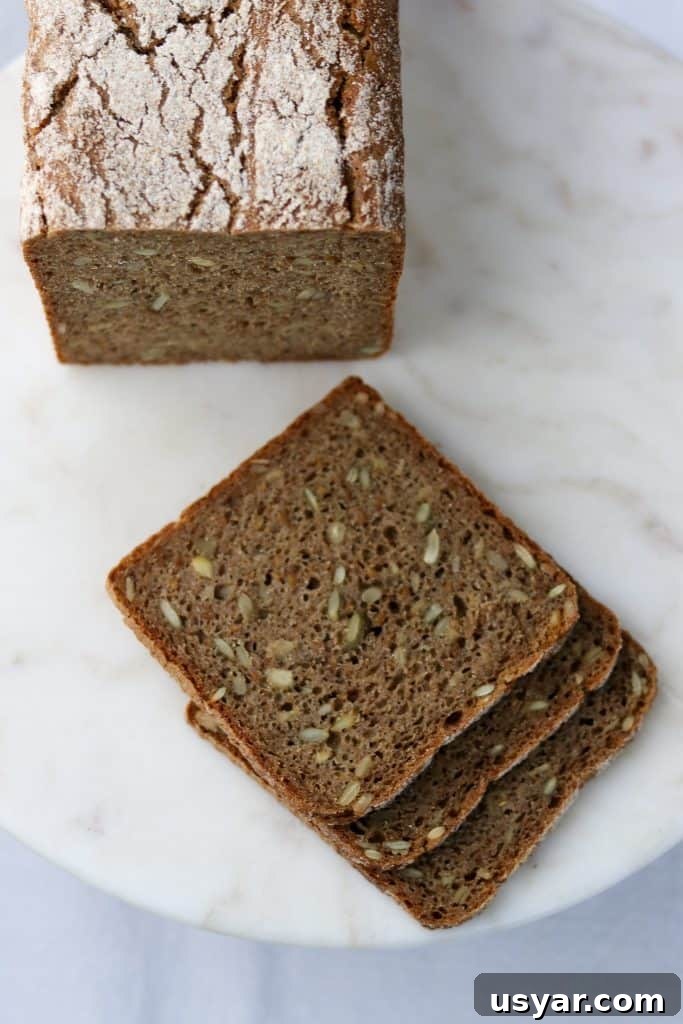
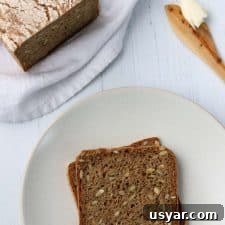
Rugbrød simply means “rye bread” in Danish. Traditional Danish rye bread is a dense loaf made with rye flour, chopped rye grains, and often a generous amount of seeds such as sunflower seeds, pumpkin seeds, and flax seeds. It is commonly baked in a 13 x 4 inch Pullman loaf pan with a lid, which helps the bread bake evenly and gives it the familiar square shape that is ideal for thin slicing.
Unlike many American-style rye breads, rugbrød is usually not heavily flavored with spices or darkening ingredients. Some rye loaves include additions such as cocoa, coffee, stout, molasses, or caraway, but Danish rugbrød is typically much simpler. A small amount of molasses adds mild sweetness, but the main flavor comes from rye, seeds, fermentation, and time.
When served, rugbrød is sliced thinly, usually a little less than a quarter inch thick. It is often spread generously with salted butter. In Denmark, there is even a word, tandsmør, meaning “tooth butter,” which refers to a layer of butter thick enough to show the marks of your teeth when you bite into it. Rugbrød can be enjoyed simply with butter or used as the essential base for smørrebrød.

What Makes Rye So Special?
Rye behaves differently from wheat, which is why Danish rye bread has its own texture, flavor, and baking method. Understanding rye helps explain why rugbrød is mixed, risen, baked, and rested differently from a typical wheat loaf.
- Rye has long been important in Nordic baking. Rye grows well in cold, wet climates and can tolerate poorer soil better than many other grains. For centuries, it was a reliable grain for bread in northern Europe.
- Rye flour contains less gluten than wheat flour. Because rye does not develop the same elastic gluten structure as wheat, rye bread is naturally denser and has a closer crumb.
- Rye absorbs a lot of water. This helps create a moist loaf, but it also means the bread must be baked properly to avoid a gummy texture.
- Sourdough supports rye baking. The acidity from a sourdough starter helps balance the enzymes in rye flour and improves the final texture of the bread.
- Rye bread improves with rest. Unlike many wheat breads that are best eaten soon after cooling, rugbrød is often better after resting for 24 to 36 hours. The flavor deepens and the crumb becomes easier to slice.
The Sourdough Process
Making sourdough rugbrød is straightforward, but it does require planning. The levain and soaker are prepared the night before baking, and the final dough is mixed the next morning. The dough is very sticky, so it is mixed in a stand mixer rather than kneaded by hand.
Weighing Your Ingredients in Grams
This recipe is written primarily in grams because weighing ingredients is the most accurate way to bake sourdough bread. Place your mixing bowl on a kitchen scale, set the scale to grams, and zero it out before adding each ingredient. This method is cleaner, faster, and more consistent than measuring by volume.
The Day Before You Bake: Refresh Your Starter
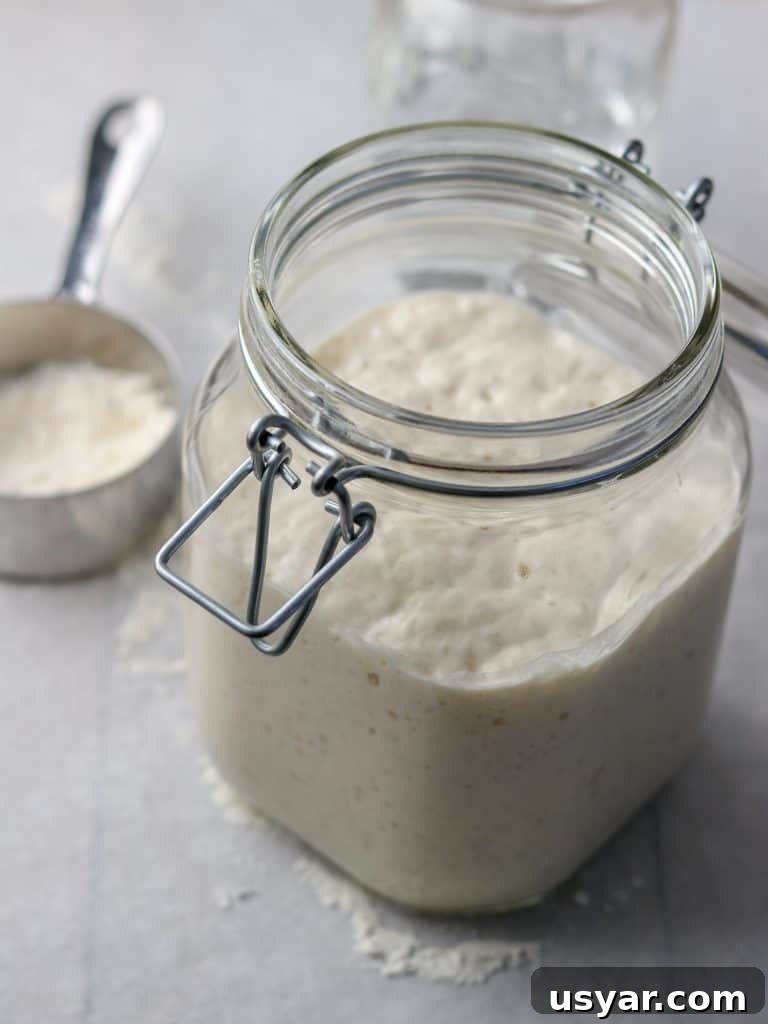
For the best results, use a ripe and active sourdough starter. A refreshed starter is one that has been fed about 8 hours before use and is bubbly, puffy, and active throughout. This ensures that the levain ferments properly overnight.
The Night Before You Bake: Create a Levain
The levain is a portion of the dough that ferments overnight. It is made with rye flour, bread flour, water, and ripe sourdough starter. By morning, it will be active and ready to flavor and leaven the final dough.
The Night Before You Bake: Create a Soaker
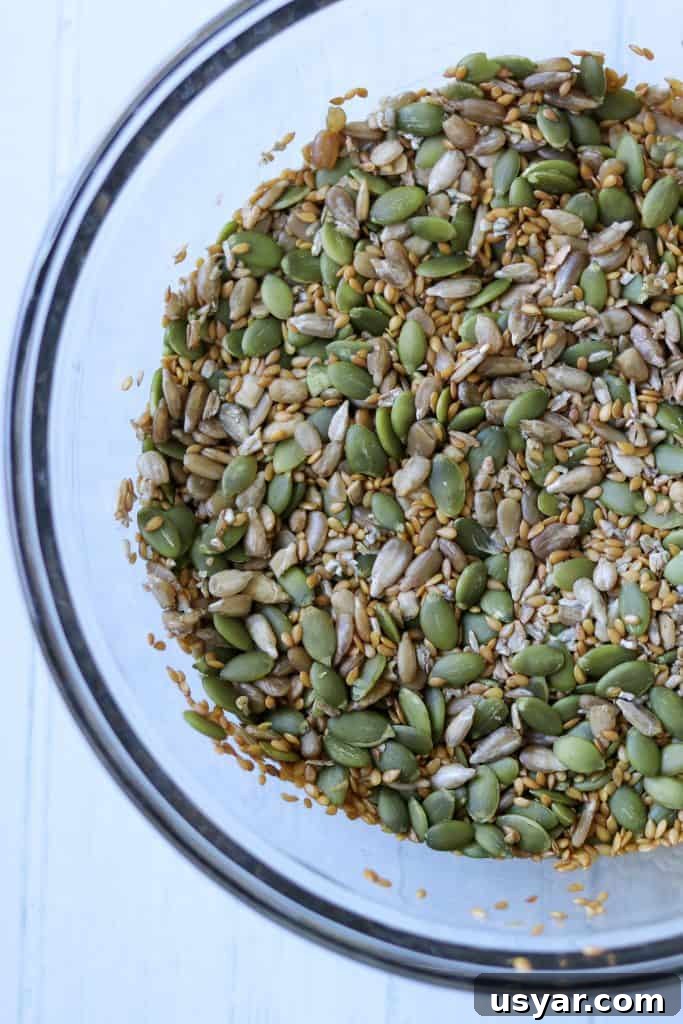
The soaker is a mixture of rye chops or 7 grain hot cereal, sunflower seeds, pumpkin seeds, flax seeds, and water. Soaking these ingredients overnight softens them and improves the texture of the finished loaf. There is no need to drain the soaker before adding it to the dough.
The Next Morning: Build Your Final Dough
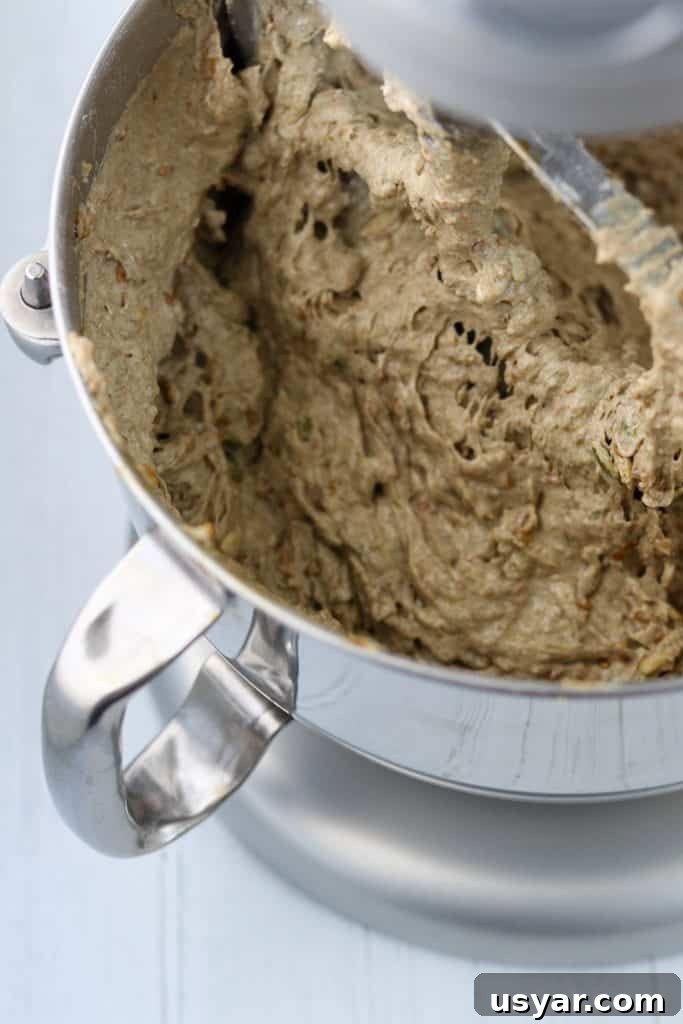
Once the levain and soaker have rested overnight, combine them with the remaining dough ingredients in the bowl of a heavy duty stand mixer. Mix on low speed, then increase to medium, scraping the bowl as needed. The dough will be thick, sticky, and paste-like, which is exactly what you want for Danish rye bread.
The Rise
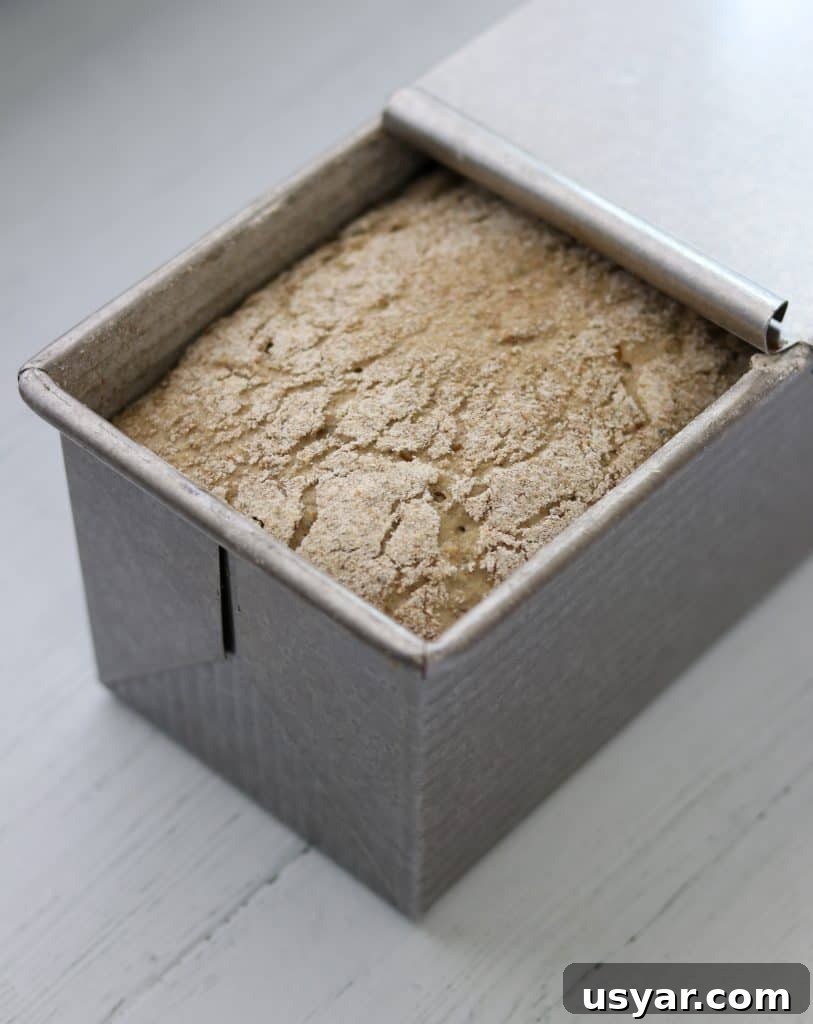
Transfer the dough to a greased and rye-floured 13 x 4 inch Pullman loaf pan. Smooth the top, dust with rye flour, cover with the lid, and let the dough rise until it reaches about ½ inch below the top of the pan. This can take anywhere from 1 ½ to 4 hours, depending on the temperature of the dough and your kitchen.
The Bake
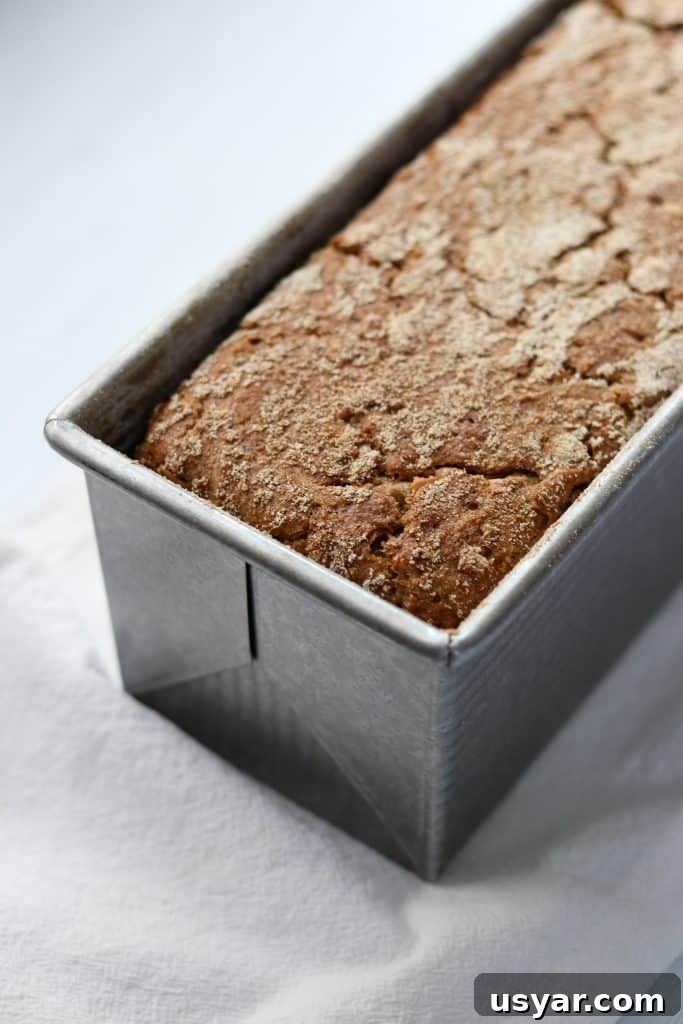
The changing oven temperatures in this recipe are intentional. Starting hot and then gradually lowering the temperature helps the loaf bake through properly while reducing the risk of a gummy crumb. Once baked, let the bread cool completely. If possible, wait until the next day to slice it. This resting time improves both flavor and texture.
Recipe
Sourdough Danish Rye Bread (Rugbrød)
Ingredients
Special Equipment Needed:
- Kitchen scale
- Heavy duty stand mixer
- Pullman loaf pan with lid, 13 x 4 inches
Ingredients for the Night Before:
For the Levain:
- 300 grams dark rye flour
- 100 grams bread flour
- 350 grams water
- 70 grams ripe sourdough starter
For the Soaker:
- 75 grams rye chops or 7 grain hot cereal
- 1 cup raw sunflower seeds (131 grams)
- 1 cup raw pumpkin seeds (142 grams)
- ½ cup flax seeds (65 grams)
- 285 grams water
Ingredients for the Day of Baking:
- All of the levain
- All of the soaker
- 200 grams dark rye flour
- 130 grams bread flour
- 180 grams water
- 18 grams salt
- 2 tablespoons molasses
Instructions
-
The night before baking, prepare the levain. Combine the levain ingredients in a medium bowl and stir until fully mixed. The mixture will be thick and paste-like. Cover and leave at room temperature for about 12 hours.
-
Prepare the soaker in a separate bowl. Combine the rye chops or cereal, seeds, and water. Cover and leave at room temperature for about 12 hours.
-
The next morning, grease a 13 x 4 inch Pullman loaf pan with a lid and dust it with rye flour. Set aside.
-
Add all of the levain and all of the soaker to the bowl of a heavy duty stand mixer. Do not drain the soaker. Add the remaining dough ingredients.
-
Using the paddle attachment, mix on low speed for 3 to 4 minutes, scraping down the sides of the bowl as needed. Increase to medium speed and mix for another 4 minutes, scraping the bowl occasionally.
-
Transfer the dough to the prepared pan with a sturdy spoon or spatula. Spread it evenly, smooth the top with a damp spatula if needed, and dust the surface generously with rye flour.
-
Cover the pan with its lid and let the dough rise until it reaches about ½ inch below the top of the pan. This may take 1 ½ to 4 hours, depending on the warmth of the kitchen and the dough.
-
Preheat the oven to 500 degrees. Bake the covered loaf for 15 minutes. Reduce the oven temperature to 400 degrees and bake, still covered, for another 15 minutes.
-
Remove the pan from the oven and take off the lid. Reduce the oven temperature to 325 degrees and bake uncovered for an additional 45 minutes.
-
Remove the loaf from the pan and cool completely on a wire rack before slicing. For the best flavor and texture, wrap the cooled loaf loosely in foil and let it rest until the next day before cutting.
-
Store the bread at room temperature for about 4 to 5 days, wrapped loosely in plastic wrap and foil. For longer storage, wrap tightly and freeze.
Notes
This recipe is adapted from a traditional sourdough rye bread method and is designed for a 13 x 4 inch Pullman loaf pan.
Nutrition
| Carbohydrates: 59g
| Protein: 13g
| Fat: 12g
| Fiber: 10g
| Sugar: 5g