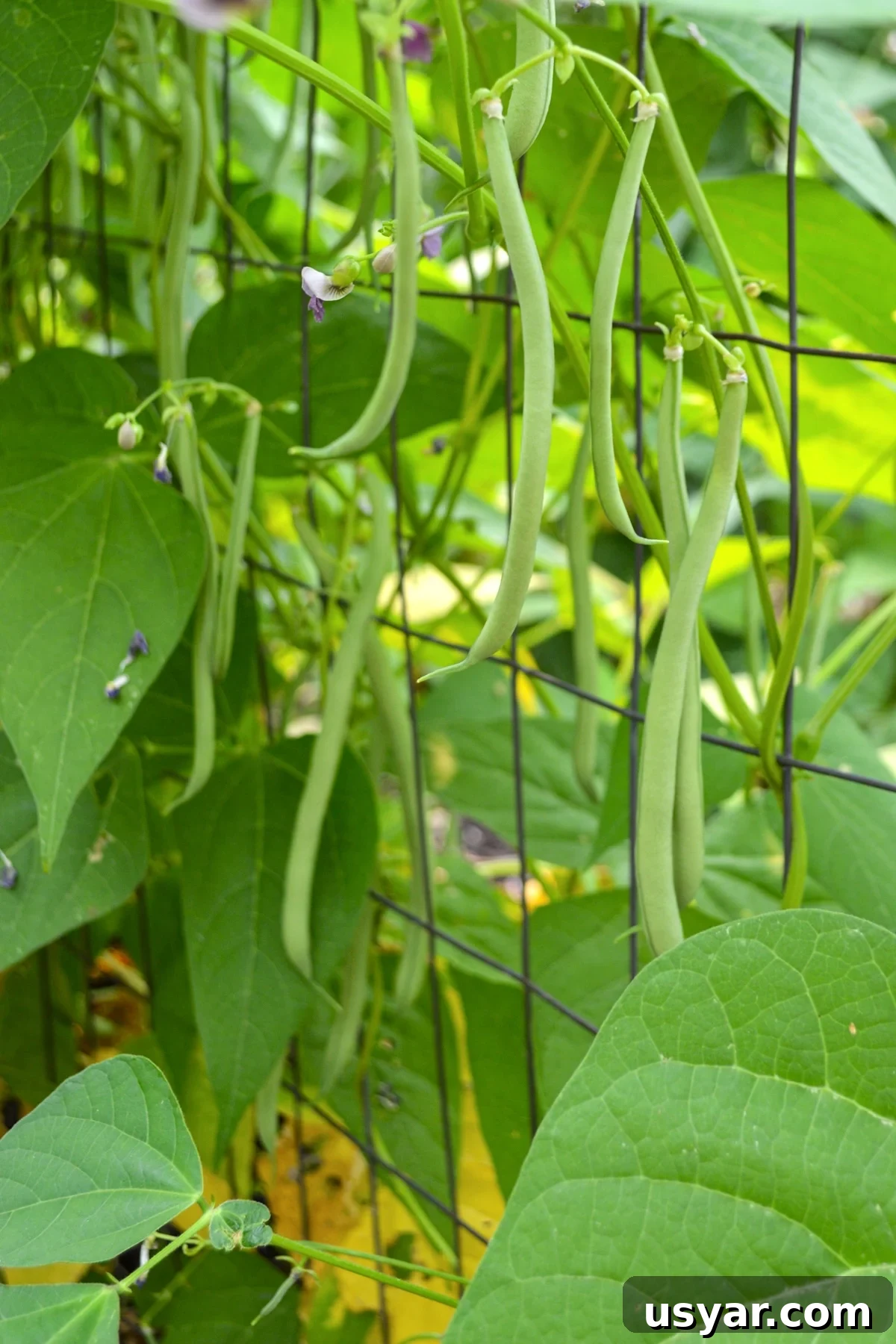
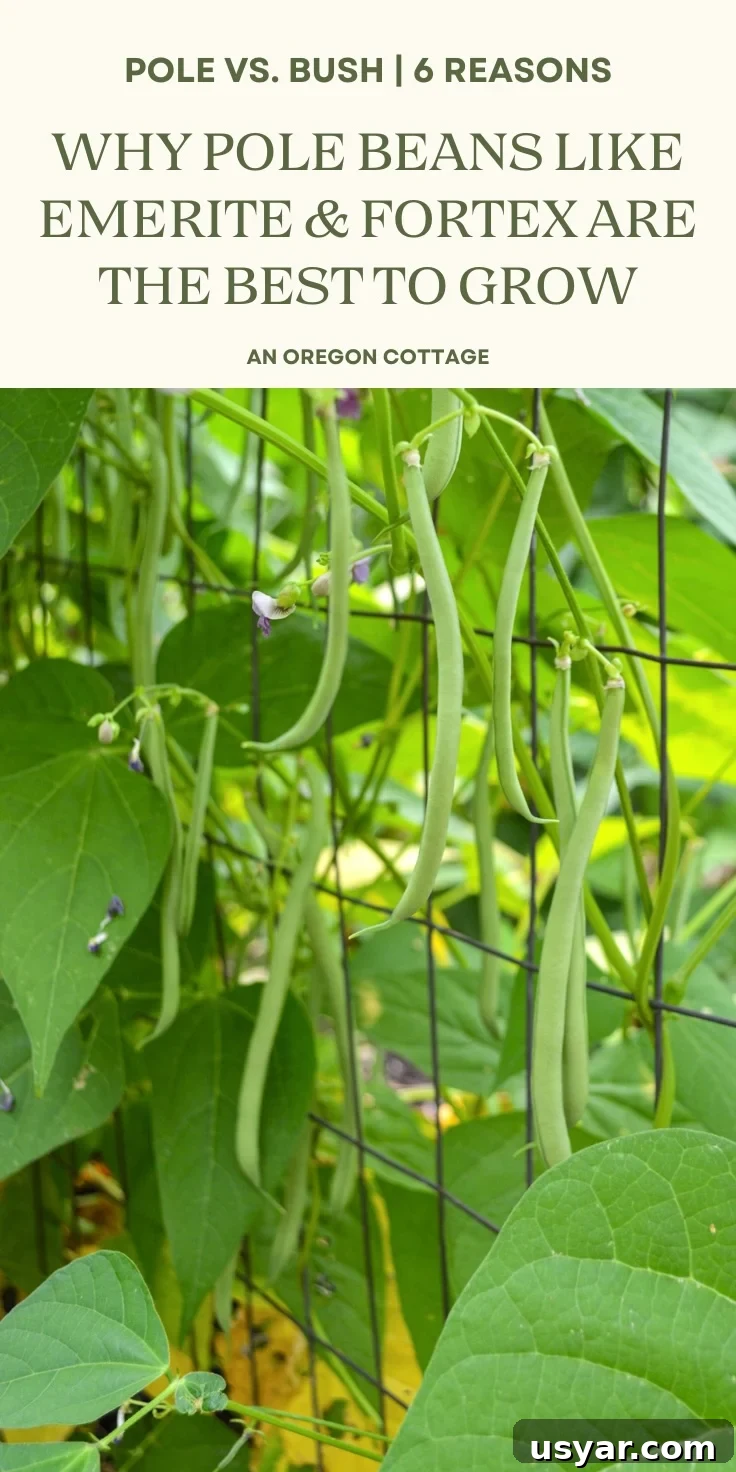
Find three good reasons to grow pole beans instead of bush beans, and six reasons why tender filet-style pole beans like Emerite and Fortex are among the best. These climbing beans are reliable in the garden and easy to cook, making them one of the most prolific, cost-saving vegetables to grow at home. If you want beans that truly earn their space, these varieties are hard to beat.
✩ What readers are saying…
“This year, after reading your article, I tried the Emerite beans and am so happy…I have beans to pick, finally! I love how tender and ‘un-stringy’ they are.” – Jani
Some links in this article are affiliate links and if you click on them and purchase I will receive a small commission at no cost to you.
Note: I first wrote about my favorite green bean, Emerite, 15 years ago. I updated this piece in 2016 after adding Fortex to my garden, and I’m updating it again in 2026 because I now also grow a yellow filet pole bean, Monte Gusto. I still plant a few bush beans for an earlier harvest — it doesn’t have to be all one type. Read on for the details and practical reasons to choose pole beans.
Pole beans versus bush beans — which do you prefer? Early on I planted bush beans because that’s what most gardeners seemed to grow. One year I tried pole beans to make a decorative bean teepee and discovered how different they are: more convenient to harvest, longer producing, and often much more tender when you choose filet-style varieties.
3 Reasons to Grow Pole Beans Instead of Bush Beans
- Easier harvesting: Pole beans grow up supports, so you can harvest standing up rather than bending and searching through low, tangled plants.
- Longer production: Bush beans tend to produce in a short, intense window and require succession plantings. Pole beans take longer to start but yield steadily through the season.
- Cleaner pods: Because they stay off the ground, pole beans are less dirty than bush beans and are often ready to trim and freeze with little washing.
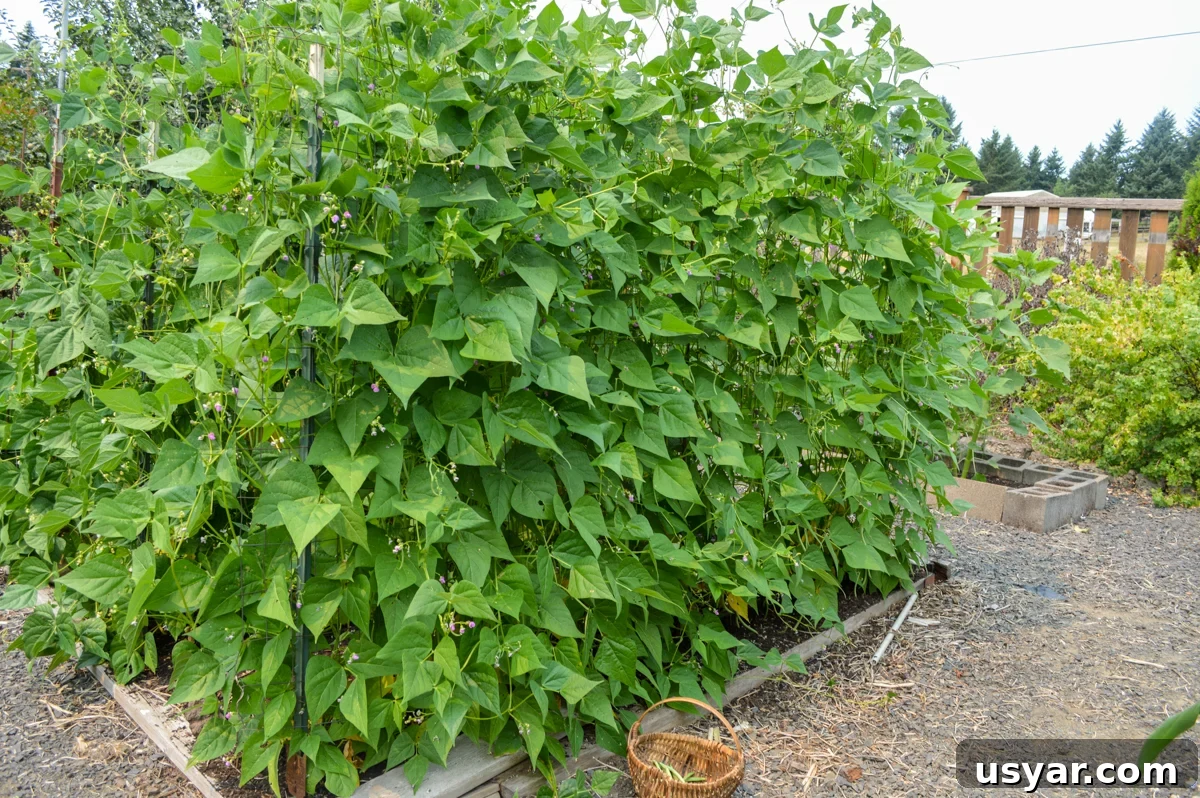
I now plant mostly rows of pole beans, while still sowing a small patch of bush beans for the earliest harvests. Pole beans reward the extra trellis work with season-long productivity and easier harvesting.
Filet-Style vs. Standard Pole Beans
I’ve grown many types of beans, including popular standards like Kentucky and Blue Lake, but those can be stringy and inconsistent where I live. Filet-style (French filet) beans, by contrast, are consistently tender and stringless. My favorite is Emerite, a delicate filet pole bean I’ve grown for years. I also grow Fortex, which produces longer pods, and Monte Gusto, a yellow filet that adds color and complementary timing when planted together on the same trellis.
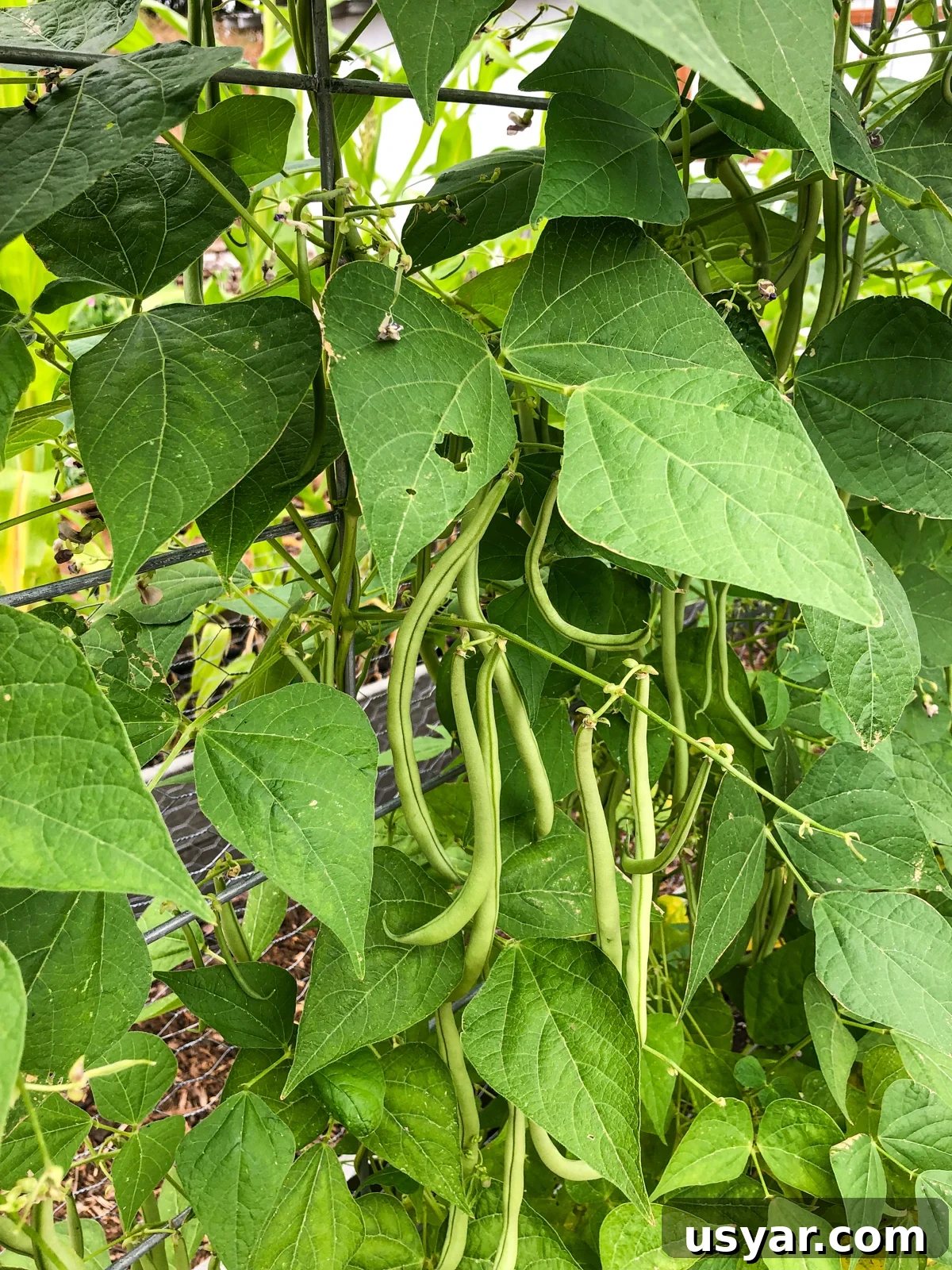
6 Reasons to Grow Filet Pole Green Beans (Emerite, Fortex, Monte Gusto)
1. Pickable at many stages: Filet beans are delicious when harvested small (around 4 inches) or left to grow larger. You get usable pods throughout their development.
2. Never stringy: Filet varieties remain tender and stringless even when pods mature, which makes cooking and preserving easier. This consistent tenderness is why I prefer freezing without blanching for these beans.
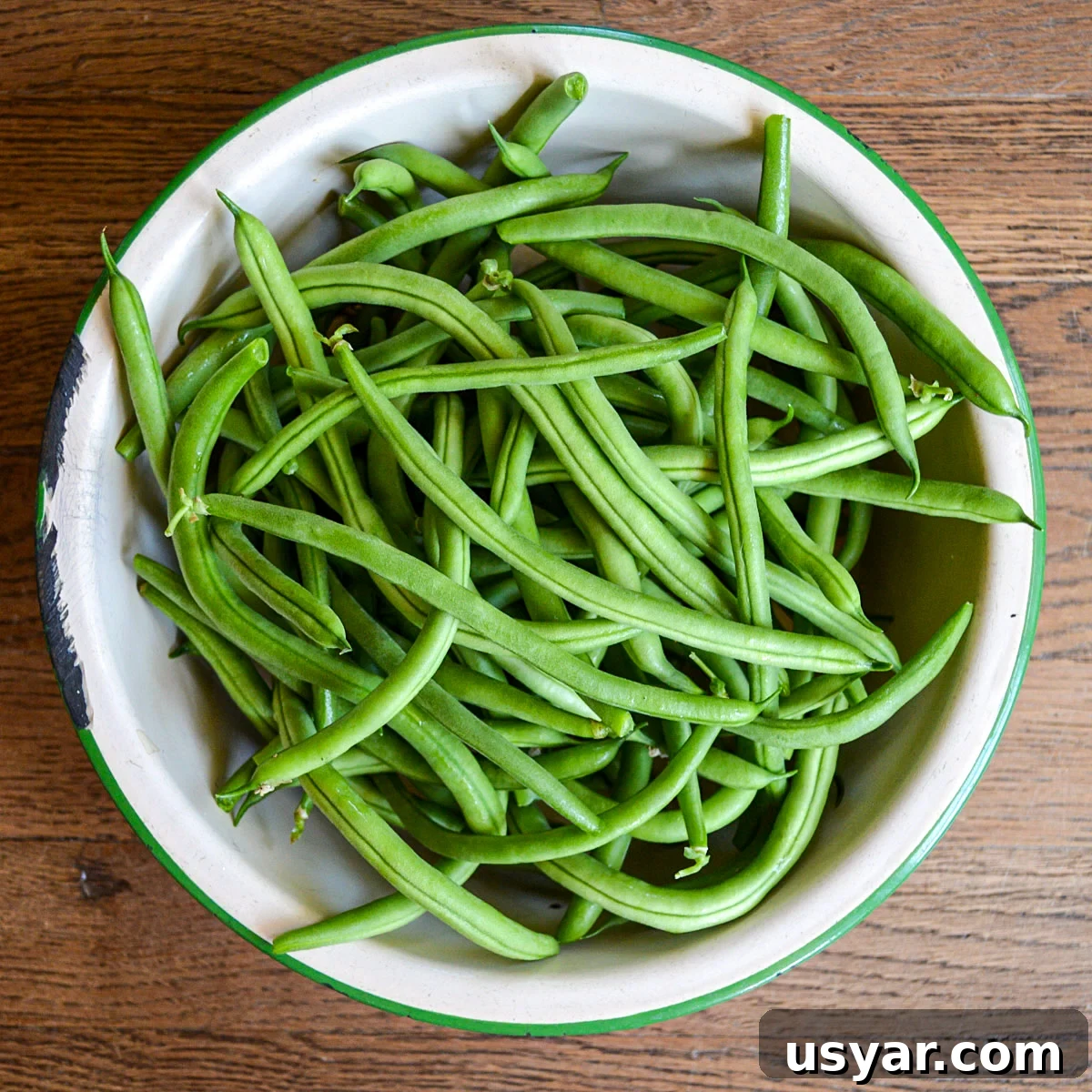
3. High seasonal yields: A well-planted 10–12 foot row of filet pole beans can provide abundant fresh beans through the season and several quart bags for the freezer.
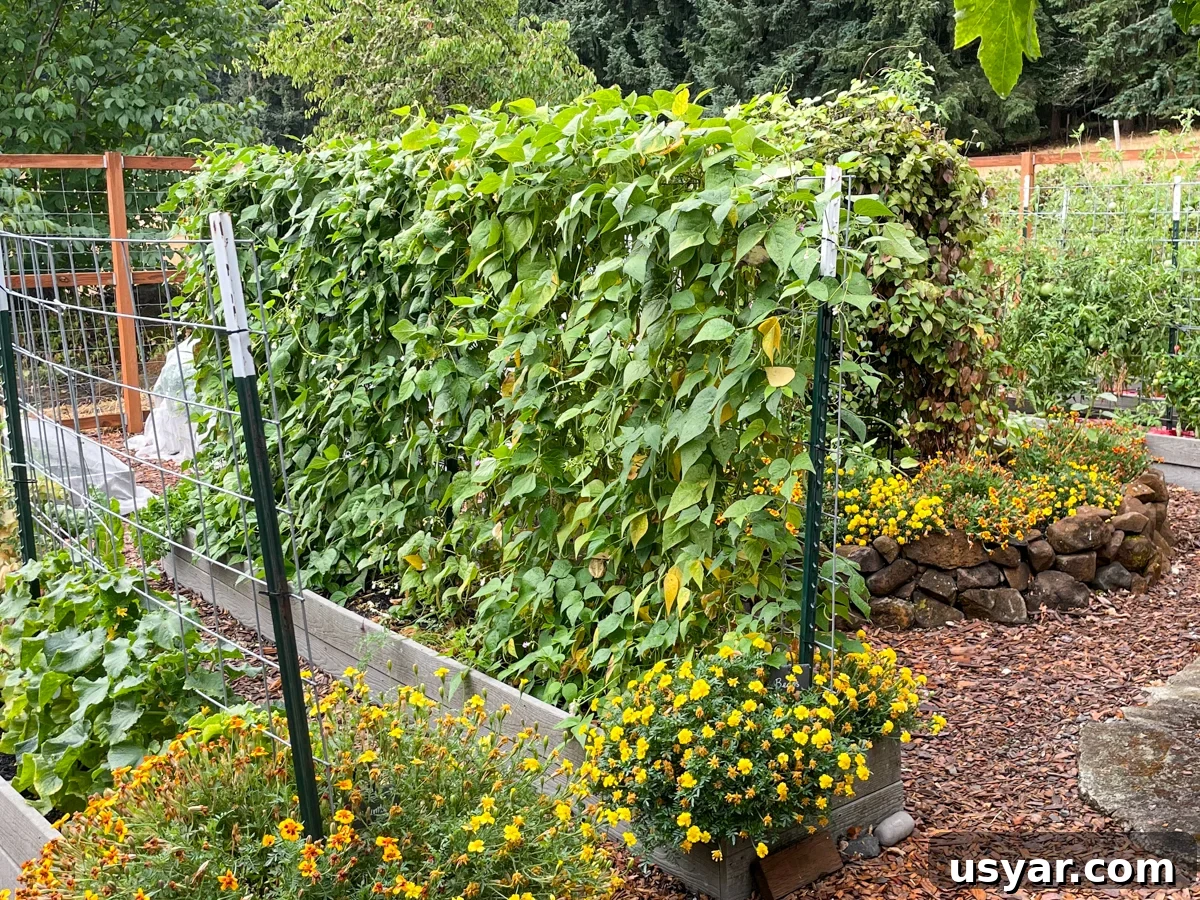
4. Production until frost: These pole beans often keep producing late into fall. Some varieties slow during heat but resume with cooler, wetter weather. Growing two or three complementary varieties helps ensure continuous harvests into autumn.
5. Easier on the back: Picking from a trellis means standing at waist to chest height instead of bending over low plants — a real advantage if you prefer not to crouch for long periods.
6. One planting for the season: Unlike bush beans, which usually require staggered sowings, a single planting of pole beans can supply beans for most of the season. I still sow a few early bush filet varieties for the first picks, but poles are the long-game solution.
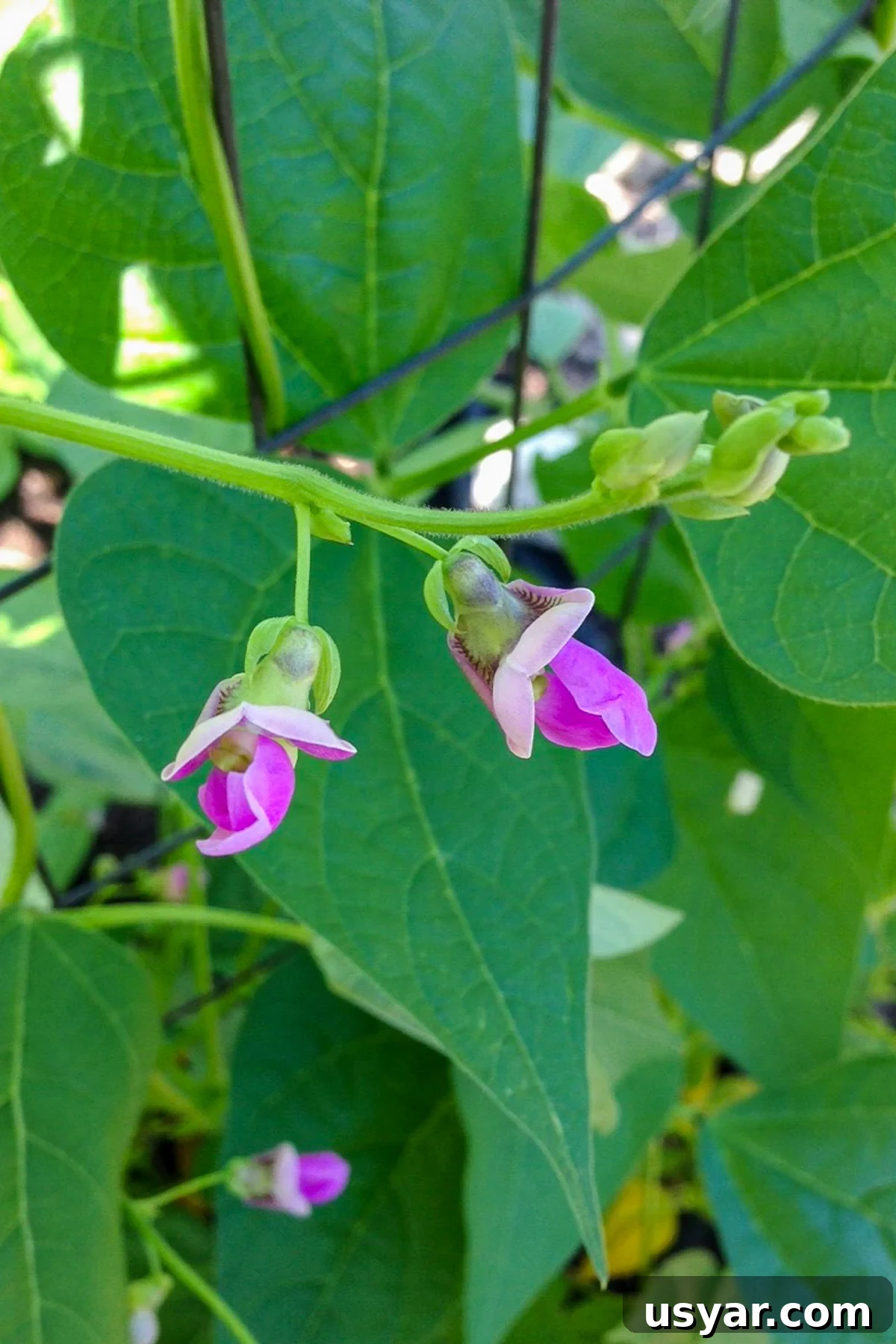
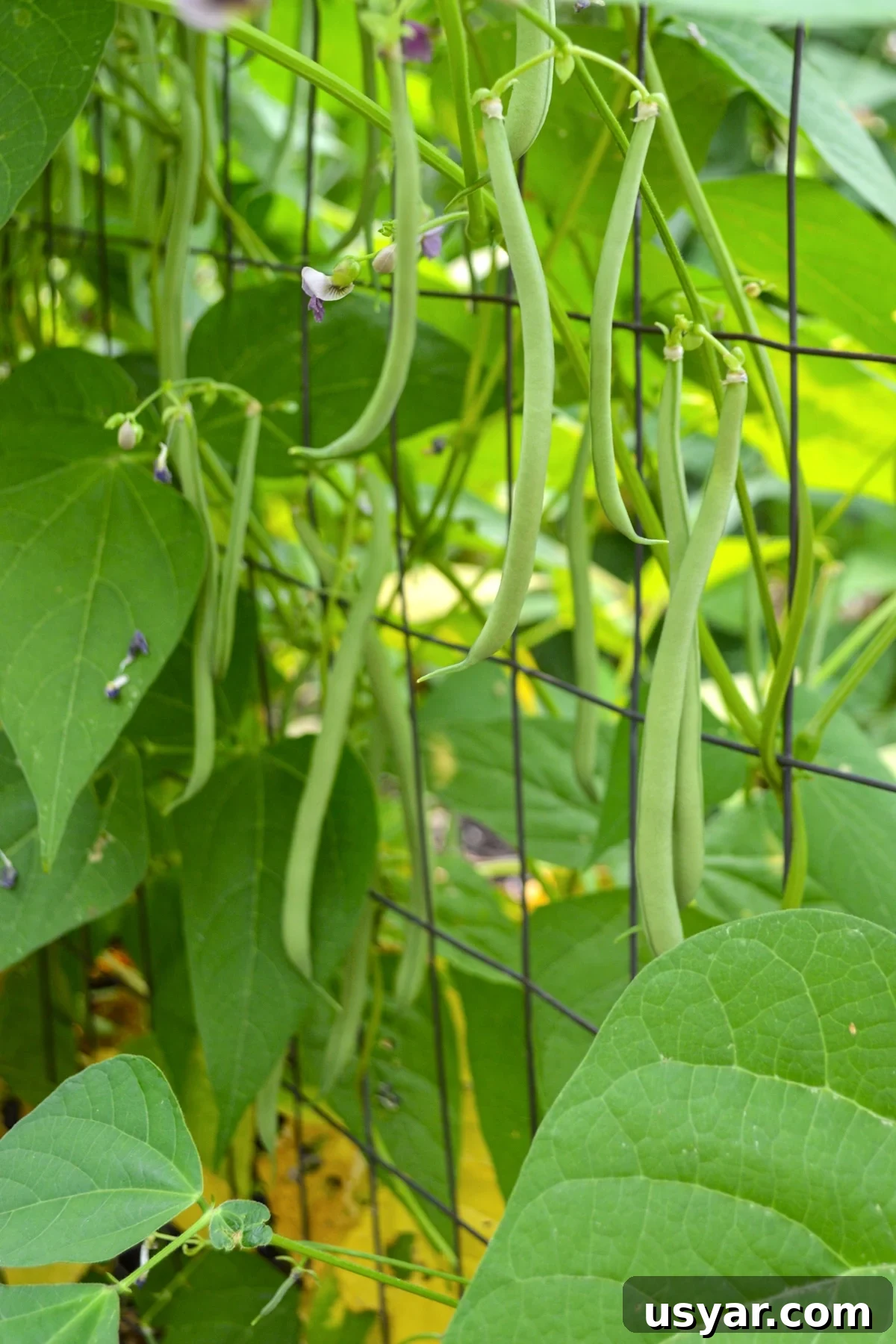
BONUS: Emerite bean blossoms are lovely and add a subtle ornamental touch to the vegetable bed.
TIP: If you want tender, stringless beans, choose filet varieties whether you plant pole or bush types. For early harvests, consider a few filet bush beans sown alongside your poles to extend your fresh supply.
Have I convinced you to grow pole beans?
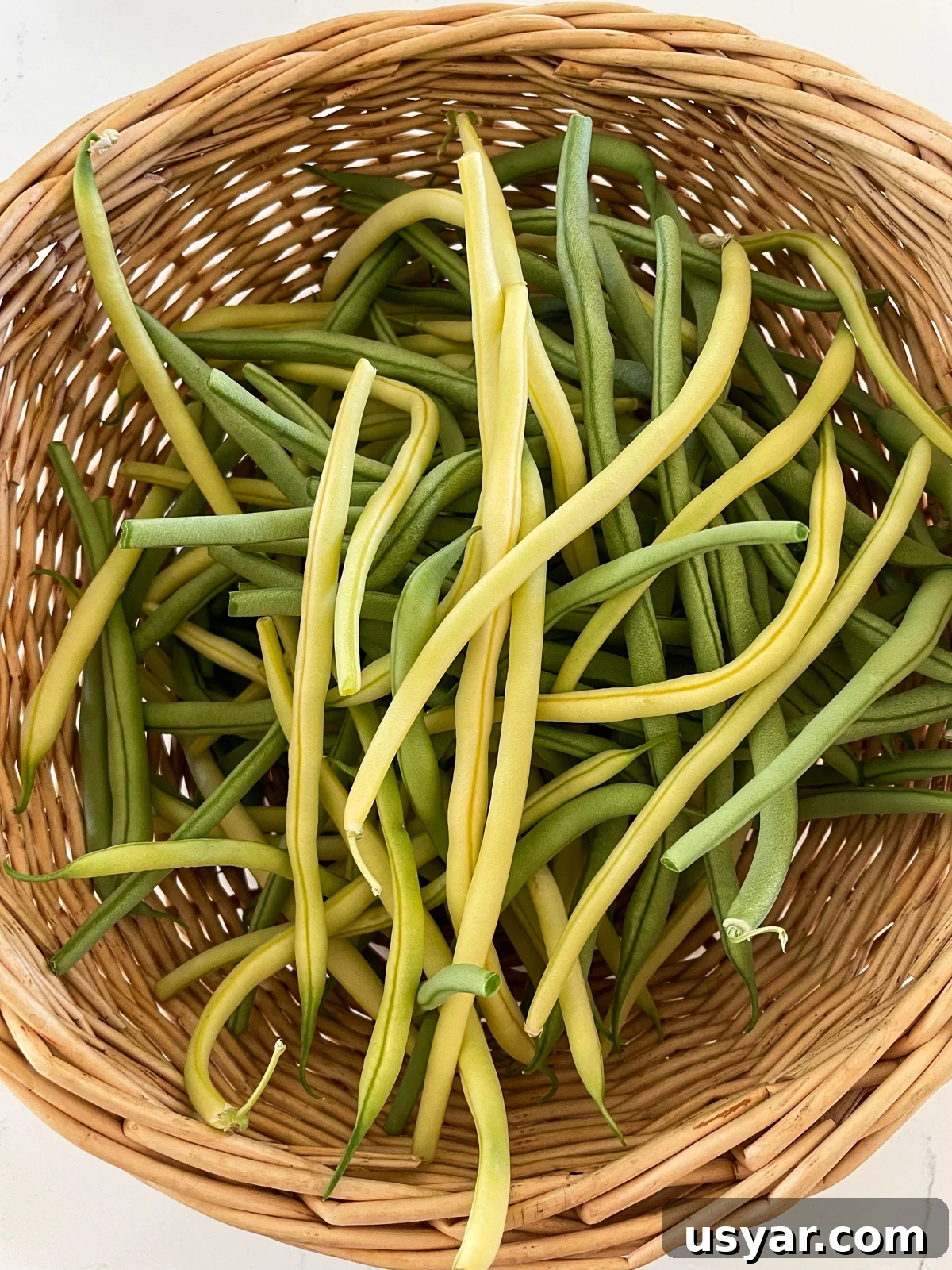
Where to buy filet pole bean seeds
- Fortex — commonly sold by several seed companies; check reputable seed catalogs or local suppliers for availability.
- Emerite — a classic filet pole bean sought by home gardeners; availability varies by seed company and season.
- Monte Gusto — a yellow filet pole bean that pairs well with Emerite and Fortex for variety and timing.
I’ve purchased these varieties from several seed vendors over the years. If you can’t find Emerite locally, consider saving a few mature pods at season’s end to use for the next year — just be sure to leave some plants to go to seed.
More Easy Gardening Tips
- Steps to starting a vegetable garden — basics for planning and planting.
- Organic vegetable gardening 101 — principles for healthy, chemical-free beds.
- Simple and easy gardening tips and techniques — practical ideas for better yields and less work.
This article was originally published in October 2011 and updated in 2016 and 2026.
Disclosure: affiliate links in this article may earn commission based on sales, but they do not increase your price.