Learn how many ounces are in a pint with this clear conversion guide. Whether you are measuring water, milk, flour, sugar, or other ingredients, understanding the difference between fluid ounces, dry ounces, and pints will help you cook and bake with confidence.
Have you ever started a recipe and suddenly wondered how many ounces are in a pint? It is a common kitchen question, especially because the answer can change depending on whether you are using U.S. measurements, Imperial measurements, liquid ingredients, or dry ingredients. A quick calculator can help, but it does not always explain which type of ounce or pint your recipe actually means.
This guide explains ounces to pints in simple terms, so you can measure accurately and avoid recipe mistakes. You will learn the standard pint conversion, the difference between U.S. and Imperial pints, and why dry ingredients should often be weighed rather than measured by volume. Once you understand the basics, converting pints to ounces becomes much easier.
Table of Contents
- How Many Ounces in a Pint?
- What is an Ounce?
- What is a Pint?
- Dry vs Liquid Measurements
- How to Measure an Ounce and Pint Internationally (Imperial vs. Metric Systems)
- Wet vs. Dry Pint
- Fluid Ounces vs. Dry Ounces
- Fluid Ounces:
- Dry Ounces:
- Frequently Asked Questions
- More Helpful Resources
How Many Ounces in a Pint?
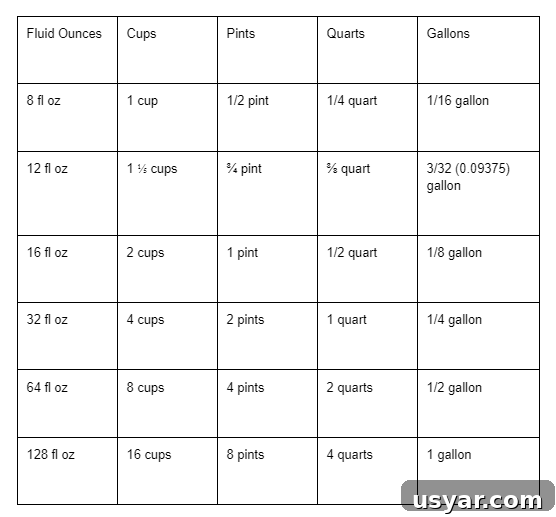
In the U.S. customary system, 1 pint equals 16 fluid ounces. This is the conversion most often used in American recipes for liquids such as water, milk, cream, oil, broth, and juice.
In the Imperial system, which is used in the United Kingdom and some other countries, 1 pint equals 20 Imperial fluid ounces. This is why pint conversions can be confusing: a pint is not the same size everywhere.
Below is a quick conversion chart for easy reference:
What is an Ounce?
An ounce is a unit of measurement used for small quantities. However, the word “ounce” can mean two different things in the kitchen. A fluid ounce measures volume, while a dry ounce measures weight.
For example, 8 fluid ounces of water refers to the amount of space the water takes up in a measuring cup. On the other hand, 8 dry ounces of flour refers to the weight of the flour on a kitchen scale. These are not interchangeable because different ingredients have different densities.
In the United States, ounces are commonly used in recipes and food packaging. In many other countries, smaller weights are usually measured in grams, while liquids are often measured in milliliters or liters.
What is a Pint?
A pint is a unit of volume used in both the U.S. customary system and the Imperial system. In U.S. measurements, 1 pint equals 16 U.S. fluid ounces, or about 473 milliliters. In Imperial measurements, 1 pint equals 20 Imperial fluid ounces, or about 568 milliliters.
Pints are most often used for liquids, including milk, water, beer, cream, and stock. In cooking and baking, you may also see pint measurements used for certain dry foods, such as berries or chopped ingredients. When precision matters, especially in baking, weighing dry ingredients is usually more accurate than measuring them by the pint.
Dry vs Liquid Measurements
Liquid measurements are based on volume. In the U.S. system, 1 liquid pint equals 16 fluid ounces. In the Imperial system, 1 Imperial pint equals 20 Imperial fluid ounces. These conversions are straightforward when you are measuring liquids with a liquid measuring cup.
Dry measurements can be more complicated. A dry pint is also a unit of volume, but dry ingredients do not all weigh the same. A pint of flour, a pint of sugar, and a pint of berries can each have a different weight because each ingredient has a different density and can settle differently in the measuring container.
For this reason, it is best not to assume that one dry pint always equals a fixed number of dry ounces by weight. If a recipe gives dry ingredients in ounces or grams, use a kitchen scale for the most accurate result. This is especially important for baking, where too much or too little flour can change the texture of cakes, breads, cookies, and pastry.
How to Measure an Ounce and Pint Internationally (Imperial vs. Metric Systems)
Now that you know how many ounces are in a pint, it is helpful to understand how pint measurements vary around the world. This is especially useful if you follow recipes from different countries.
In U.S. measurements, 1 pint equals 16 U.S. fluid ounces, or approximately 473 milliliters.
In Imperial measurements, 1 pint equals 20 Imperial fluid ounces, or approximately 568 milliliters. This is the pint commonly used in the United Kingdom.
In many metric-based countries, recipes usually avoid pints and use milliliters or liters instead. A 500 milliliter measurement is close to a pint, but it is not exactly the same as either a U.S. pint or an Imperial pint. When accuracy matters, always follow the measurement system used in the recipe.
Wet vs. Dry Pint
Wet and dry pints are easy to confuse because both describe volume, but they are used in different ways. A wet pint is used for liquids and is measured in fluid ounces. In the U.S., a wet pint equals 16 fluid ounces.
A dry pint is used for dry ingredients and is also a volume measurement. However, it should not be treated the same as dry ounces, because dry ounces measure weight. For example, a pint container filled with one ingredient may weigh more or less than the same container filled with another ingredient.
A helpful kitchen rule is that 2 cups make 1 U.S. pint, and 2 pints make 1 quart. This works well for U.S. liquid volume conversions. For dry ingredients, use measuring cups when the recipe calls for volume, and use a kitchen scale when it calls for ounces or grams by weight.
Fluid Ounces vs. Dry Ounces
Understanding the difference between fluid ounces and dry ounces is essential for accurate cooking and baking. A fluid ounce measures how much space a liquid takes up. A dry ounce measures how much an ingredient weighs.
If a recipe lists milk, water, oil, or stock in fluid ounces, use a liquid measuring cup. If a recipe lists flour, sugar, butter, grains, or chocolate in ounces by weight, use a kitchen scale. Measuring by weight is usually more precise and helps keep recipes consistent.
This distinction matters because one cup of water weighs about 8 ounces, but one cup of flour does not. The volume may look the same in a measuring cup, but the weight is different.
Fluid Ounces:
- Definition: Fluid ounces, often written as fl oz, measure volume.
- Usage: They are commonly used for liquid ingredients such as water, milk, cream, oil, juice, and broth.
- Representation: Fluid ounces are usually written as “fl oz,” although some recipes may simply use “oz” when the ingredient is clearly liquid.
- Conversion: 1 U.S. fluid ounce is approximately 29.57 milliliters.
- Examples: In U.S. measurements, 1 cup equals 8 fluid ounces, and 1 pint equals 16 fluid ounces.
Dry Ounces:
- Definition: Dry ounces measure weight, not volume.
- Usage: They are used for dry or solid ingredients such as flour, sugar, grains, nuts, chocolate, and butter.
- Representation: Dry ounces are usually written as “oz” without the “fl” abbreviation.
- Conversion: 1 dry ounce is approximately 28.35 grams.
- Examples: A cup of all-purpose flour and a cup of granulated sugar do not weigh the same, even though they take up the same volume in a measuring cup.
In short, fluid ounces measure volume and are used for liquids, while dry ounces measure weight and are used for ingredients that should be weighed. Knowing the difference helps prevent common measuring mistakes and improves the outcome of your recipes.
Frequently Asked Questions
In the U.S. customary system, 1 pint equals 16 fluid ounces. In the Imperial system, 1 pint equals 20 Imperial fluid ounces. Always check which measurement system your recipe uses before converting.
In U.S. liquid measurements, 1 fluid ounce equals 0.0625 pints. Another way to say this is that 16 fluid ounces make 1 U.S. pint.
More Helpful Resources
- How Many Tablespoons Are in a Cup? A Conversion Guide
- Melting Chocolate: A Guide
- Baking Powder Vs. Bicarbonate of Soda
- How to Turn Plain Flour Into Self-Raising Flour