
Learn how to make stamped fondant cookies and turn simple sugar cookies into memorable party favours and personalised treats. This step‑by‑step guide explains how to use fondant stamps and shares practical tips and techniques for a professional finish.

I love decorating cookies with fondant, and fondant stamps are one of my favourite ways to create detailed cookies without advanced piping or painting skills. Stamps let you imprint or raise a repeatable design on fondant quickly, making them perfect for batches of cookies, personalised messages, or uniform party favours.
This guide covers the types of fondant stamps, the supplies and tools you’ll need, step‑by‑step instructions for both debossed and embossed designs, how to add painted details, and tips for cleaning and caring for your stamps.
Types of Fondant Stamps
There are two main kinds of fondant stamps:
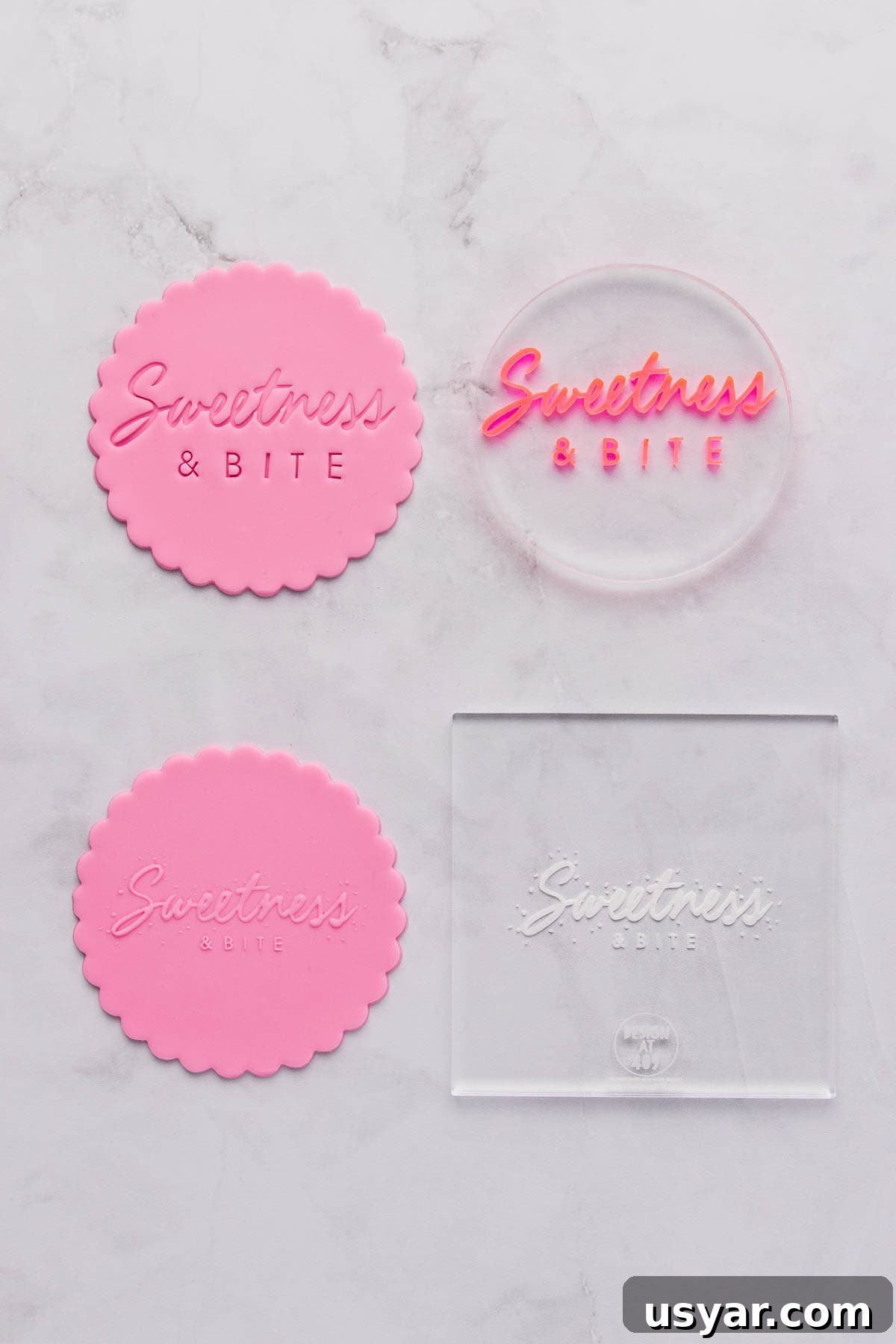
- Debossing stamps press a design into the surface of the fondant, leaving an imprinted (recessed) pattern. These are quick and simple to use and can be applied before or after the fondant is placed on the cookie.
- Embossing (raised) stamps create a raised design that stands above the fondant surface. These take a bit more practice, but they give a dimensional look that can be left plain or painted for dramatic effect.
Most modern stamps are made from laser‑cut acrylic or 3D‑printed plastic, offering clear, consistent details suitable for cookie use.
Where to Buy Fondant Stamps
Fondant stamps are available from many cake and cookie supply shops and online marketplaces. Search for terms like “acrylic fondant stamps,” “embossing cookie stamps,” or “alphabet fondant stamps” to find options for images, patterns and lettering. Many embossing tools designed for cake decorating also work well on cookie‑sized fondant.
Edible Supplies
- Cookies – Use any sugar cookie recipe that dries flat and firm. Sturdy cookies give the best base for fondant decoration.
- Fondant, coloured with gel food colouring if desired. Prepare and rest coloured fondant ahead of use so it’s less sticky.
- Sugar syrup or cooled boiled water to adhere fondant to the cookie.
- Cornstarch for dusting; confectioners’ sugar is an acceptable substitute if you don’t have cornstarch.
Tools
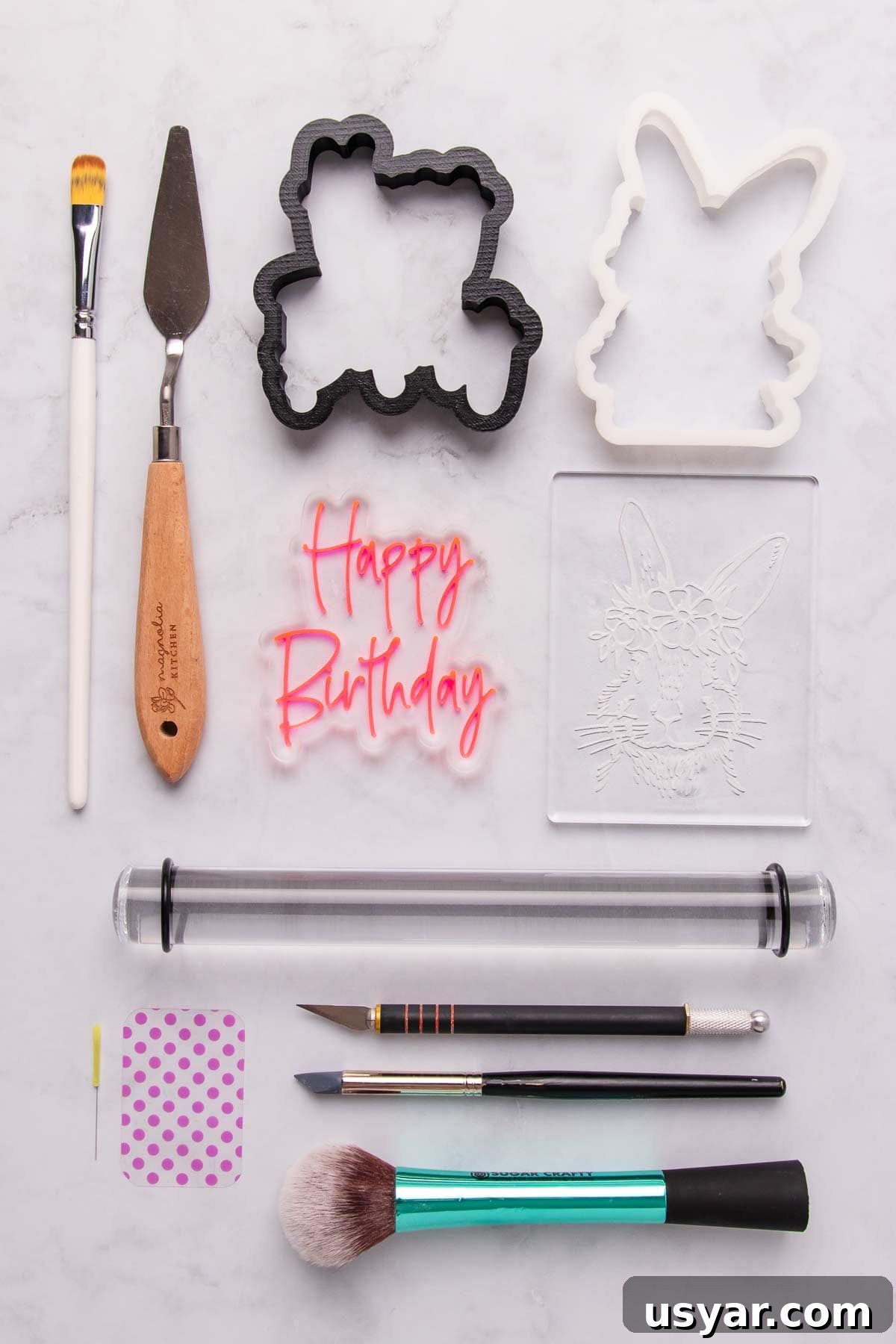
- Fondant stamps
- Cookie cutters – choose cutters slightly larger than the stamp design, or use cutters that match your stamp if provided.
- Rolling pin – one with thickness spacers helps achieve an even fondant thickness (2–4 mm depending on the stamp).
- Food‑safe paintbrushes or pastry brushes – one for brushing syrup and one for dusting cornstarch.
- Offset spatula (palette knife) – useful for lifting fondant pieces cleanly.
- Small flexible fondant smoother – helps smooth flat areas without distorting the stamped detail.
- Pin or acupuncture needle – for pricking and releasing trapped air bubbles.
- Scalpel or small knife – for tidying edges where cutters don’t make perfect cuts.
- Optional tools – sugar shapers or paint shapers to clean up fine edges and shape details.
Quick Tips
- Clean and dry stamps before use; dust or moisture left on the stamp will transfer onto fondant. Follow the manufacturer’s cleaning recommendations.
- If you colour fondant, do it hours ahead and let it rest to reduce tackiness.
- Work one cookie at a time when you’re learning so the fondant doesn’t dry while you’re stamping and cutting.
How to Make Stamped Fondant Cookies
Debossing (Imprinted) Stamps
1. Knead a golf‑ball sized piece of fondant until soft and pliable, then roll it to about 2–3 mm thickness. Make sure the rolled fondant is large enough to cover your design and fit your cutter.
2. Allow the surface to dry very slightly or dust lightly with cornstarch to prevent sticking.
3. Position the debossing stamp and press gently but firmly. Apply enough pressure to create a clear impression without cutting through the fondant. The right pressure varies by stamp depth and fondant softness, so test on scrap fondant first.
4. Line up a cookie cutter over the stamped design and cut out the fondant. Trim any rough edges with a scalpel if needed.
5. Brush the cookie top lightly with sugar syrup or cooled boiled water, lift the cut fondant with an offset spatula, and place it on the cookie. Smooth carefully to release any air pockets. If the fondant is too floppy to lift cleanly, let it firm up for a minute and try again.
6. Very lightly buff flat areas with a flexible smoother and tidy edges with silicone tools or a knife. Let the finished cookies dry before storing or packaging, and keep them away from direct sunlight to maintain colour.
Embossing (Raised) Stamps
1. For raised designs, roll fondant to about 2–3 mm for simple patterns, but for very deep or intricate embossers roll slightly thicker (around 4 mm) so the fondant can fill the stamp without tearing.
2. Dust the stamp lightly with cornstarch using a fluffy brush, then tap off the excess. Place the stamp onto the fondant and press evenly across the surface.
3. Carefully lift the stamp. If parts haven’t fully formed, you can realign and press again, or reroll the fondant if alignment is difficult.
4. Centre a cookie cutter over the embossed design and cut out the shape. Trim edges and remove excess cornstarch with a soft brush.
5. Brush the cookie with sugar syrup and apply the embossed fondant, taking care not to press on the raised design. Use fingers or a silicone tool to smooth background areas and correct small shape issues.
6. Let embossed fondant dry completely before storing or painting.
Adding Details
Small fondant appliqués, sprinkles or tiny fondant elements can enhance stamped cookies. Use tiny dabs of edible glue to attach decorations. You can also combine stamps: stamp the central motif first, then add border or pattern stamps around it to create layered compositions without flattening earlier impressions.

Cleaning the Stamps
Follow the care instructions supplied with your stamps. Many are hand‑wash only; some should not be submerged. If full washing is not recommended, brush away dried fondant and cornstarch with a soft toothbrush, pastry brush or lint‑free cloth and store the stamps dry to avoid damage.
Painting a Fondant Stamped Cookie
Painting stamped fondant is satisfying because the design gives you clear lines to follow. For best results, stamp and cover cookies at least 24 hours before painting so the fondant has time to firm up. Use a glaze‑based edible paint that dries cleanly and won’t rub off.
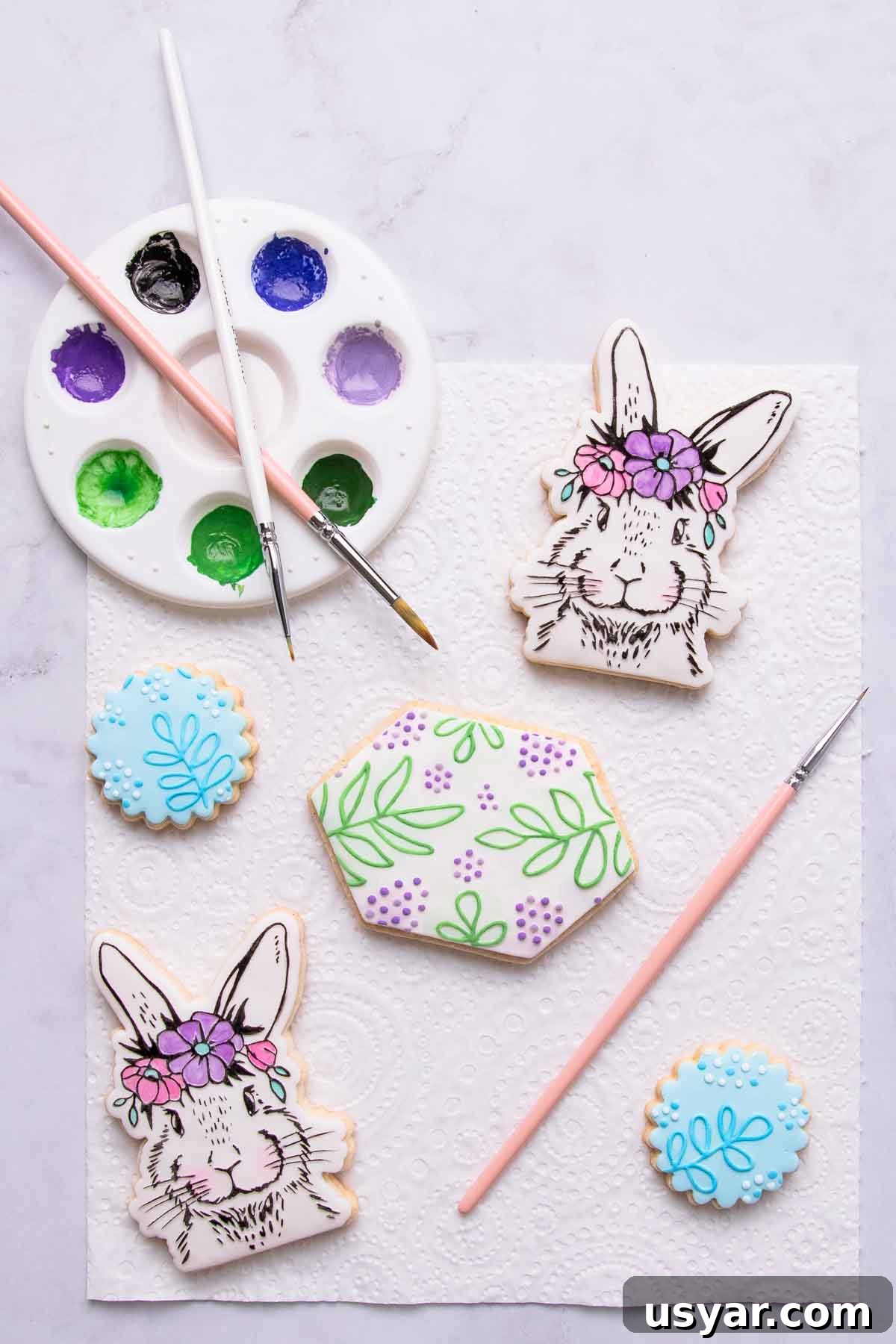
To paint recessed areas, thin the paint to a watercolour consistency and fill those sections first; allow them to dry before painting raised lines. For outlines, use paint at a thicker consistency and a fine, pointed brush to avoid bleeding. Work in a methodical direction to prevent smudges, and let each layer dry fully before adding more colour or details.
Sponge dabbing or washes can add background shading before you finish with crisp outlines and highlights. If touch‑ups are needed, wait for the paint to dry fully and add thin additional layers to build depth.
I love seeing what people make with stamped fondant — feel free to share your creations and ask questions if you need help.
— Natalie
More Tutorials You May Like
- Sugar Cookies with Fondant
- Watercolour Cookies Tutorial
- How to Cover a Cake With Fondant
- Edible Sand for Cakes and Cookies
- Gluten Free Chocolate Cookies