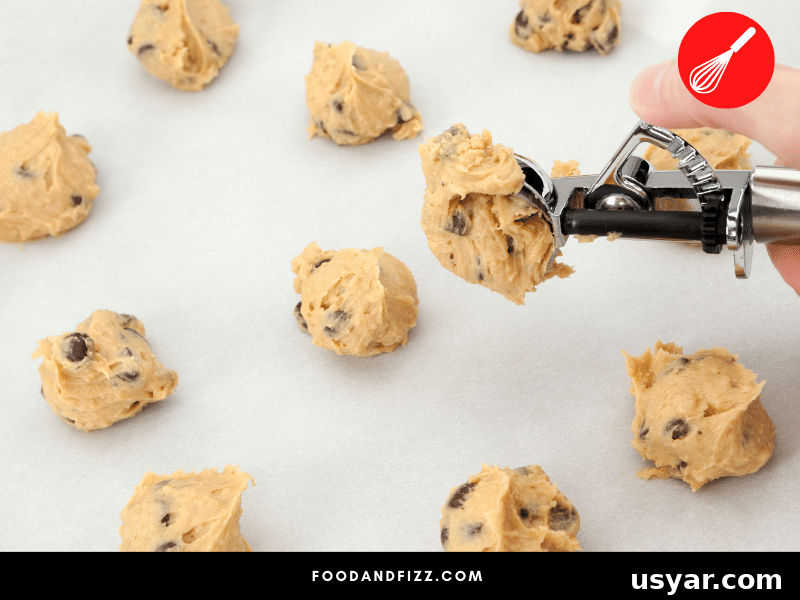
You’ve mixed your dough or batter, wiped a smear of flour on your cheek, and reached the instruction that always trips bakers up: form one-inch balls and place them on the baking sheet. But how much is a one-inch ball when converted to tablespoons or teaspoons? This article explains the conversion and explores practical tools and tips for portioning dough consistently.
Table of Contents
1 Inch Balls In Tablespoons
In baking, a one-inch ball is roughly 1.74 teaspoons, which is a little more than half a tablespoon (about 0.58 tablespoons). For practical portioning and repeatable results, a small cookie scoop or disher is often the easiest way to match that size.
Baking with Balls
Recipes often mix units (US cups, metric grams, oven temperatures in °F or °C) and add informal measures like “rounded spoonful” or “one-inch balls.” That can be confusing, especially when precision matters for even baking. When a recipe asks for one-inch balls, it’s asking you to portion dough so each piece bakes at the same rate and produces consistent cookies, drops, or bites.
If you want the quickest, cleanest, and most consistent method, reach for a cookie scoop—or learn a simple spoon-and-spatula technique to shape consistent portions without specialized tools.
A Short History of Baking Scoops
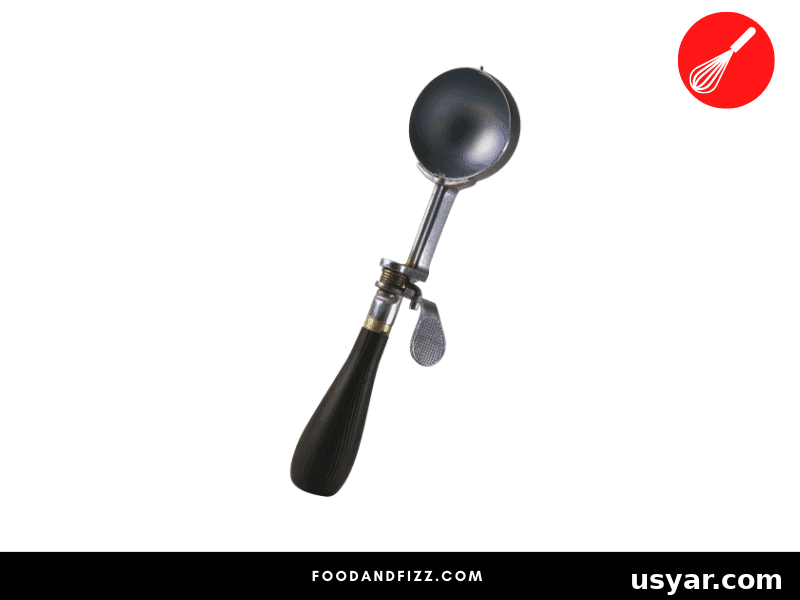
Scoops have long been used to move food from container to plate quickly. Early scoops prioritized speed over precision, but in the late 19th century innovations made scoops more functional. The classic ice cream scoop was improved with a built-in scraper mechanism that allowed single-handed release and better portion control. That same mechanism carried over to cookie scoops and dishers used in professional and home kitchens.
Different Kinds and Functions of Scoops
Speed
Cookie scoops let you portion dozens of uniform balls in minutes, far faster than scooping with spoons or shaping by hand. For busy bakers and catering kitchens, speed is a major advantage.
Uniformity
Using a scoop ensures each cookie, muffin, or meatball starts with the same volume of dough or batter. Uniform portions give a consistent rise and appearance across the batch, so nothing bakes too quickly or stays underdone.
Consistency
Baking times and textures benefit from consistent portions. A batch made with even-sized scoops will bake through evenly, reducing the risk of overbaked edges or undercooked centers.
Cleanliness
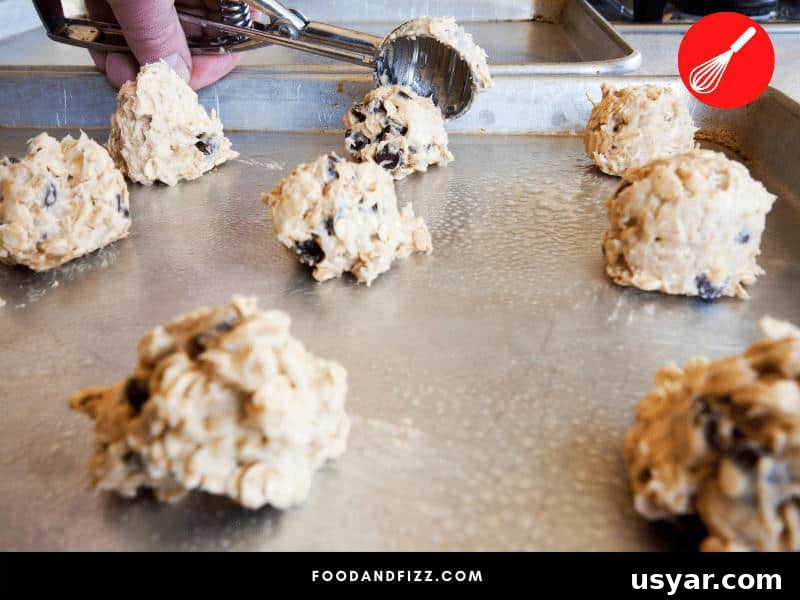
Scoops reduce hand contact and mess. They’re a hygienic way to portion dough and batter, and they make cleanup easier by minimizing spills and splatters.
The Standard Scoops
Standard scoop sizes are often numbered so you can estimate how many scoops a quart will yield. Different sizes suit different tasks—from tiny teaspoon scoops for petit fours to jumbo scoopers for pancakes or large ice cream servings.
Teaspoon Scoop
A teaspoon-style scoop is handy for small cookies, mini cupcakes, or portioning soft fruits and garnishes. It’s also useful for serving condiments or dressings in uniform dollops.
Tablespoon Scoop
The tablespoon scoop is versatile for drop cookies, meatballs, and stuffing. It creates evenly sized pieces that cook at the same rate, improving overall results.
The Jumbo Scoop
Large scoops simplify pouring batter for pancakes, waffles, or crêpes and make it easier to portion rice, mashed potatoes, or large servings of ice cream.
Other Sizes
Dishers are numbered to indicate how many scoops come from a quart. Here are common references for scoop sizes and approximate volumes:
#16 = 4 tablespoons = 2 fluid ounces
#20 = 3.2 tablespoons = 1.6 fluid ounces
#24 = 2.67 tablespoons = 1.33 fluid ounces
#30 = 2.13 tablespoons = 1.07 fluid ounces
#40 = 1.6 tablespoons = 0.8 fluid ounces
#50 = 1.28 tablespoons = 0.64 fluid ounces
#60 = 1.07 tablespoons = 0.53 fluid ounces
#70 = 0.91 tablespoons = 0.48 fluid ounces
#100 = 0.64 tablespoons = 0.32 fluid ounces (roughly 1.9 teaspoons)

Frequently Asked Questions on 1 Inch Balls In Tablespoons
What’s the difference between a one-inch ball and a rounded spoonful?
A rounded teaspoon is usually a little smaller than a true one-inch ball. For recipes that specify “teaspoonful,” a very small scoop such as a #100 disher often matches that intent. A heaping tablespoon would correspond to a much larger disher size.
How can I make a one-inch ball without a scoop?
If you don’t have a scoop, use two spoons or a spoon and a small spatula: scoop the dough with one spoon and slide it with the other to form a neat ball. Practice a couple of times on a plate until you get uniform sizes.
Why measure dough or batter into balls?
Portioning dough into uniform balls helps ensure even baking and consistent texture. Rounded portions also produce more attractive, predictable results than irregular dollops.