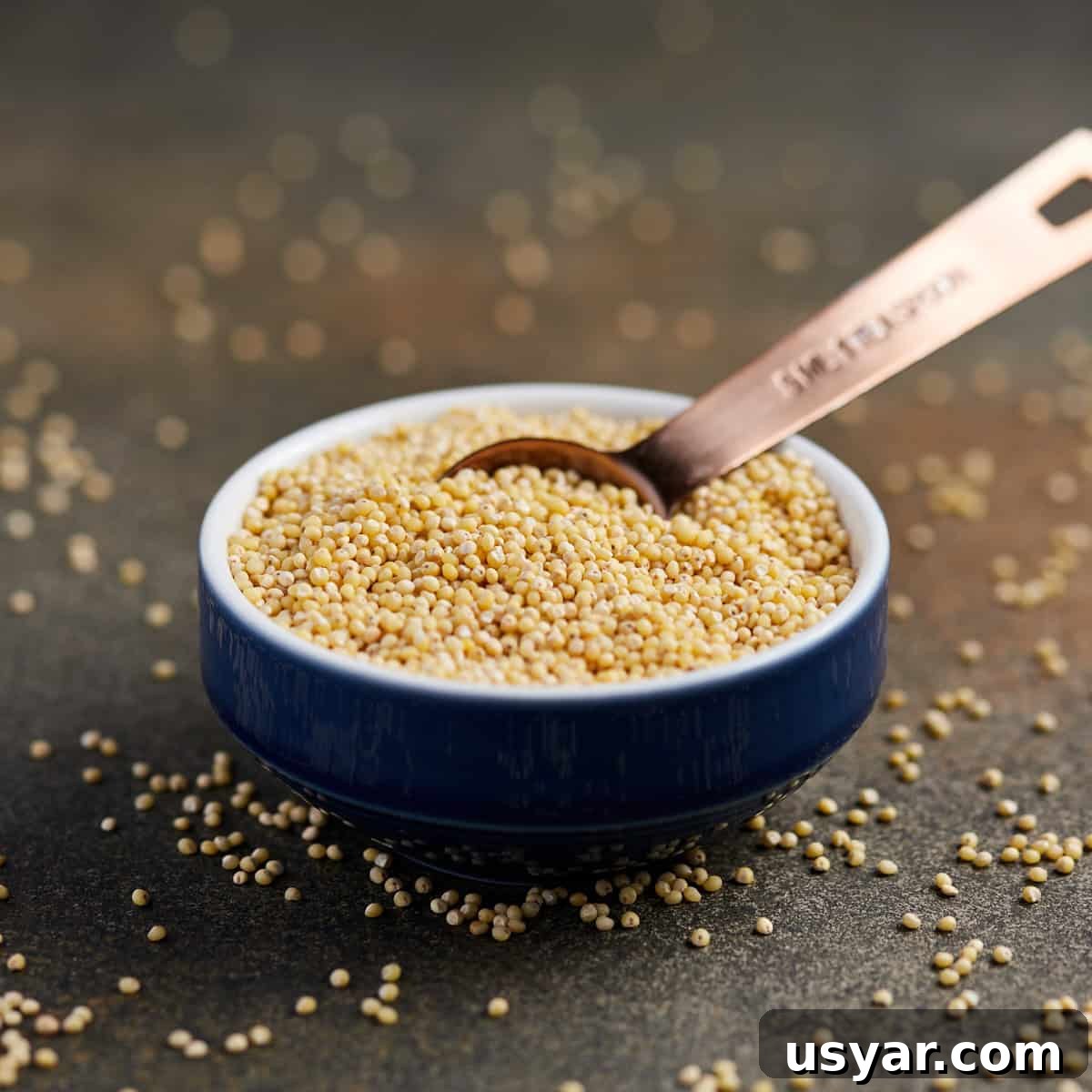
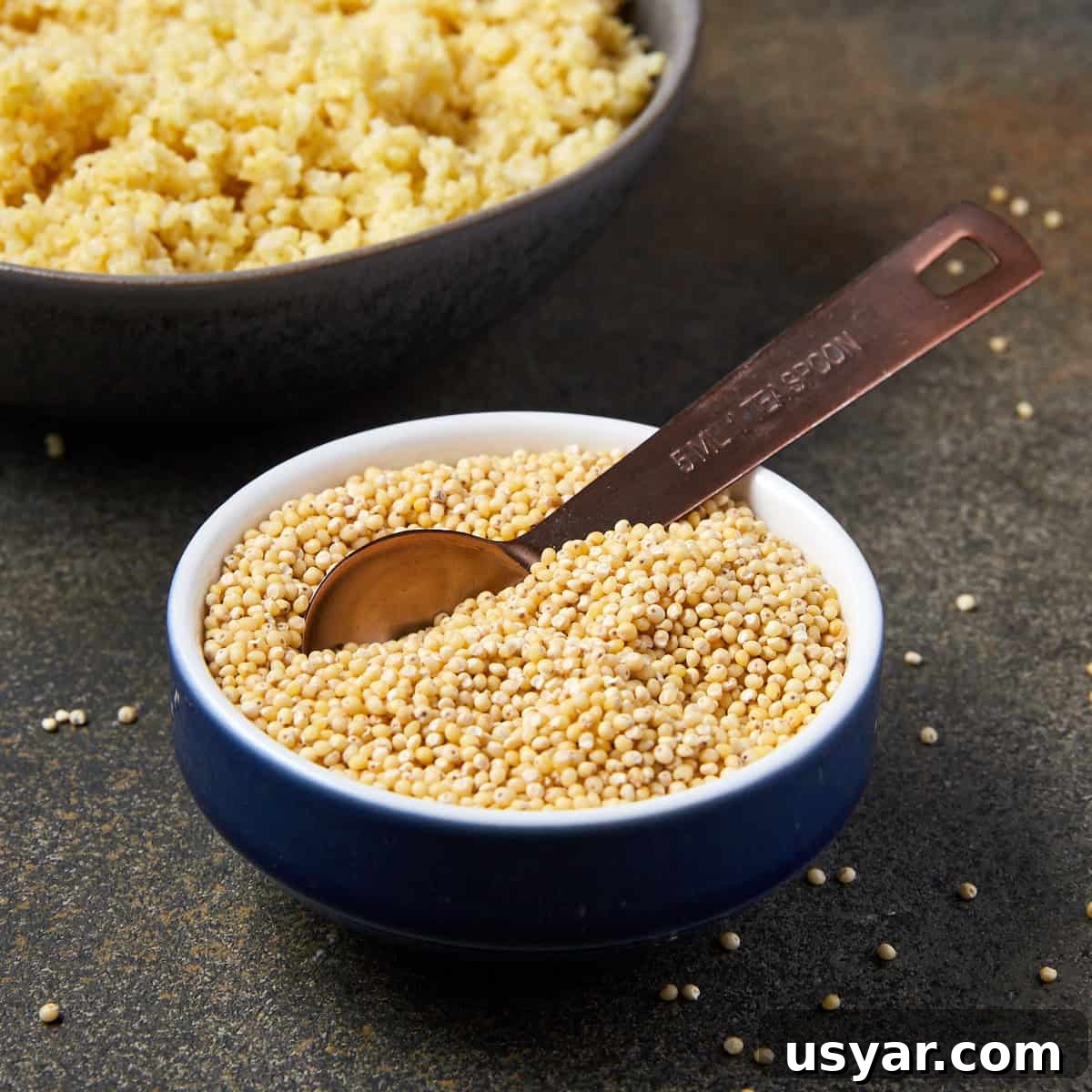
Millet is an often overlooked whole grain that is nutrient-dense and highly sustainable. It resembles couscous in appearance and can be used in many of the same ways, but unlike couscous it is naturally gluten-free. Below you’ll find clear, practical information about millet—what it is, its benefits, how to cook it, and how to use it in everyday meals.
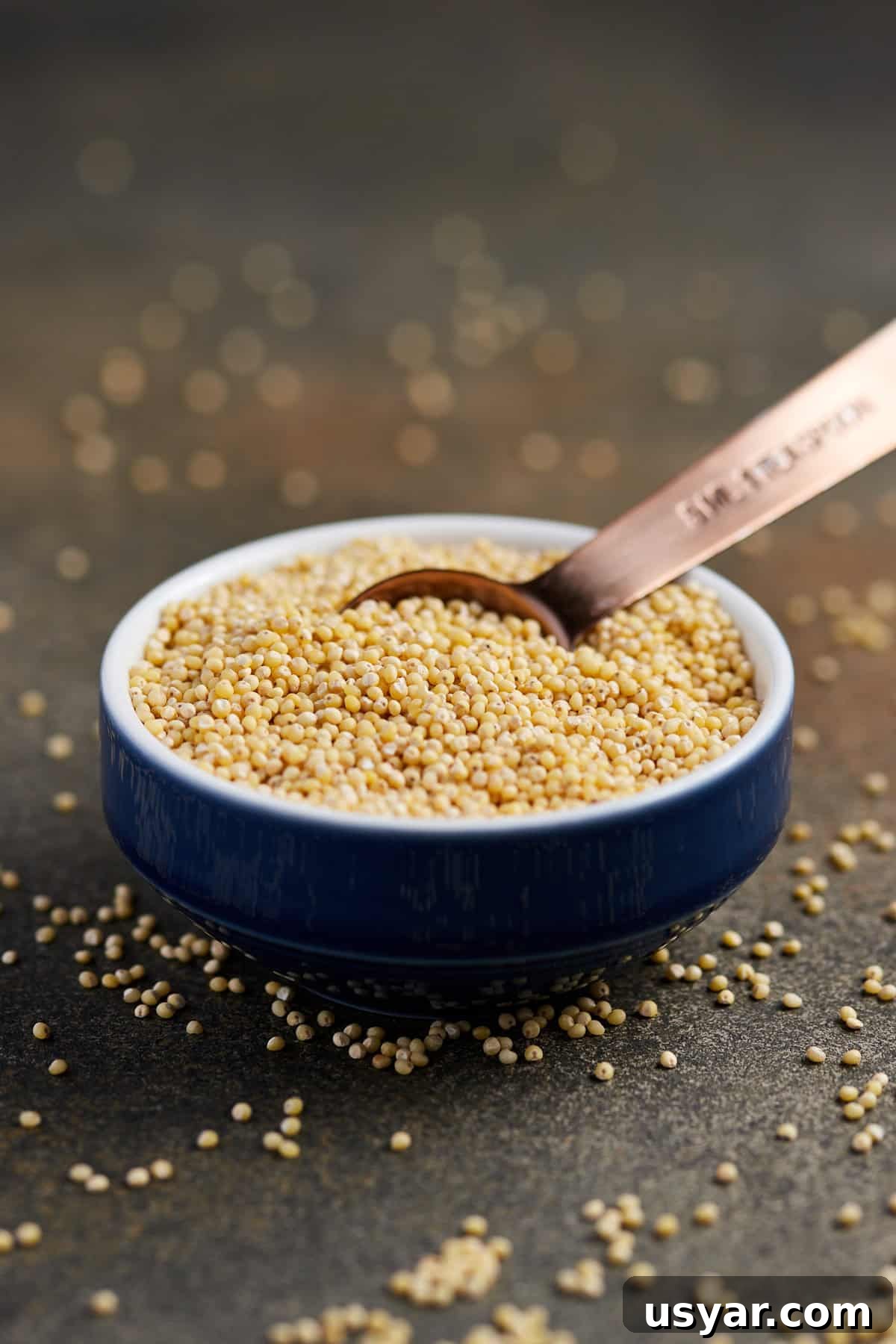
What’s So Good About Millet?
- Gluten-free – millet is naturally free of gluten, making it a useful substitute for wheat-based grains like couscous or bulgur.
- Environmentally friendly – many types of millet are drought- and pest-tolerant, so they need less irrigation and fewer pesticides than some other staple crops. They can thrive in hot, dry conditions and are inexpensive and quick to grow.
- Nutritious – as a whole grain, millet provides fiber, protein, polyphenols and antioxidants, along with a range of B vitamins and minerals such as magnesium, copper and zinc.
Read on to learn how to cook millet and how to include it in breakfasts, salads, mains and more.
What is Millet?
Millet is an ancient cereal grain in the grass family, related to wheat, rice and maize. People have cultivated millet for thousands of years, and it remains a staple in many parts of Asia and Africa. It is commonly used to make creamy porridges, ground into flour for flatbreads, or cooked and served like rice or couscous as a light, grain-based side.
What Does Millet Taste Like?
Millet has a mild, slightly sweet flavor reminiscent of corn. Its taste is gentle and adaptable, so it benefits from seasoning and pairs very well with bold flavors, spices and dressings.
Health Benefits of Millet
As a whole grain, millet contributes complex carbohydrates that digest more slowly than refined starches, providing steady energy. It is a good source of protein and fiber, and contains antioxidants and B vitamins. Millet also delivers essential minerals such as magnesium, copper and zinc. Because it lacks gluten, millet is suitable for people with coeliac disease or gluten sensitivity.
Whole millet can be more acceptable to children who favor refined grains, since its texture is soft when cooked, but it still provides the nutritional advantages of a whole grain.
Should You Soak Millet Before Cooking?
Millet contains phytic acid, like many whole grains and seeds, which can bind minerals and reduce their absorption. Soaking millet for a short time—ten minutes or several hours—can help reduce these anti-nutrients and make minerals more available. Sprouting is another option if you want to maximize nutrient availability.
That said, soaking is optional. If you’re short on time, you can cook millet without soaking and still benefit from its nutrients and enjoy its flavor.
Types of Millet
Millet is sold under one name in many stores, but there are several varieties that differ in size, texture and cooking behavior. These are roughly grouped into major and minor millets, and related grains like sorghum are sometimes considered alongside millets.
Major millets
Pearl, Foxtail, Proso, Finger (Ragi)
Minor millets
Kodo, Barnyard, Little, Guinea, Brown Top, Fonio, Adlay
Pearl millet is the most commonly available type sold simply as “millet.” The cooking tips and recipe below are based on pearl millet, but many of the methods apply to the other varieties with minor timing adjustments.
My Millet Cooking Experiment
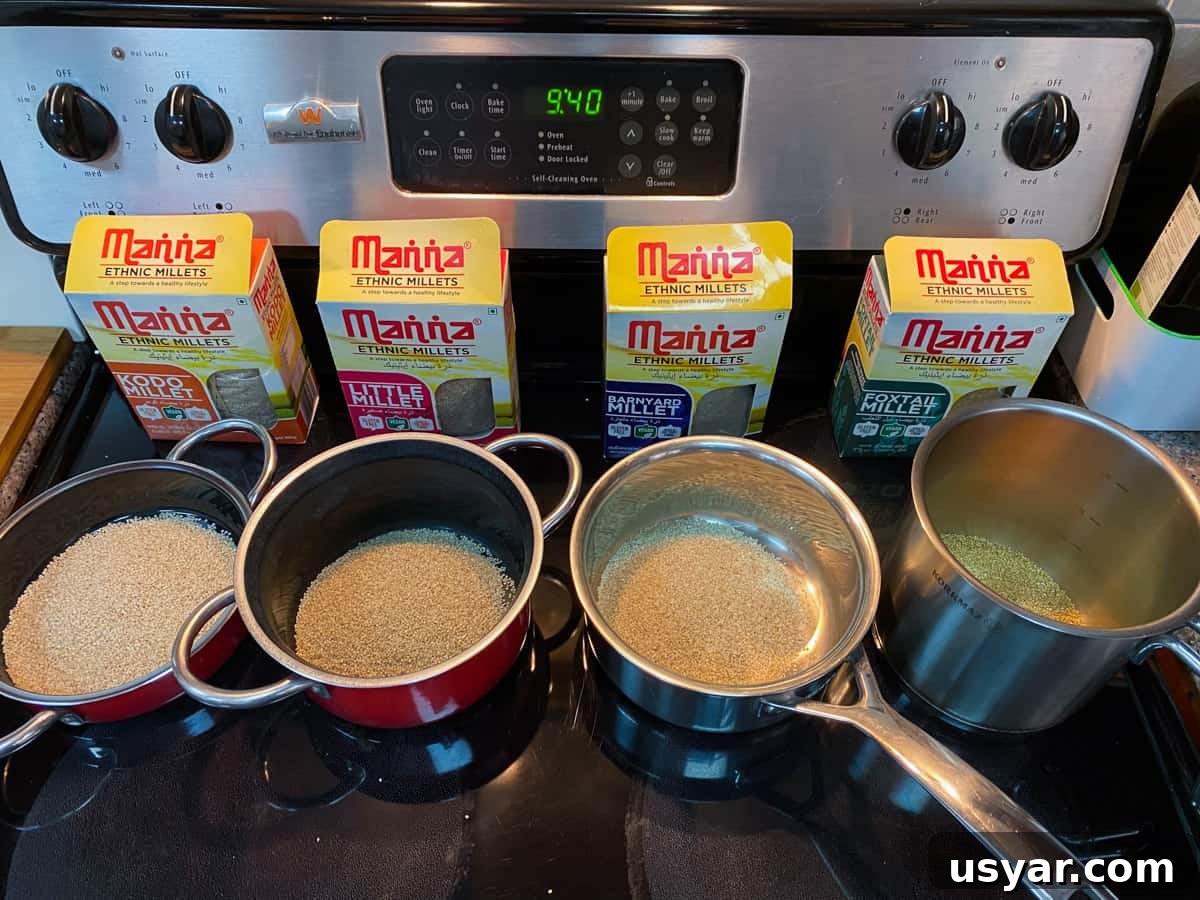
I compared four types—foxtail, barnyard, kodo and little millet—cooking them side-by-side with the same method to observe texture and flavor differences.
Method:
- Soak each millet briefly for 10 minutes, then drain and rinse.
- Cook each in a separate pot with two parts water and a pinch of salt, bring to a boil, then simmer gently for 10 minutes.
Results
- Little millet and barnyard millet break down more quickly and become porridge-like.
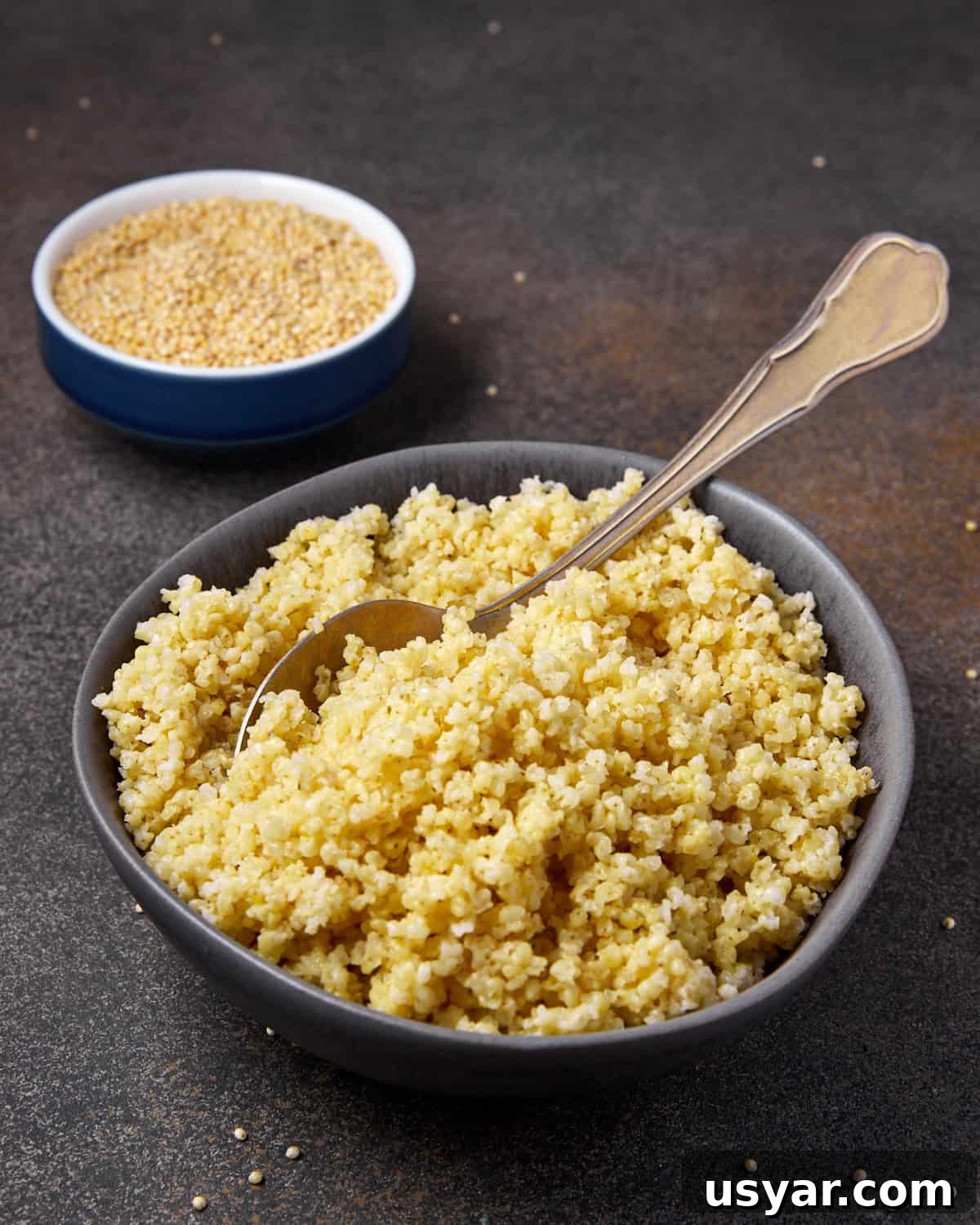
- Foxtail and kodo millet tend to hold their shape and remain light and fluffy, similar to a gluten-free couscous.
Conclusion
- Use foxtail or kodo millet when you want distinct, fluffy grains suitable for salads or as a rice substitute.
- Use little or barnyard millet for quick-cooking porridges.
Millet Cooking Tips
- Cook on the stovetop or in a pressure cooker/Instant Pot. Total active cooking time is typically about 10 minutes.
- For porridge, use more water and stir frequently on the stove; if using a pressure cooker give it a longer rest after pressure release and stir to break down the grains.
- For fluffy grains, use less water and avoid stirring while it cooks—treat it like cooking rice.
- Toasting dry millet in a pan before cooking enhances nuttiness, but it must be dry to toast. If you have soaked the grain, skip toasting or allow the grain to dry first.
How To Use Millet
Millet is versatile and can be used in many dishes:
Porridge – Cook millet with water or stock for a creamy breakfast. For sweet versions add fruit, jam or maple syrup. For savory porridge use broth and top with chili oil, sesame oil, spring onions, herbs and soy or tamari.
Salads – Use fluffy millet as the grain base for salads combined with vegetables, nuts and a tangy dressing.
Grain side dish – Serve millet instead of rice or couscous alongside curries and stews. Cook it in vegetable stock and finish with olive oil or a pat of butter and fresh herbs.
Grain bowls – Build nourishing bowls with millet, roasted vegetables, a protein like tofu, and a creamy dollop of hummus or muhammara.
Pilaf – Substitute millet for rice in pilaf recipes. Sauté aromatics, add millet and stock, and cook until tender; finish with toasted nuts for crunch.
Flour – Millet can be ground into flour for gluten-free baking and included in blends for breads and pancakes.
Storage
Cooked millet keeps in an airtight container in the refrigerator for 4–5 days. Use it cold in salads or allow it to come to room temperature. You can also reheat it briefly in the microwave. Cooked millet freezes well for a couple of months.
FAQs
Is sorghum a type of millet?
Sorghum is closely related and sometimes grouped with millets, but it is a different genus. It can be thought of as a sister grain to many millet varieties.
How do you stop millet breaking down into porridge?
Use less water when cooking and avoid prolonged soaking before cooking. Choose millet varieties that retain their shape, such as foxtail and kodo, when you want fluffy grains.
Recipe
How to Cook Millet Perfectly (Stovetop or Instant Pot)
Simple methods to cook this healthy, eco-friendly, naturally gluten-free grain with reliable results.
Cook time: 10 minutes (plus resting)
Soaking time (optional): 10 minutes to 12 hours
Total time: About 20 minutes
Serves: 4
Ingredients
Millet Porridge
- 1 cup millet
- 3 cups water or vegetable stock (stovetop)
- 2.5 cups water or vegetable stock (Instant Pot)
Millet Grains (fluffy)
- 1 cup millet
- 2 cups water or vegetable stock (stovetop)
- 1.75 cups water or vegetable stock (Instant Pot)
Instructions
Soaking (optional)
- Soak the millet for 10 minutes or up to 12 hours. Drain and rinse before cooking.
Millet Porridge
Stovetop: Combine millet and water or stock in a small pan. Bring to a boil, reduce to low, cover slightly askew and simmer for 10 minutes, stirring frequently until the grains break down to a creamy consistency.
Instant Pot / Pressure cooker: Combine millet and the specified amount of liquid in the inner pot. Seal and pressure cook on high for 10 minutes. Allow a 10-minute natural pressure release, then quick-release remaining pressure and stir to a porridge texture.
Millet Grains (fluffy)
Stovetop: Combine millet and water or stock in a pan. Bring to a boil, reduce to low, cover (lid slightly askew) and simmer for 10 minutes. Remove from heat and stir once to separate grains.
Instant Pot / Pressure cooker: Combine millet and liquid in the pot. Pressure cook on high for 10 minutes. Allow a 10-minute natural release, then quick-release and stir to fluff the grains.
Notes
- Soaking is optional but can improve mineral availability.
- Toast dry millet in a frying pan to highlight its nuttiness if you haven’t soaked it first.
- Cooked millet stores 4–5 days in the refrigerator or about two months in the freezer.
- Sweet porridge works well with fruit and maple syrup. Savory porridge is delicious made with broth and flavored with chili or sesame oil, scallions, herbs and tamari.
- Use fluffy cooked millet in salads, grain bowls, soups and as a side dish in place of rice or couscous.
Nutrition (per serving, approximate)
Calories: 200 kcal | Carbohydrates: 38 g | Protein: 6 g | Fat: 2 g | Fiber: 4 g | Potassium: 103 mg
If you tried this recipe, please consider leaving a star rating on the recipe card.
Related Recipes
If you enjoy millet, you might also like dishes based on sorghum, mung beans, or other whole grains and hearty porridges that use similar cooking techniques.
🌿 Follow CookingWithCamilla on social channels or subscribe to her email list for updates and more plant-based, gluten-free recipes. 🌿